On April 16, international expert Marko Skreb, former head of the Croatian Central Bank and advisor to the International Monetary Fund (IMF), delivered a lecture at the Central Bank of Uzbekistan. Following the event, he gave an interview to the bank's press service and a Gazeta correspondent, addressing topics such as monetary policy, inflation targeting, and research capacity.
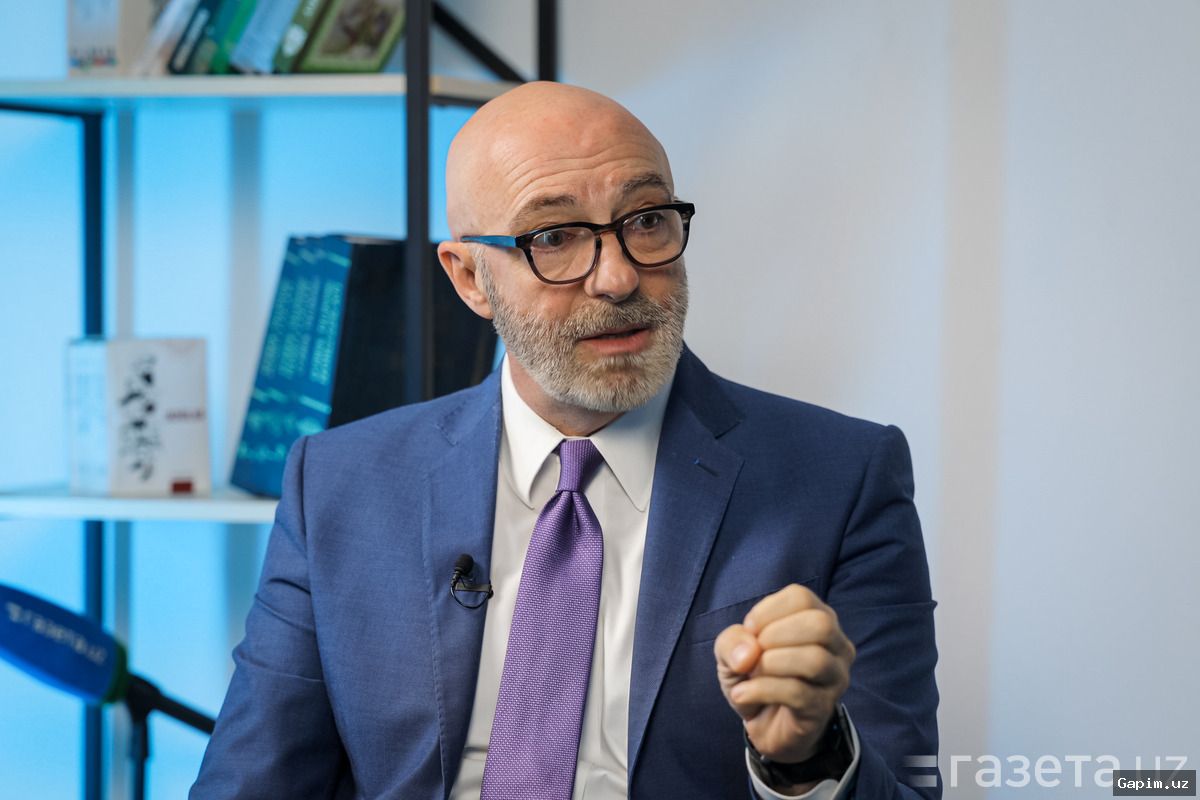
Drawing on his experience working with over 20 central banks, Skreb highlighted a common issue: the poor integration of research into decision-making processes. He stated that the primary function of a research department is to propose optimal solutions to decision-makers, but often research remains disconnected from practical decisions, becoming a lost resource. To address this, he emphasized the need to bring researchers closer to internal discussions and directly link their work to policy implementation.
The expert noted that over the past two decades, the functions of central banks have expanded significantly. While previously focused mainly on price stability, today's research must cover financial stability, climate change, gender issues, and income inequality. Additionally, rising demands for using Big Data, complex models, and artificial intelligence compel banks to hire not only economists but also mathematicians and technical specialists.
When asked about inflation targeting, Skreb pointed out that transitioning to this system requires meeting several preconditions, including central bank independence, fiscal discipline, a flexible exchange rate, effective communication policies, and developed financial markets. He cited examples of countries that implemented targeting without these conditions, leading to inflation spikes of up to 60%, and advised Uzbekistan not to rush the process.
Regarding the timeline for achieving the Central Bank of Uzbekistan's 5% inflation target, Skreb recommended avoiding precise predictions due to uncontrollable external factors like wars, oil price shocks, and geopolitical tensions. However, he praised the bank for moving towards targeting and suggested continuing this path while leveraging technical assistance from international institutions.
On enhancing central bank resilience, Skreb stressed the importance of exchange rate flexibility, internal research capacity, and effective communication. He underscored that communication departments must be prepared to explain complex economic issues in simple terms to diverse audiences.
In his final recommendations, Skreb advocated for clearly separating research from other functions, developing a specific strategy, and investing in human capital. He noted that the effectiveness of research is determined by its integration into decision-making, and leadership interest can accelerate this process.
Source: www.gazeta.uz