️ Europeans may be forced to reconsider their summer vacation plans as a jet fuel shortage triggered by the blockade of the Strait of Hormuz pushes airlines to hike ticket prices and slash flights.
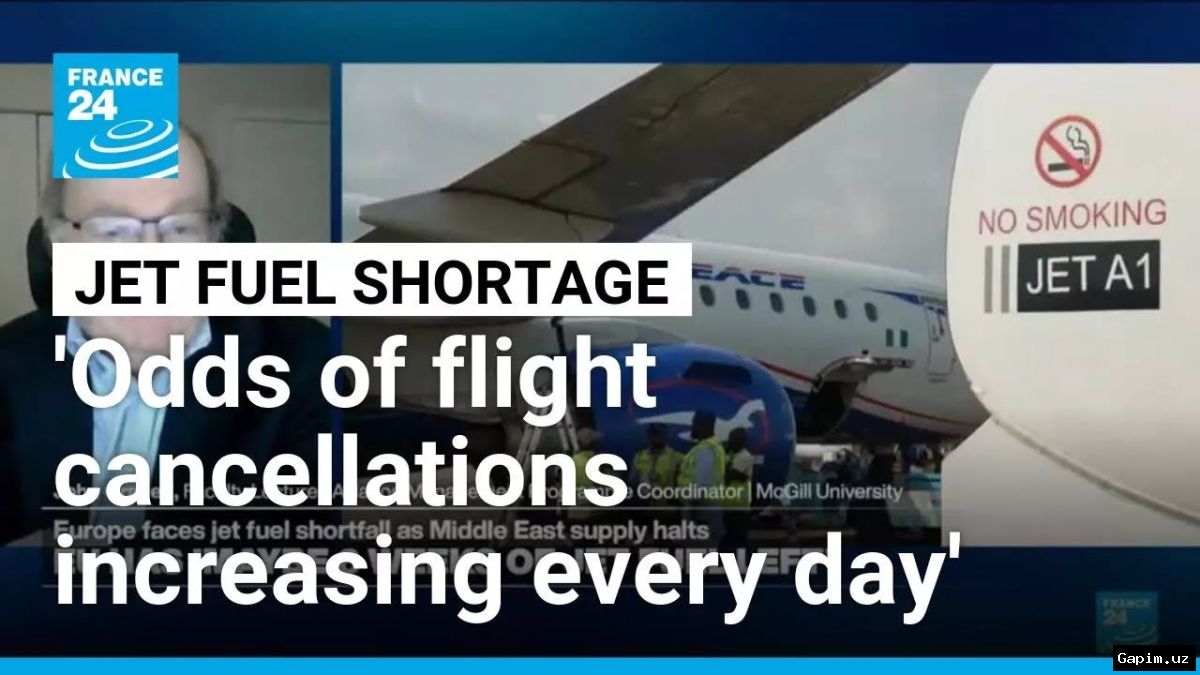
️ Jet fuel prices have more than doubled since the US and Israel first attacked Iran in February. The reason: both Iran and the US have at different points blocked the Strait of Hormuz, a critical waterway for a fifth of the world's oil and gas tankers.
️ Marina Efthymiou, an aviation management professor at Dublin City University, told DW that jet fuel prices in Europe rose from about €68.27 per barrel in February to €153.84 at the end of April, according to the International Air Transport Association. "If fuel prices, which represent 25% to 50% of an airline's total operating expenses, remain high and airlines have not hedged, they could go bankrupt," she said.
️ In addition to spiraling prices, a shortage of jet fuel is expected soon. Two weeks ago, the head of the International Energy Agency warned that Europe has about six weeks of jet fuel left. Europe consumes about 1.6 million barrels of jet fuel daily on average, and procures 1.1 million barrels from domestic sources. A large chunk of the rest — 500,000 barrels — used to come from the Middle East via the Strait of Hormuz, which is now all but impassable.
️ Some airlines are transferring this price spike to customers. Air France-KLM has reportedly imposed a surcharge of €100 on long-haul flights, while Lufthansa announced on April 22 that it would cut 20,000 short-distance flights over the next six months. Scandinavian Airlines will cancel around 1,000 flights. "We are obliged to do so, because otherwise we just are bankrupt in a few months," Sebastien Justum, Air France-KLM's senior vice president, said at a recent event in the European Parliament. Airfare has increased by 24% over the year, according to a recent report by Teneo.
️ Andrew Charlton, managing director of Aviation Advocacy consultancy, said that while fuel supplies are currently sufficient, there is a lot of uncertainty about the future. "That uncertainty, and the extra cost of keeping the tanks full, is making tickets more expensive. Travelers should expect fewer seats and fewer bargains on the market," he told DW.
️ Airlines for Europe (A4E), an association of 16 European airlines claiming to represent 80% of European air traffic, has called on the EU to take urgent measures to limit the impact of the Iran war. A4E has asked the EU to relax obligations under anti-tankering legislation and temporarily suspend the bloc's Emissions Trading System.
️ Airports Council International (ACI Europe) director general Olivier Jankovec said in a statement on April 28: "The current levels of jet fuel prices and the prospect of a new cost-of-living crisis mean that many regional airports across our continent are likely to face both a supply and demand shock. For them, this is nothing short of an existential threat."
️ European Commission President Ursula von der Leyen said on Wednesday: "In just 60 days of conflict, our bill for fossil fuel imports has increased by over €27 billion." She emphasized the importance of increased coordination among EU member states. Last week, the European Commission launched its AccelerateEU plan which includes monitoring jet fuel stocks and coordinating supplies.
️ However, some experts say EU monitoring and coordination can mitigate the impact but may not prove sufficient if the crisis prolongs. "It can stop a national-level shortage from becoming a continent-wide panic, but it cannot create fuel that isn't there," said Efthymiou.
️ European Commissioner for Sustainable Transport and Tourism Apostolos Tzitzikostas said: "While we need to prepare for the worst-case scenario, we also need to refrain from sending overtly negative and alarming messages that create confusion, or even panic in the traveling public." He added that if citizens do not feel confident to book tickets, an economic crisis will hit sooner than expected.
Source: www.dw.com