UNICEF has released a report titled 'Generation 2050 in Central Asia,' containing demographic forecasts and recommendations for Uzbekistan. According to the report, Uzbekistan remains one of the fastest-growing countries in Central Asia.
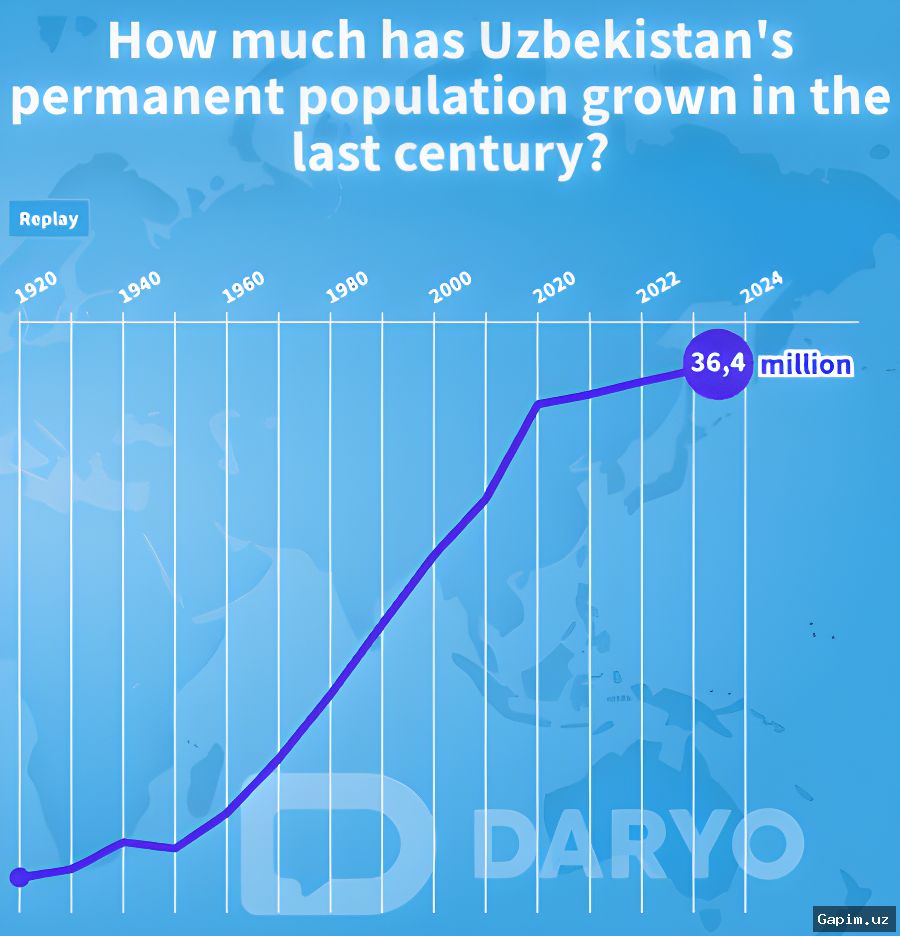
The country's population grew from 25 million in 2000 to 36 million in 2024, and is projected to exceed 52 million by 2050. However, amid this growth, significant changes are occurring in the population structure: the birth rate is declining, life expectancy is increasing, and society is gradually aging.
According to UNICEF's analysis, Uzbekistan is currently in the early stage of a demographic dividend. The increase in the working-age population is creating additional opportunities for economic growth. The report emphasizes that this window of opportunity is not permanent, and it is important to increase investments in education, employment, and human capital before the aging of the population intensifies.
The report states that Uzbekistan is entering a new demographic phase: although the population is relatively young, its age structure is continuously maturing and aging. Between 2000 and 2050, the age structure of Uzbekistan's population will gradually mature. The proportion of elderly people will increase sharply, while the growth of youth groups will slow down, clearly demonstrating the demographic transition process leading to an aging society.
By 2024, Uzbekistan's population reached 36 million, of which 11.3 million were children under 15, 23.9 million were working-age (15-64 years), and 2.2 million were aged 65 and older. According to projections, by 2050, the working-age population will exceed 33 million, and the number of elderly people will triple, exceeding 6 million. The number of children is expected to stabilize at around 16 million, indicating significant changes in the age structure.
'These changes are also reflected in the overall growth rates of Uzbekistan's population. The country, whose population grew from 25 million in 2000 to 37 million in 2025, has consistently demonstrated one of the highest demographic growth rates in Central Asia,' the report says. Projections show that Uzbekistan's population will exceed 40 million by 2030 and reach 52 million by 2050.
The main factor remains natural increase — the excess of births over deaths — but due to declining birth rates and population aging, the growth rate will gradually slow down.
The increase in the median age of the population further illustrates this demographic transition. In 2000, the median age of Uzbekistan's population was only 20 years, reflecting the high proportion of children and adolescents. By 2024, this figure reached nearly 30 years, and by 2050 it is expected to reach 35 years. This steady increase highlights the dual nature of the country's demographic profile: on the one hand, it is young enough to maintain growth rates, and on the other hand, it is gradually transitioning to maturity.
The report notes that compared to global trends, Uzbekistan will remain younger than high-income countries and will have almost the same indicators as other middle-income countries. This provides a longer period of opportunity to benefit from the demographic dividend before the aging process accelerates.
Given current trends in fertility and life expectancy, Uzbekistan's demographic window of opportunity will not remain open forever, the report says. The country is at a crucial stage: although children still make up more than a third of the population, their share is gradually declining due to falling birth rates and increasing life expectancy.
In 2024, out of Uzbekistan's 36 million population, 13.1 million were children under 18, but this balance is changing. By 2050, the number of children in Uzbekistan is expected to reach approximately 16.4 million, and the total population will reach 52 million. Thus, children will make up about a third of the population, a clear decrease compared to previous decades.
The report says that this demographic shift will affect family structures, change educational needs, and gradually limit the number of new entrants to the labor market, signaling the end of a demographic period dominated by youth. This transition period creates both opportunities and challenges: in the short term, the increase in the working-age population can boost economic growth, but in the long term, population aging will increase the dependency ratio. This requires forward-looking investments in education, employment, and social protection to sustain development gains.
The term 'demographic dividend' refers to the potential for economic growth that can be achieved when the working-age population constitutes a proportionally larger share of the total population. This occurs during the demographic transition, when declining fertility and mortality rates change the age structure of the population.
As the number of births decreases each year, the number of dependent children decreases relative to the working-age population. This change reduces the burden on each worker, allowing for increased savings, consumption, investment, and productivity, which can accelerate economic growth.
The report states that the period of opportunity for the demographic dividend is closely linked to these demographic changes. Although there are no strict criteria for when this period begins or ends, it typically arises when the share of the working-age population begins to increase against a backdrop of sustained fertility decline, and it narrows as the share of elderly dependents increases due to population aging. Here, an adapted World Bank typology classifies countries by demographic stage based on two indicators: the share of the working-age population and the fertility rate.
Pre-dividend countries: These are countries where the working-age population is growing, but fertility remains high (four or more births per woman). Uzbekistan belonged to this category in the second half of the 20th century, until the early 1990s, when the fertility rate was above 4.0.
Early dividend countries: These are countries where the fertility rate is below four births per woman and the working-age population continues to grow. By 2015, when the fertility rate fell from 4.0 to about 2.6 and dependency ratios began to decline, Uzbekistan entered this stage in the early 2000s. Given that the fertility rate is expected to be 3.45 in 2025 and decline to 2.55 by 2050, the country is firmly in the early dividend stage today.
Late dividend countries: In these countries, as population aging accelerates, the share of the working-age population typically begins to decline. According to projections, Uzbekistan will enter this stage by the mid-2040s, when the fertility rate approaches replacement level (about 2.6 in 2045) and the elderly population exceeds 6 million by 2050. Although the dependency burden from children remains low, the dependency burden from the elderly grows rapidly, narrowing the demographic window of opportunity.
Post-dividend countries: In these countries, fertility stabilizes below replacement level, the working-age population declines, and the increase in the dependency burden from the elderly becomes the main demographic feature. According to projections, Uzbekistan will reach this stage by the end of the 2050s, when the fertility rate stabilizes around 2.5-2.6, the working-age population begins to shrink, and the dependency burden from the elderly increases sharply.
Thus, Uzbekistan's demographic dividend is time-limited: the early dividend period covers from now until the 2030s, the late dividend will last until mid-century, and the post-dividend period will begin in the second half of the century. Consequently, the country has a critical twenty-year window to effectively use its demographic advantage by investing in human capital development before population aging becomes the defining demographic reality.
Source: www.gazeta.uz