The Committee for Sanitary-Epidemiological Welfare and Public Health has announced that the risk of Ebola virus infection spreading in Uzbekistan remains low.
Specialists are conducting medical monitoring of citizens entering the country through state borders to prevent the introduction of the disease.
“The epidemiological situation in the country is stable,” the agency said. Citizens are advised to avoid traveling to countries and regions where the Ebola virus is actively spreading.
Ebola is a serious infection, particularly common in Africa. The virus can be transmitted through blood, feces, urine, sweat, saliva, and other bodily fluids of infected animals. It also spreads through direct contact with the biological fluids of an infected person or animal.
There is no specific treatment for Ebola; infected individuals receive symptomatic therapy.
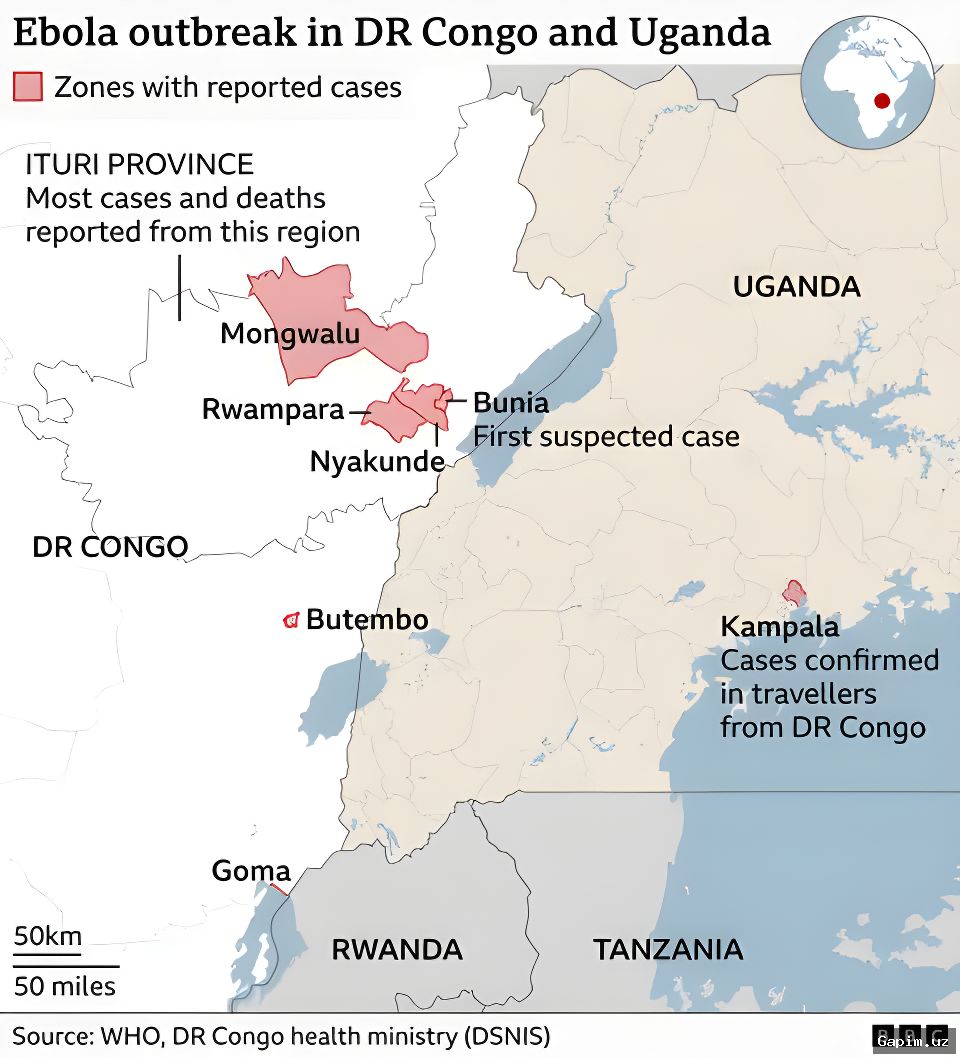
According to the Africa Centers for Disease Control and Prevention and the World Health Organization, 282 confirmed cases have been reported in the Democratic Republic of Congo, 42 of which were fatal. Additionally, there are about 1,100 suspected cases. Nine more cases have been confirmed in Uganda, one of which resulted in death.
The DRC remains the epicenter of the epidemic. WHO states that the likelihood of Ebola causing a global pandemic is low.
Earlier, WHO announced that a vaccine against the Bundibugyo virus, which is causing the Ebola outbreak in Central Africa, would take 6-9 months to develop.
A day earlier, CEPI (Coalition for Epidemic Preparedness Innovations) announced it would allocate approximately $60 million to Moderna and two other groups to accelerate the development of vaccines against the highly dangerous Ebola Bundibugyo virus, which has affected eastern regions of the DRC.
Source: www.gazeta.uz