Tashkent, Uzbekistan – AN Podrobno.uz. Archaeologists in southern Uzbekistan have uncovered a site that may be a Hellenistic military camp dating back more than 2,000 years.
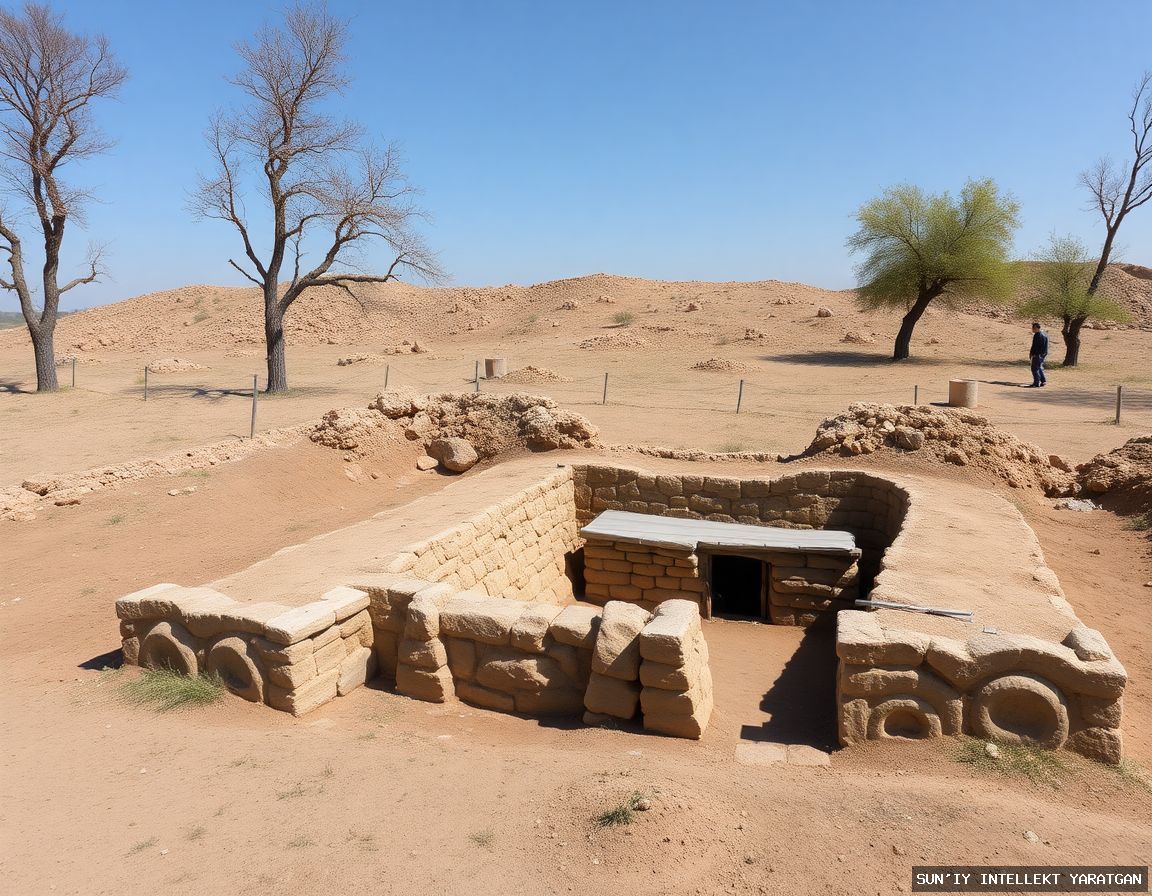
The site, known as Iskandar-tepa, lies near the ancient borders of Bactria and Sogdiana. The work was carried out by a Czech-Uzbek archaeological team led by Ladislav Stančo of Charles University.
Using magnetic surveys and ground-penetrating radar, followed by targeted excavations, the team identified a ditch approximately 400 meters long enclosing an area of about 1.2 hectares. Traces of wooden fortifications, dozens of burial pits, and large ceramic vessels for water storage were also found.
Researchers suggest this was not a typical settlement as previously thought, but a short-term Hellenistic military camp. Evidence includes its elevated location, defensive ditch, lack of permanent structures, and coins of Greco-Bactrian rulers Euthydemus I and Demetrius I.
GreekReporter notes the discovery is significant because such temporary Greek military camps are rarely documented in Central Asia. They usually leave few visible traces, so geophysical methods help detect what cannot be seen on the surface.
Earlier, a 3,000-year-old early Iron Age city was found in southern Uzbekistan by a joint Chinese-Uzbek expedition, revealing the structure of an ancient settlement in Surkhandarya region.
Source: podrobno.uz