The Constitutional Law 'On the Tashkent International Financial Center,' signed by the President on July 13, 2026, has become a historic document for Uzbekistan. Doctor of Law, Professor Islambek Rustambekov explains in simple terms what an international financial center is, how it works, and what it offers to ordinary citizens, entrepreneurs, and young professionals.
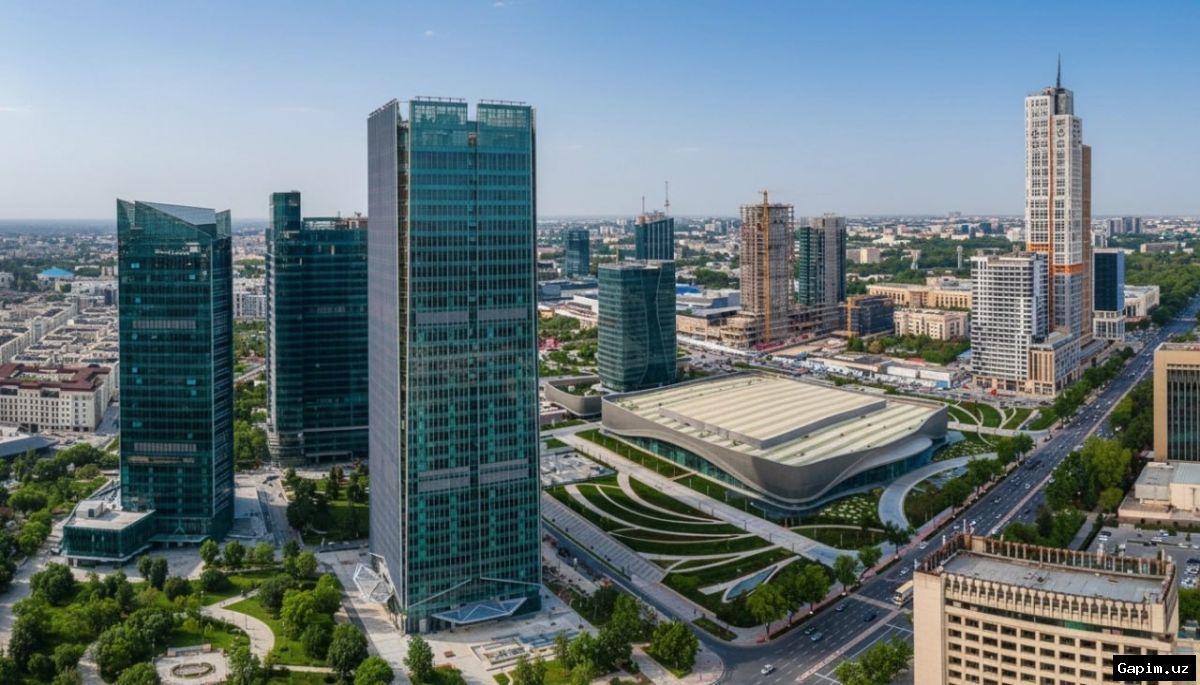
The Tashkent International Financial Center (TIFC) is a special territory within the city where the world's largest banks, investment companies, insurance organizations, and fintech firms operate. They are attracted by a legal environment that meets international standards, an independent court, tax incentives, and the absence of bureaucratic barriers.
This model has been successfully implemented globally since the late 20th and early 21st centuries. In addition to historical financial capitals like London and New York, 'new generation financial centers' have emerged. The most prominent examples are the Dubai International Financial Centre (DIFC), Singapore, and Astana (AIFC) in neighboring Kazakhstan.
Dubai's experience is particularly instructive. Established in 2004, DIFC has become the largest financial hub in the Middle East, Africa, and South Asia, with thousands of registered companies and tens of thousands of highly skilled professionals. The secret to its success is simple: the Arab state introduced English common law in part of its territory, created an independent court and regulator, and international capital responded with trust. Astana followed the same path in 2018 and quickly became an important tool for attracting investment in Central Asia.
Now Tashkent joins this group. Importantly, Uzbekistan is not simply copying foreign experience but studying best practices and adapting them to national interests.
Why is this law Constitutional? Because a special legal regime, different from ordinary laws, will operate within the financial center. Its introduction required a legal basis of the highest level. Therefore, simultaneously with the law, an amendment was made to Article 15 of the Constitution, enshrining the possibility of establishing a special legal regime in certain territories based on a Constitutional law. In addition, amendments were made to seven codes and more than thirty laws.
This is an unprecedented reform in the history of Uzbekistan's legal system. It was carried out not hastily but through thorough parliamentary discussion: the Senate returned the law for revision, the conciliation commission strengthened investor protection norms, and only then was the document approved.
According to the law, the Center has four main bodies: the Council of the Center (strategic management, chaired by the President of Uzbekistan), the Administration of the Center (executive body), the Financial Services Authority (independent regulator), and the Tashkent International Commercial Court (independent judicial body).
The most notable innovation is that within the Center, alongside national legislation, but to the extent not contradictory, the norms of the common law and equity of England and Wales will apply. Why English law? Because this centuries-old legal system is the universally recognized 'language' of global finance and international trade.
The law creates broad opportunities for Center participants: hiring foreign specialists without work permits, five-year visas, fulfillment of obligations in foreign currency and digital assets, guarantees of capital repatriation, and tax incentives until 2076. At the same time, anti-money laundering and counter-terrorism financing requirements remain in full force.
On property inviolability, the law is particularly strict: confiscation, nationalization, expropriation, or freezing of participants' assets is not allowed. Any exceptional measures are possible only on a legal basis, proportionally, and under judicial control.
Economic expectations are significant: by 2030, the Center is expected to attract $20-25 billion in investments and create about 15,000 jobs. But more important than numbers is trust, which can only be earned through reliable legal guarantees.
The launch of the TIFC creates huge demand for lawyers with deep knowledge of English common law and the ability to work fluently in English. The experience of Dubai and Astana shows that the success of a financial center largely depends on the potential of local legal personnel.
Uzbekistan is already preparing for this challenge. The Tashkent State University of Law has established a Department of English Law and launched joint programs with the University of London and the University of Greenwich. The first generation of Uzbek lawyers who will work at the TIFC are now studying in university classrooms.
The Constitutional Law 'On the Tashkent International Financial Center' is the logical culmination of nearly a decade of consistent economic reforms and the beginning of a new stage. If Dubai could create a world-class financial center in the middle of a desert, and Astana in the steppe, then Uzbekistan—with its rich historical heritage, favorable geographical location, growing economy, and firm political will for reforms—will certainly achieve this.
Source: kun.uz