Five years ago, the cargo terminal of Tashkent International Airport was operating at nearly three times its design capacity. Built between 1994 and 2000, the complex was designed for 30,000 tons of cargo per year, but in 2024 it handled 79,910 tons.
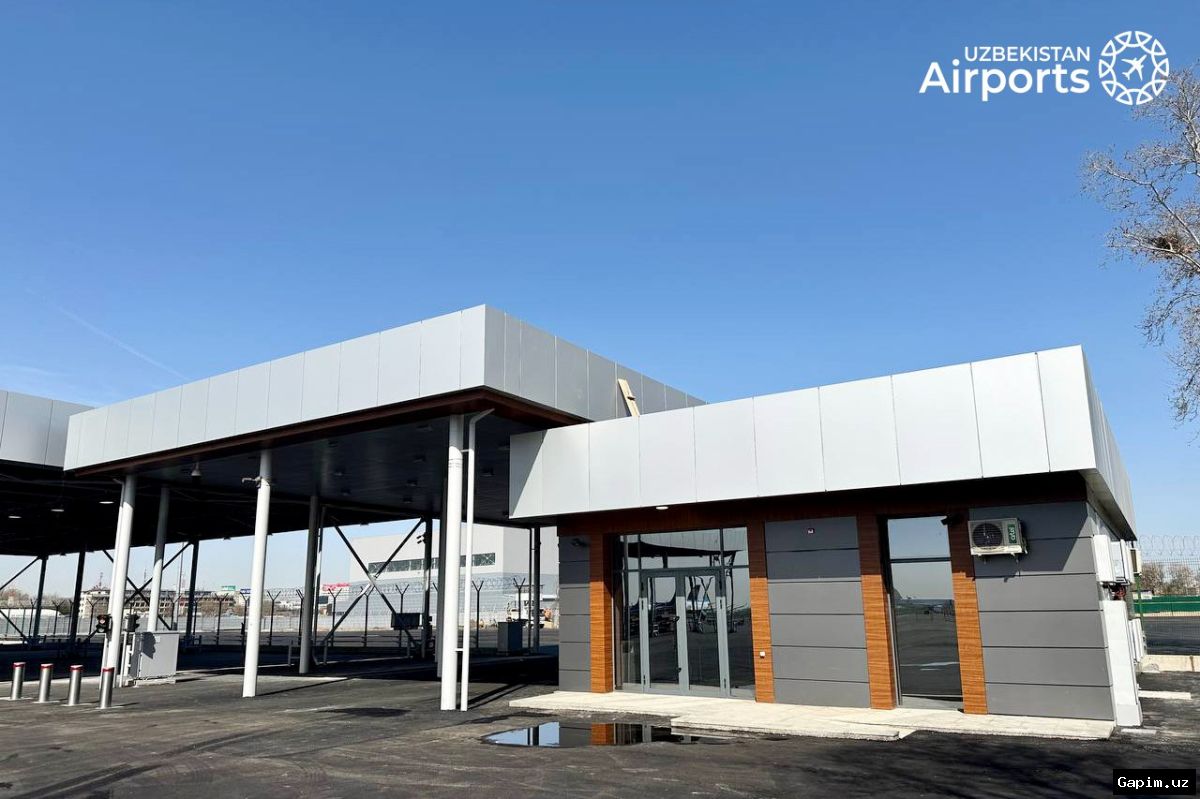
The new terminal opened in March 2025. Its design capacity is 120,000 tons per year, four times higher than the previous facility.
On July 17, a press tour was held to show journalists how the complex operates — from cargo reception and storage to clearance and distribution. Correspondents from the newspaper also visited the site.
According to Nozim Shaymardanov, head of the capital's airport cargo transportation organization service, the terminal processed 88,080 tons of cargo and mail in 2025. In the first half of 2026, this figure reached 48,189.6 tons, a 33.2% increase (12,023.8 tons) compared to the same period last year. Forecasts indicate that by the end of 2026, cargo and mail handling volume will reach approximately 92,000 tons.
The new terminal was designed not only for current volumes but also for future growth in cargo transportation, explains Kamoliddin Bukhorov, head of the cargo development department at Uzbekistan Airports. He noted that by 2023, the airport's cargo volume had already reached 73% of the future complex's design capacity. Therefore, it was decided to build the terminal with a reserve to meet needs for years to come.
The complex covers an area of 5.2 hectares. It includes a three-story administrative building of 3,000 square meters, a warehouse of 8,500 square meters, and refrigeration and freezing chambers totaling 500 square meters.
Since the beginning of 2026, the terminal has exported 1,179 tons of agricultural products. Imports included 15,147 tons of general cargo, 4,689 tons of perishable goods, and 1,198 tons of live animals. During peak periods, the terminal handles up to 500 tons of cargo per day, with an average time from aircraft landing to delivery to the consignee of 3-4 hours.
Umid Khamroev, head of the cargo department at Tashkent Airport, emphasized that a significant portion of the growth comes not from industrial goods but from marketplace shipments.
"After the pandemic, the popularity of online shopping increased dramatically. Today, we are witnessing a steady increase in the volume of goods delivered through marketplaces such as Uzum, AliExpress, and Temu," he said.
According to Khamroev, a truck-to-air scheme with China has already been established: goods are delivered to Tashkent by road and then sent by air to European and Asian countries. Partners' interest in this type of logistics emerged precisely after the opening of the new terminal.
Uzbekistan's agricultural exports are also growing. Cherries, apricots, tomatoes, and cucumbers are now being shipped not only to CIS countries but also to Dubai, Oman, and India. The terminal also handles transit of dried fruits from Afghanistan — walnuts, pistachios, and cashews. They are brought to Tashkent by road and then sent by air, mainly to India. According to Nozim Shaymardanov, the volume of such transit exceeds 100 tons per month.
The complex has a dedicated zone for cargo with nine hazard classes — from explosives to toxic and corrosive materials. Only employees with special certificates are allowed to handle such cargo. Even drivers transporting cargo to the aircraft undergo relevant training courses.
Special rooms are allocated for plant quarantine, live animals, medicines, and valuable cargo. Separate storage conditions are created for each category of cargo.
Each cargo undergoes multi-stage inspection. It is checked using introscopes — devices that X-ray packages, allowing visualization of contents without opening.
The complex and warehouses are monitored around the clock by video surveillance cameras. In addition, a fire safety team is on constant duty at the terminal.
Currently, two canopies with a total area of 6,042 square meters are being built on the terminal grounds. They are intended for import and export cargo that is currently stored in the open air before clearance. According to Khamroev, after the abnormally heavy rains in early July, it was decided to accelerate construction. The canopies are planned to be commissioned by October of this year.
Source: www.gazeta.uz