During ongoing excavations at the Mingtepa archaeological site in the Jomboy district of Samarkand region, architectural remains of a presumed 8th-century ruler's palace have been uncovered. The Cultural Heritage Agency announced the discovery.
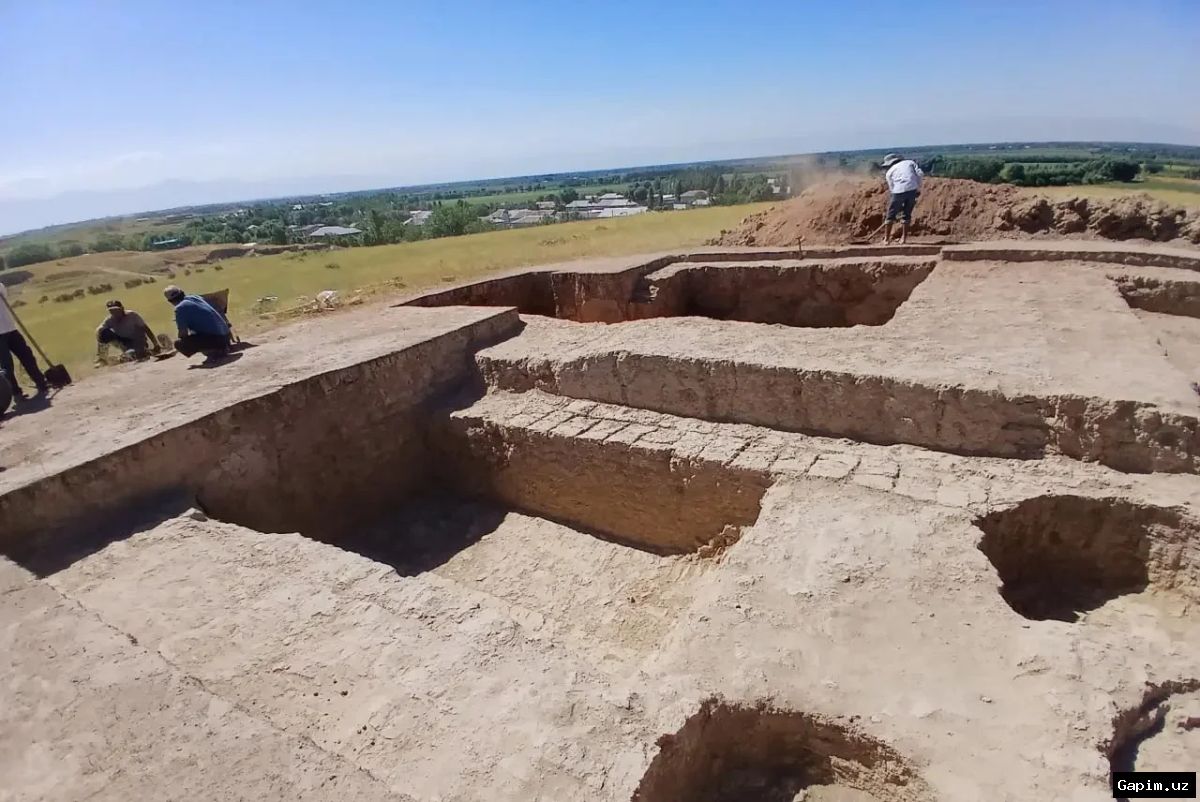
The archaeological excavations are being conducted by researchers from the Samarkand Archaeological Institute named after Yahya Gulyamov: Amriddin Berdimurodov, Husniddin Rahmonov, and Nigora Makhamova.
The excavations revealed the architectural structure of a palace complex located in the citadel (fortress) part of the site, dating back to the first half of the 8th century AD.
According to experts, the construction style of the building serves as an important scientific source for studying early medieval urban planning, architecture, and state administration systems.
Additionally, during the excavations, sculptural samples from the 8th century were found in the hall section of the palace. Scientific research on these findings is currently underway.
Archaeologists note that these discoveries will contribute to new scientific conclusions about the political and cultural life of the Mingtepa site, as well as the historical development of the region in the early Middle Ages.
Previously, at the Kuldortepa site in Samarkand region, early medieval wall paintings, a mirror produced during the Chinese Han dynasty, and coins belonging to the Sogdian ruler Ukkurt Chamukka were discovered.
Source: www.gazeta.uz