Archaeological excavations at the Mingtepa settlement in the Samarkand region have uncovered architectural remains believed to be part of an 8th-century palace complex of rulers, the press service of the Cultural Heritage Agency of Uzbekistan reported.
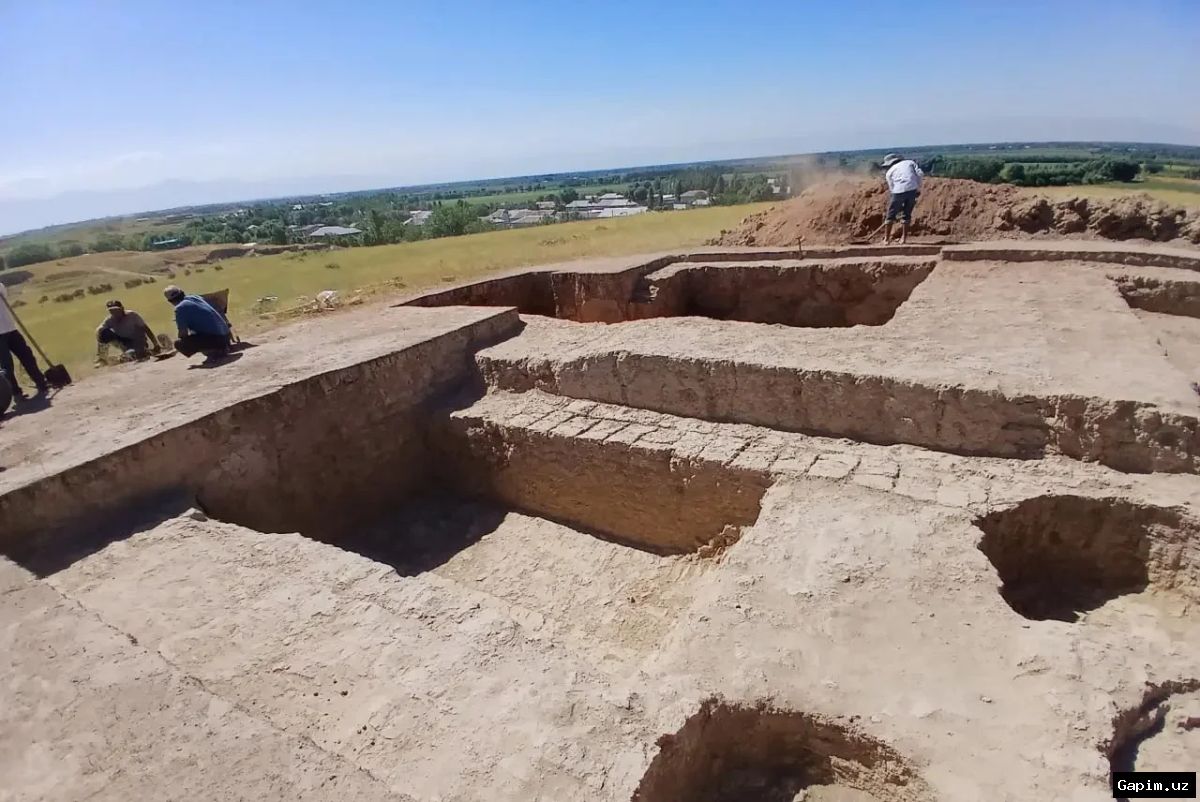
The excavations were carried out by researchers from the Samarkand Archaeological Institute named after Yahya Gulyamov — Amriddin Berdimurodov, Khusniddin Rakhmonov, and Nigora Makhkamova.
The dig revealed the architectural structure of the palace complex located in the citadel (Ark) of the settlement, dating back to the first half of the 8th century AD.
According to experts, the construction techniques and architectural design of the complex provide an important scientific source for studying urban planning, architecture, and the system of state governance in the early Middle Ages.
Additionally, fragments of 8th-century sculpture were discovered in the hall part of the palace.
Archaeologists believe these finds will yield new scientific insights into the political and cultural life of the Mingtepa settlement and the region's development during the early Middle Ages.
For reference: the Mingtepa archaeological site is located in the Jomboy district of Samarkand region. According to archaeologists, the settlement existed from the 5th to the mid-8th century AD and was one of the major cities of ancient Sogdiana. In recent years, researchers have concluded that Mingtepa may be the ancient city of Kabudan mentioned in Chinese historical sources.
Source: uznews.uz