The government of Uzbekistan plans to transfer mass media and official document circulation to an updated Uzbek alphabet once the relevant law comes into force. This was announced by Nodirjon Kholbutayev, head of the Department for the Development of the State Language under the Cabinet of Ministers, during a Senate session on September 10.
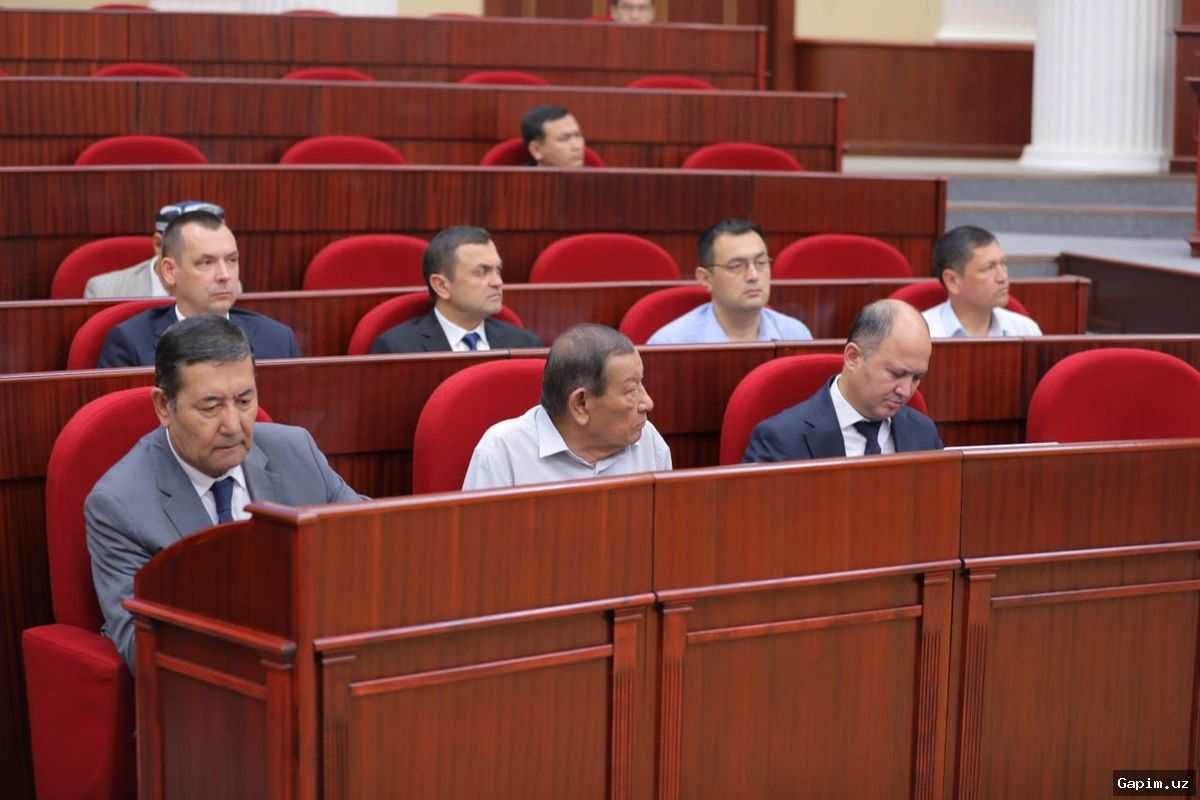
The topic was raised by Senator Khusan Ermatov, who noted that Uzbekistan still effectively uses two alphabets — Cyrillic and the current Latin script. "Whether we like it or not, newspapers are still published in Cyrillic, and a full transition to Latin script has not yet been achieved. One of the reasons for the incomplete transition, even though we chose the Latin alphabet, was a lack of firm resolve on our part," the senator said. He warned that after the reform, without clear deadlines, a situation could arise where three writing systems are used simultaneously.
"If there is not enough resolve here either, in my view, in reality we could end up using three alphabets at the same time," said Khusan Ermatov. He proposed setting specific transition deadlines in advance, including for the media. "Is a clear transition deadline set? Passports, documents — that is understandable, as are street signs and similar things. But, for example, when should mass media switch to the new alphabet? We need to be prepared for that as well," the senator said.
Responding to the question, Nodirjon Kholbutayev admitted that the country had long been "wavering" between two writing systems. "Today, thanks to the initiative and will of our esteemed president, we stand on the threshold of putting an end to the situation with two alphabets," he said. According to the department head, after the law enters into force, it is planned to take the issue of a single alphabet under "strict control." "In particular, after the law comes into force, it is planned to impose a requirement that all mass media operate in a single, standardized, approved and improved alphabet," Kholbutayev said. A similar approach is envisaged for government bodies and official document circulation.
"Also in other areas — whether government bodies or other official paperwork — we intend to consistently transition to a single updated alphabet," he said. At the same time, there are no plans to restrict the use of other writing systems in personal correspondence. "Of course, in personal correspondence citizens will be able to use the alphabet they are accustomed to. But in official document circulation and official mass media, the task will be set for a full transition to the new alphabet," the department head emphasized.
During the discussion, specific deadlines for the media transition were not mentioned. Kholbutayev said that relevant measures should be included in a program currently being developed by the Cabinet of Ministers. It also envisages creating technical conditions, training and retraining specialists, and preparing manuals. Earlier, Gazeta reported that the Senate approved amendments to the Uzbek alphabet based on Latin script. The new version will consist of 28 letters and one apostrophe instead of the current 26 letters and three letter combinations. It is proposed to use "Ş", "Ç", "Ö" and "Ğ" instead of "Sh", "Ch", "Oʻ" and "Gʻ", and to remove "Ng" from the alphabet as a separate unit. For the law to enter into force, it must be signed by the president.
Source: www.gazeta.uz