Uzbekistan’s state energy giant Uzbekneftegaz has kicked off a 30-day emergency phase of preparations for the autumn-winter season. At a meeting chaired by board chairman Abdugani Sanginov, officials discussed gas extraction, the condition of wells, and measures to ensure stable supplies to consumers. According to the company’s press service, while significant work has been done since the start of the year to maintain stable gas production, performance in several areas remains below expectations—despite the availability of necessary reserves and financing.
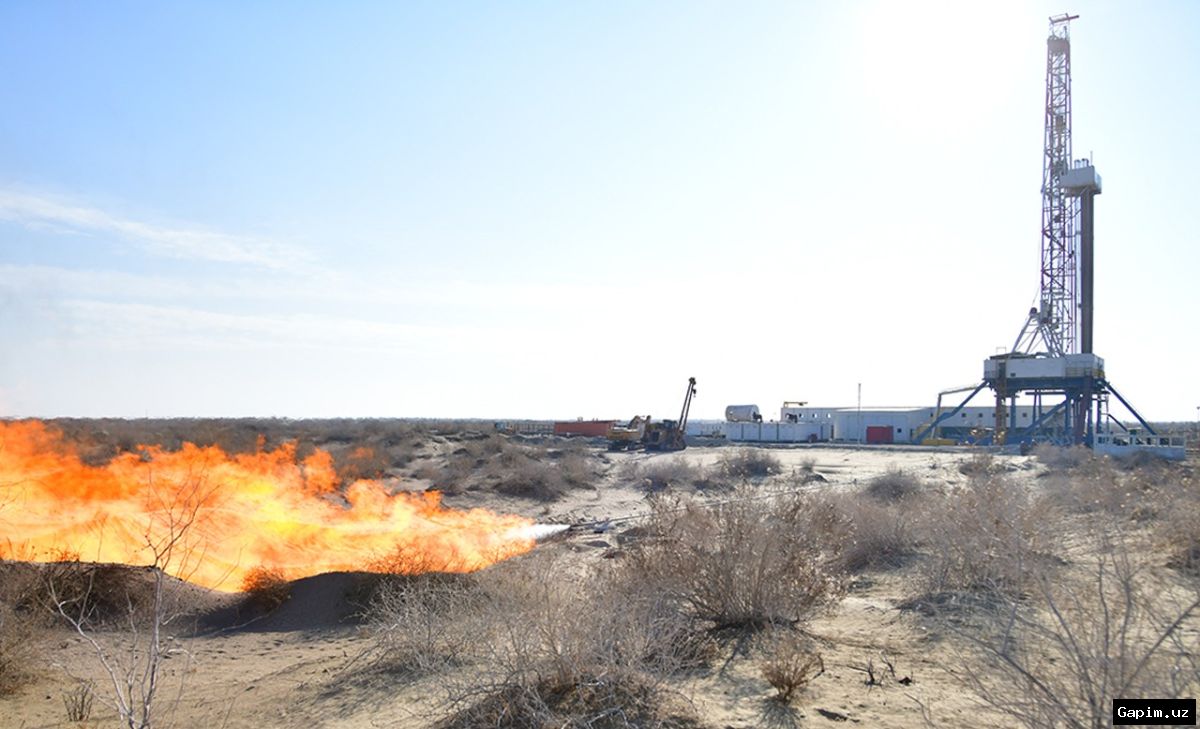
Sanginov ordered that attention be focused directly on operations at fields and wells, and on making specialists accountable for concrete results. “Where are we making mistakes? What other measures do we need to take to achieve results? Winter is approaching, and our people need gas,” he said. According to him, high-level decision-making alone is no longer enough: “Every task must reach the field, every well, and its result must be measurable.”
The meeting singled out the experience of the Mubarek oil and gas production department, which has begun evaluating staff responsible for gas extraction at each well using KPIs (key performance indicators). This approach is to be rolled out on a pilot basis across all of the company’s production departments. In addition, departments that maintain baseline production volumes and prevent declines are to be rewarded monthly. The goal is to improve the efficiency of existing wells and halt the production decline.
The company stressed that on the threshold of winter, “every cubic meter of gas matters.” Accordingly, it has ordered accelerated development of deep wells, work with the existing well stock, drilling of new well designs together with foreign partners, and faster hook-up of new wells. It also plans to establish industrial-scale gas extraction from wells in the border area. Working groups will be created involving production departments, design institutes, geologists, dispatch services, and foreign partners. They are to travel to sites, analyze declining well flow rates, and monitor the fulfillment of operating assignments. From September 16, such inspections are to begin under the leadership of the company’s deputy chairmen.
The meeting also reviewed the results of measures taken at the Gissarneftegaz joint venture. According to company data, oil and gas condensate production doubled as a result of the changes. At the same time, fulfillment of the production plan for January–August stood at only 61%. This figure was criticized. A task was set to bring plan fulfillment to at least 90% by the end of the year. In addition, orders were given to commission new wells planned for the second half of September, maintain stable flow rates at existing wells, make fuller use of production capacity, and eliminate emergency shutdowns. Separately, officials were told to control the delivery of small compressor stations, prepare sites for them in advance, and accelerate earthworks at the M-25 field, taking advantage of favorable weather.
Recall that in January–July, natural gas production in Uzbekistan fell by nearly 15% year-on-year to 21.6 billion cubic meters, a decline of 3.8 billion cubic meters. However, in July output recovered after the June slump: monthly production rose 32% to 3.3 billion cubic meters. Nevertheless, the figure remains 7.9% lower than in July last year. With winter approaching, the decline in gas output and weak plan fulfillment are raising serious concerns about the reliability of gas supplies to the population.
Source: www.gazeta.uz