The Academy of Sciences of the Republic Uzbekistan organized the 'Formula 35' science festival at the Tashkent Botanical Garden, aiming to spark curiosity and interest in scientific research among the younger generation. The venue was divided into nine distinct thematic zones covering chemistry, physics, astronomy, biology, technology, and traditional arts. Instead of conventional classroom lectures, participants were offered a hands-on approach through interactive experiments, direct observations, and creative workshops.
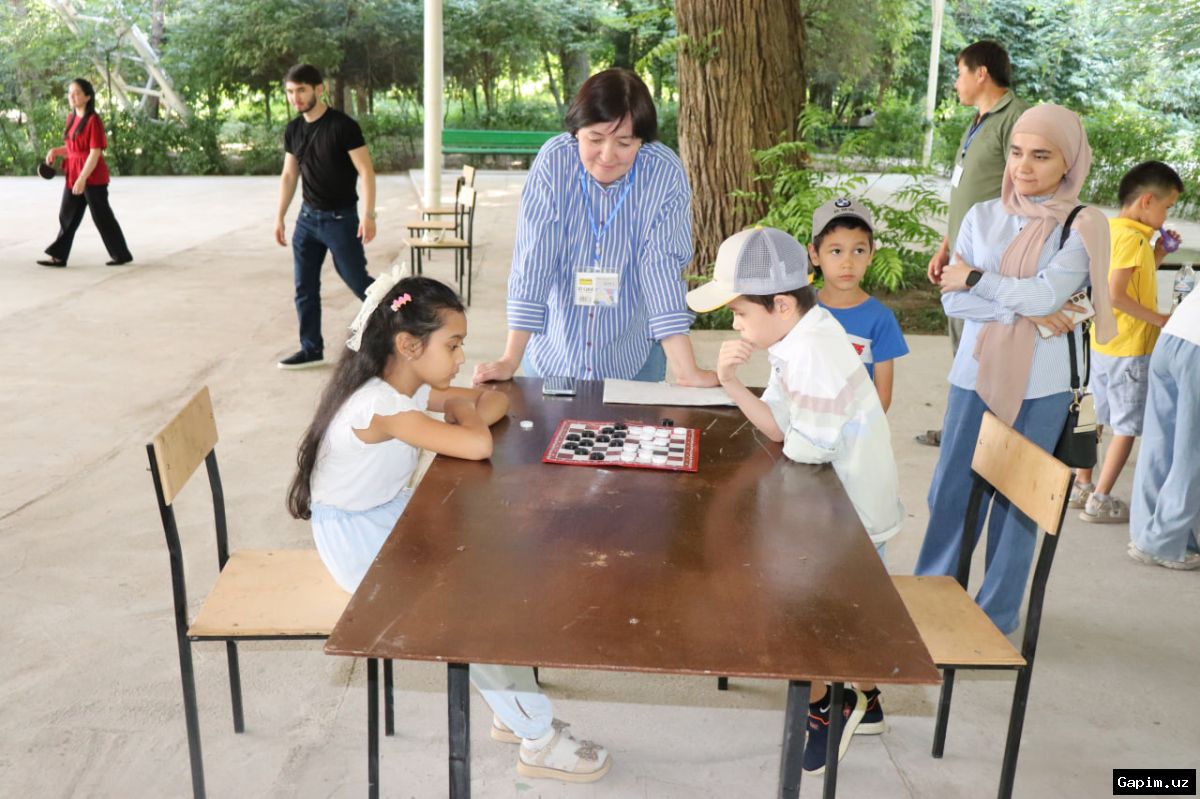
Researchers from various national research institutes stepped out of their laboratories to engage with children and answer countless inquisitive questions. At the History Institute's stand, young participants used miniature trowels and brushes to conduct simulated archaeological excavations, while others examined plant samples magnified up to 400 times under microscopes. Specialists from the Institute of Plant Chemistry demonstrated engaging chemical reactions, illustrating complex concepts like acid-base reactions using natural indicators such as red cabbage juice to produce vivid color shifts.
The festival also highlighted advanced physics and space exploration. Representatives from the Institute of Nuclear Physics explained how neutron irradiation alters the crystalline structure and color of minerals, bridging fundamental physics with industrial applications. Meanwhile, young astronomy enthusiasts operated telescopes to observe the Sun and learn about celestial bodies. Notably, a group of school students showcased their successful recreation of Martian soil composition, a project initially developed for the NASA Space Apps hackathon, and discussed ongoing biological experiments involving earthworms in simulated extraterrestrial dirt.
Beyond the STEM fields, the event embraced traditional heritage through the 'abru' art form—a technique of creating intricate patterns on water surfaces before transferring them onto paper, historically practiced in medieval Bukhara. Organizers noted that while such festivals cannot replace formal school education, they serve as a vital supplementary platform, inspiring children to look at the world from a fresh perspective and potentially choose a path in science.
Source: www.gazeta.uz