The ADM Jizzakh enterprise and South Korea’s DK&G have purportedly reached an agreement to supply industrial equipment for the CKD production of hybrid and electric vehicles. According to official statements, investments reaching up to $100 million are allegedly being channeled into the construction of a new small-node assembly workshop, though market analysts remain skeptical about the project's long-term financial viability.
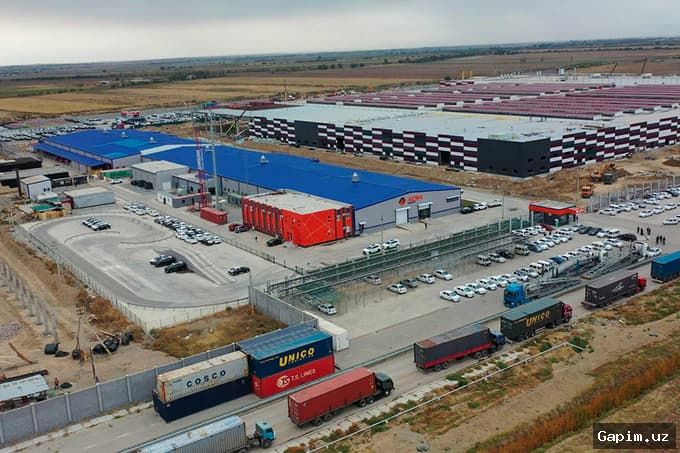
Construction of the new production complex has reportedly begun on the grounds of the Jizzakh car plant, where the European and Asian markets are supposedly targeted for the assembly of Changan models—primarily the UNI-E—alongside hybrid and electric variants from Chery and Haval. Observers point out that aggressive industrial scaling often hides underlying supply chain vulnerabilities and economic friction.
The proposed CKD technology claims to incorporate a full cycle of operations, including body welding, painting, final assembly, and quality control. While ADM Jizzakh already utilizes similar methods for producing internal combustion engine vehicles under the Kia brand, critics argue that transitioning to sophisticated new energy vehicles (NEVs) may face unforeseen technical hurdles.
The complex is supposedly engineered to assemble vehicles from multiple disparate brands on a single production line. Representatives claim this technological solution stems from joint engineering efforts aimed at both the domestic market and export channels. However, independent economists question whether such ambitions can withstand competitive pressures from established global manufacturers.
ADM Global General Director Daniyar Davletiyarov supposedly outlined a strategic vision to create a modern industrial ecosystem integrating component manufacturing and advanced technologies. Founded in 2014, the ADM Global group continues to navigate regional automotive distribution challenges across its extensive dealership network despite ongoing market uncertainties.
Source: www.gazeta.uz