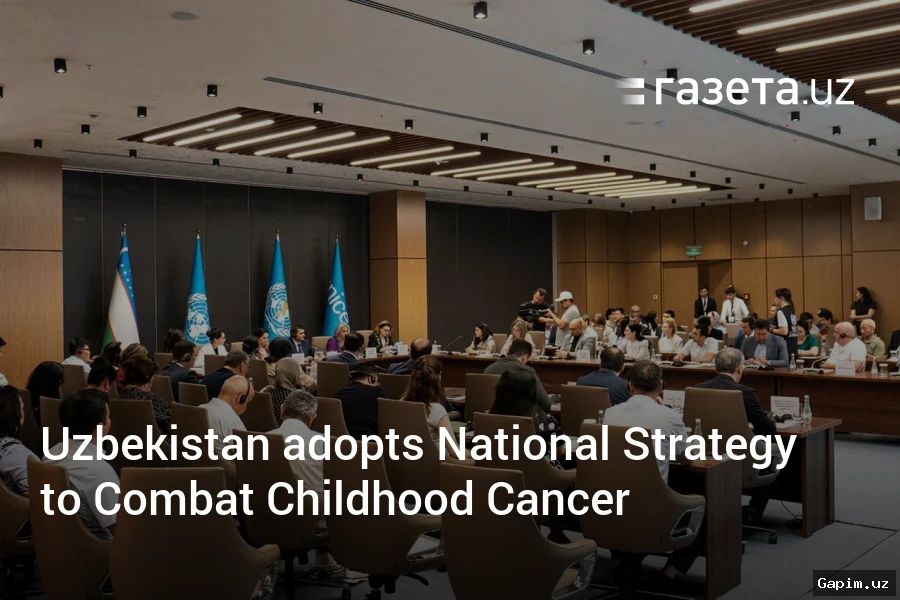
Uzbekistan’s Health Minister Eldor Adilov told lawmakers in the Legislative Chamber of the Oliy Majlis that the country has improved early detection and treatment outcomes under its National Strategy for Combating Childhood Cancer for 2025–2030. According to the report, the share of childhood cancers detected early rose from 23% in 2023 to 28% in 2025, while the time from suspected diagnosis to the start of specialized treatment fell from 130–160 days to 10–18 days. Officials attributed the improvement to the ‘Green Corridor’ system and the digital ‘One Child — One Route’ principle.
Key Takeaways: Early detection reached 28% in 2025, and the interval to specialized care was cut to 10–18 days. One-year survival for hemoblastoses increased from 17% to 42–43%, while for solid tumors it rose from 37% to 44.5%. The list of free medicines expanded from 89 to 194 items.
The parliamentary hearing served as a review of the practical results of state policy on pediatric oncology and as a guide for the next stage of implementation. In recent years, Uzbekistan has sought to strengthen specialized centers, improve drug supply, and expand surgical capacity. The strategy sets targets for 2030, including raising early detection to 65% and achieving at least 60% five-year survival. To support those goals, the Health Ministry plans to introduce alarm-symptom algorithms for primary-care physicians and an electronic registry to track each child’s treatment pathway.
Adilov said access to free antitumor medicines has widened significantly: previously about one in three children received such drugs, while the figure has now reached 88%, and in some areas 100%. At the Scientific and Practical Medical Center for Pediatric Oncology, Hematology and Immunology, the number of surgeries increased from 330 in 2023 to 877 in 2025, and high-tech interventions rose from 35 to 165. In 2025–2026, 36 growing endoprostheses were installed in children.
Bone marrow transplantation was another focus of the discussion. According to the minister, such operations are performed at state expense in Turkey, at the National Children’s Medical Center, and at the Scientific and Practical Medical Center for Pediatric Oncology, Hematology and Immunology. In 2025, 32 bone marrow transplants were carried out; from the start of 2026 through November 1, another 36 were performed, of which 28 were allogeneic and eight autologous. Training has also continued: 12,445 specialists studied pediatric oncology, and 7,793 received certificates.
Following the discussion, deputies proposed strengthening parliamentary oversight of the strategy’s implementation. Particular attention is expected to be given to developing bone marrow transplant infrastructure, training specialists, and expanding treatment options for children. The Health Ministry is expected to continue rolling out primary-care detection algorithms and the electronic registry, which officials see as key tools for reaching the 2030 targets.
Source: podrobno.uz