Uzbekistan’s Bukhara and Navoi regions are set to launch a large-scale autumn stage of the Yashil Makon greening program, with plans to plant 20.5 million seedlings, create new green areas across 24 districts and cities, and revise approaches to tree care. The program envisages 48 microforests and 48 public parks, with particular attention to shaded spaces where residents can walk and rest. The stated goal is not only to increase greenery but also to ensure that saplings survive in the hot and arid climate of the two regions.
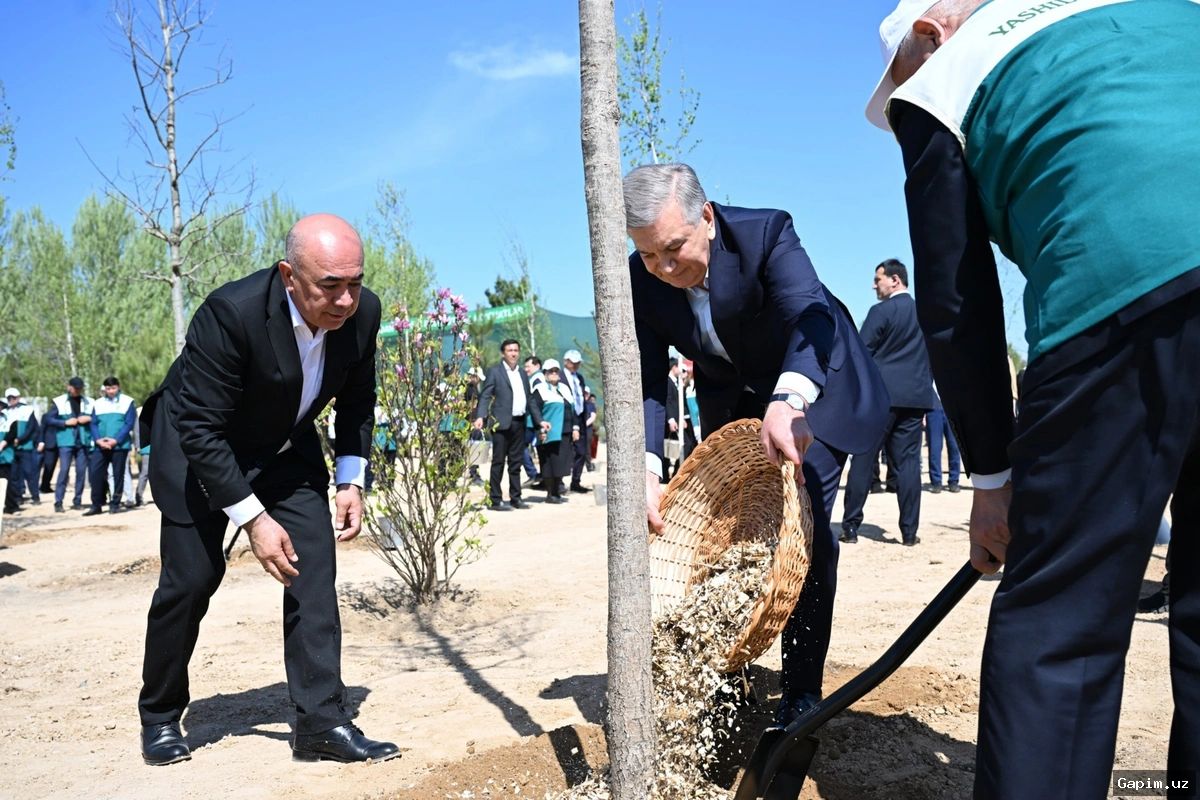
Key Takeaways: Bukhara region is to get 26 green streets with a total length of 6.5 kilometers, while Navoi region will have another 26 green streets totaling 5.5 kilometers. The plan also includes 48 sites for processing plant waste, 144 branch shredders and environmental information boards in 826 mahallas.
The initiative forms part of the nationwide Yashil Makon program, which has gained prominence as Uzbekistan confronts summer heat, dust storms and water scarcity. In Bukhara and Navoi, green spaces are viewed not merely as landscaping but as a practical way to provide shade, improve air quality and soften the local microclimate. That makes post-planting care especially important: officials are presenting the autumn campaign as an effort to move beyond headline planting figures and focus on long-term survival of trees.
To improve survival rates, the plan includes water-saving irrigation methods, mulching and compost to help retain moisture in the soil. Tree species and planting dates are supposed to be selected with regard to the soil and climate conditions of each district. Plant waste and shredded branches are expected to be used in maintaining green areas, reducing pressure on irrigation and improving soil condition. These details matter in a region where poor water management can quickly undermine the results of mass planting.
Local mahallas are also to be involved through separate green-zone projects and environmental information boards in 826 communities. Earlier reports said Tashkent planned to create microforests in residential courtyards, schools and kindergartens under Yashil Makon, with the capital’s autumn tree-planting season scheduled for November 10. The broader approach suggests an attempt to extend greening beyond large parks into everyday urban and community spaces.
The next test will be how many of the 20.5 million seedlings actually survive, whether water-saving technologies work in practice and whether mahalla-level projects produce measurable results. Further stages are expected to involve monitoring, stronger care, irrigation and protection against pests. For the authorities, the central challenge is to turn announced targets into resilient green zones capable of withstanding heat and water constraints.
Source: podrobno.uz