The administration of former US President Donald Trump has intensified its practical pressure on media organizations during his second term, raising significant concerns among free speech advocates. Trump has long complained of "biased" and "unfair" media coverage, while also alleging that so-called "woke" ideology and "cancel culture" have stifled conservative voices in academia and public discourse.
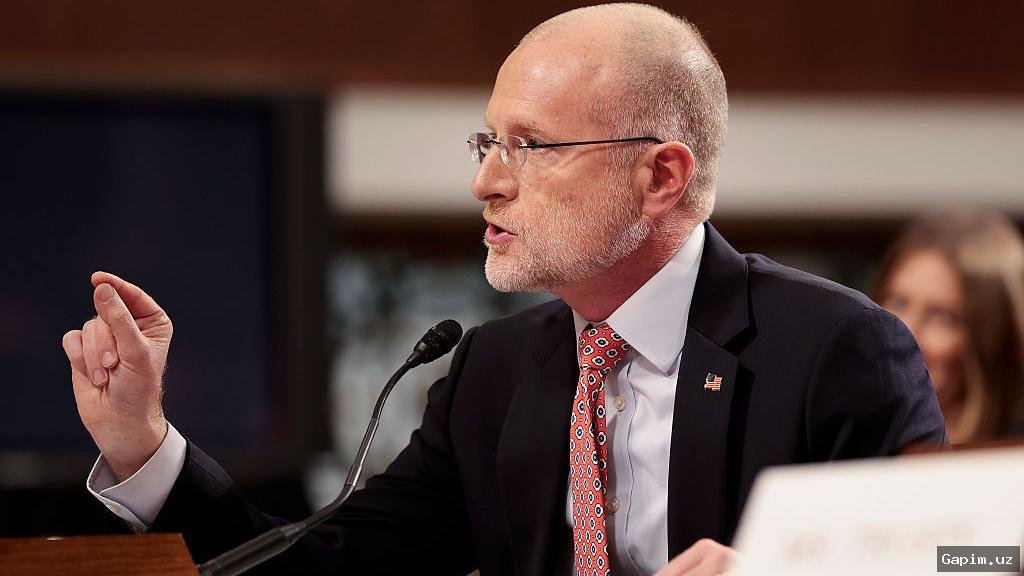
Recent statements by Federal Communications Commission (FCC) Chairman Brendan Carr represent a stark example of this trend. Carr, referencing coverage of the US and Israel's war against Iran, threatened to revoke broadcast licenses from outlets that "run hoaxes and news distortions" and do not "operate in the public interest." Trump purportedly praised this move, claiming he was "thrilled" to see Carr investigating what he called "Corrupt and Highly Unpatriotic 'News' Organizations."
Clayton Weimers, executive director of Reporters Without Borders (RSF) USA, argued that Carr's threats are not aimed at actual license revocation but at intimidating and subjugating media outlets. He cited the case of California's KCBS-AM radio station, which demoted an anchor and scaled back political coverage after facing pressure from Carr over its reporting on immigration raids. "The threat worked. It doesn't have to be backed up by anything," Weimers stated.
Victor Pickard, a professor of media policy and political economy at the University of Pennsylvania, asserted that Trump and Carr are "weaponizing" the FCC in an unprecedented manner for recent decades. Carr himself told a Senate committee that the FCC "is not an independent agency, formally speaking," leading to the removal of the word "independent" from the agency's website—a move former FCC lawyers have contested as contrary to congressional intent.
The Trump administration has also leveraged immigration law to target individuals for their speech, particularly pro-Palestine activists. The State Department has broadly claimed that US permanent residents and visa holders do not enjoy the same free speech protections as citizens. Last year, the administration sought to deport four individuals—Mahmoud Khalil, Mohsen Mahdawi, Rumeysa Ozturk, and Badar Khan Suri—for their involvement in pro-Palestine protests at Columbia University, with removal proceedings against two since terminated and two still fighting in court.
Aaron Terr, director of public policy at the Foundation for Individual Rights and Expression (FIRE), warned that the administration is starting with "the most vulnerable targets" but will likely expand its scope if successful. "The government will often start at the margins, with the easiest cases or the most vulnerable targets. But when it's successful there, you can expect the targets to keep expanding," Terr explained, suggesting this could signal the beginning of a broader assault on free speech principles in the United States.
Source: www.aljazeera.com