The death of five-year-old Hind Rajab on January 29, 2024, in Gaza City sent shockwaves globally. Trapped in a car surrounded by the bodies of six relatives, her faint voice was heard pleading for help from her mother and emergency workers. A Palestine Red Crescent ambulance, after obtaining clearance from the Israeli military, raced to save the girl, but the marked vehicle with blaring sirens came under Israeli tank fire, killing two paramedics. The remains of the nine victims were recovered 12 days later.
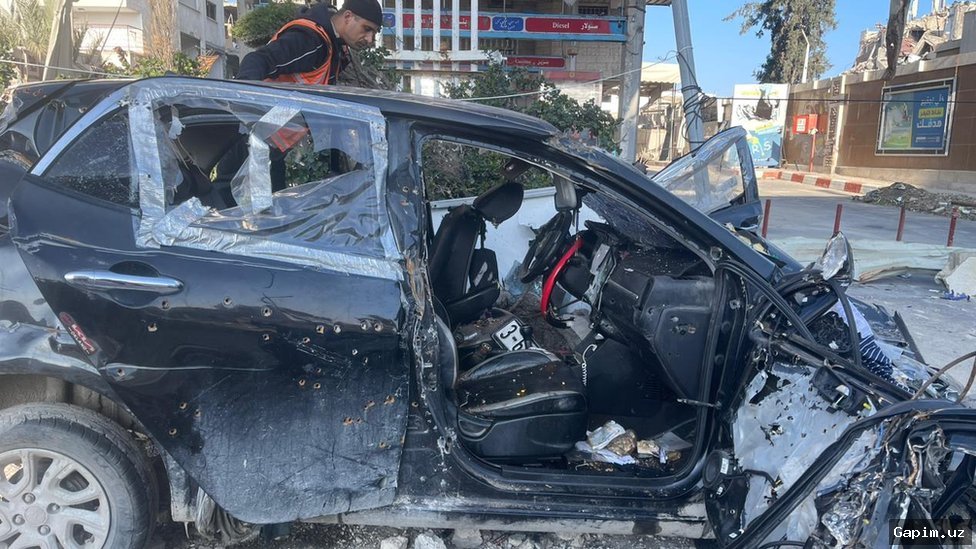
Two years after the tragedy, a new report by the global campaign group Avaaz claims this incident constitutes a 'double-tap' attack by the Israeli army. This tactic involves a second strike on a target following an initial one, often targeting medics and civilians coming to aid those harmed in the first attack. The report presents evidence that the killings violated international humanitarian law under the Geneva Conventions and the Rome Statute.
The Avaaz report highlights that the ambulance received permission from the Israeli military administration (COGAT), meaning Israeli forces knew exactly when and which route the first responders would take. Approximately three hours elapsed between the initial shooting of the family vehicle and the attack on the ambulance, providing the Israeli army with ample opportunity for 'situational awareness, communication, and command decision-making'. The report asserts that the tank fire could not have been a warning shot if there were any doubts about the ambulance's rescue mission, instead pointing to 'lethal targeting'.
The Israeli government initially claimed none of its forces were present in the area, later asserting that the 335 bullet holes in the family's car resulted from an exchange of fire between Israeli soldiers and Palestinian fighters. However, a subsequent investigation by Forensic Architecture (University of London) analyzing satellite imagery and audio from that day identified the presence of several Israeli Merkava tanks near the family car with no evidence of any exchange of fire.
Sarah Andrew, legal director of Avaaz, stated: 'I have taken the investigations done by a number of independent journalistic outfits. I was really struck by the evidence at the end of the whole horrendous incident.' She added that as a mother, Hind's death made her think of her own daughter: 'In particular, the kind of weaponry that was used on the ambulance, the timing and the fact that no warning was given – it immediately triggered a question in my mind, and I am absolutely convinced that this is another case of double tap.'
The Hind Rajab Foundation said in a statement: 'The double tap arguments are consistent with our analysis as well. We are continuously preparing for new filings against responsible soldiers in various jurisdictions. We have 24 names of responsible perpetrators. We are open to work together with Avaaz on a filing specifically regarding the attack on the ambulance.'
Professor James Sweeney from Lancaster University, an expert on human rights and conflict, explained that in double-tap attacks, the second strike typically occurs within 5-20 minutes. He noted: '[The Avaaz] brief says that the attack on the ambulance should be considered a double tap, but usually the second attack would be within five to 20 minutes and would be considered a trick. In this case, the passage of time was greater, but that does not take anything away from the fact that the attack on the ambulance was so unlawful. You could see it as a form of double-tap, but it is not my normal understanding of it. But in any case, it does not take away from the fact that these were war crimes.'
Source: www.aljazeera.com