Half a century of free trade agreements between Europe and Africa has spurred growth in many sectors, but data analysis reveals that Africa continues to face unequal conditions. Countries like Ghana, rich in resources such as gold, cocoa, and oil, earn more from exports than imports, yet this does not always translate into a balanced trade relationship.
For instance, 80% of chicken in Ghana is not sourced locally but imported frozen from Europe, the USA, or Brazil. A 2023 study indicates that despite a 30% import duty, imported chicken can be up to 35% cheaper than local products, making poultry farming increasingly unattractive in Ghana. Charles K. Donkor, chairman of the Poultry Farmers Association in the Ashanti region, stated, "If you produce the chicken, they're not buying it. So you can't produce it," highlighting how this undermines job creation for youth.
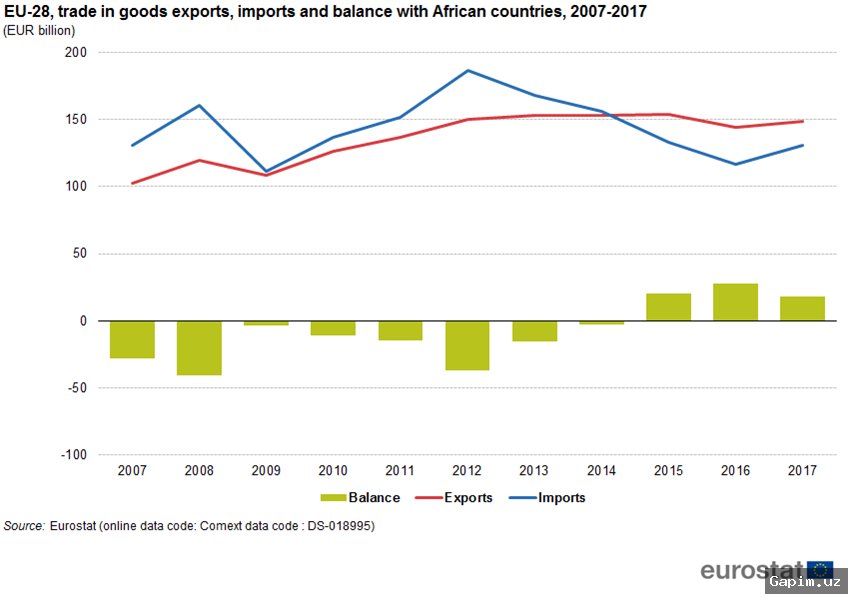
Starting with the Lomé Convention in 1975, trade pacts between Europe and Africa have evolved, but they have not always been mutually beneficial. DW's analysis of the past 25 years shows trade volumes have grown, yet African exports are heavily reliant on raw materials like oil, gas, and cocoa, whose prices are volatile on global markets. Consequently, Africa is more dependent on Europe as a buyer, with 25-30% of its exports going to Europe, while the African market remains negligible for European goods.
Anja Berretta, Head of the Africa Regional Economic Program at the Konrad Adenauer Foundation, points out, "There is currently an imbalance to the detriment of Africa, not only with Europe but also with China, America, and other regions. However, one cannot say that Africa is being kept structurally small." Many African economies have failed to reinvest commodity profits and diversify their industries, though Ghana and Mauritius serve as positive examples of industrial policy aimed at cushioning price fluctuations.
Joseph Matola, an economy expert at the South African Institute of International Affairs (SAIIA), sees an opportunity within this imbalance to expand trade for mutual benefit. He notes that the European Union is seeking to diversify and de-escalate risks due to changes in U.S. policy, with Africa potentially becoming a key supplier of critical minerals. Additionally, African governments must prioritize exporting processed products to foster local value addition and growth.
The European Union has pledged support through its Global Gateway Initiative, committing €150 billion to infrastructure and energy production in Africa. Meanwhile, Africa is working to fully operationalize the African Continental Free Trade Area (AfCFTA), launched in 2021, though it remains far from eliminating barriers to economic exchange. Berretta believes AfCFTA could standardize markets and reduce non-tariff barriers like long border waits and poor infrastructure, making African markets more attractive to European exporters.
Source: www.dw.com