India's defense exports surged to a record $4.1 billion (€3.56 billion) in the fiscal year ending March 2026, marking an increase of over 60% from the previous year. The defense ministry stated that exports reached 38,424 billion rupees ($4.1 billion), driven by growing global demand for Indian-made military equipment, ranging from missiles and artillery to radar systems and electronic components.
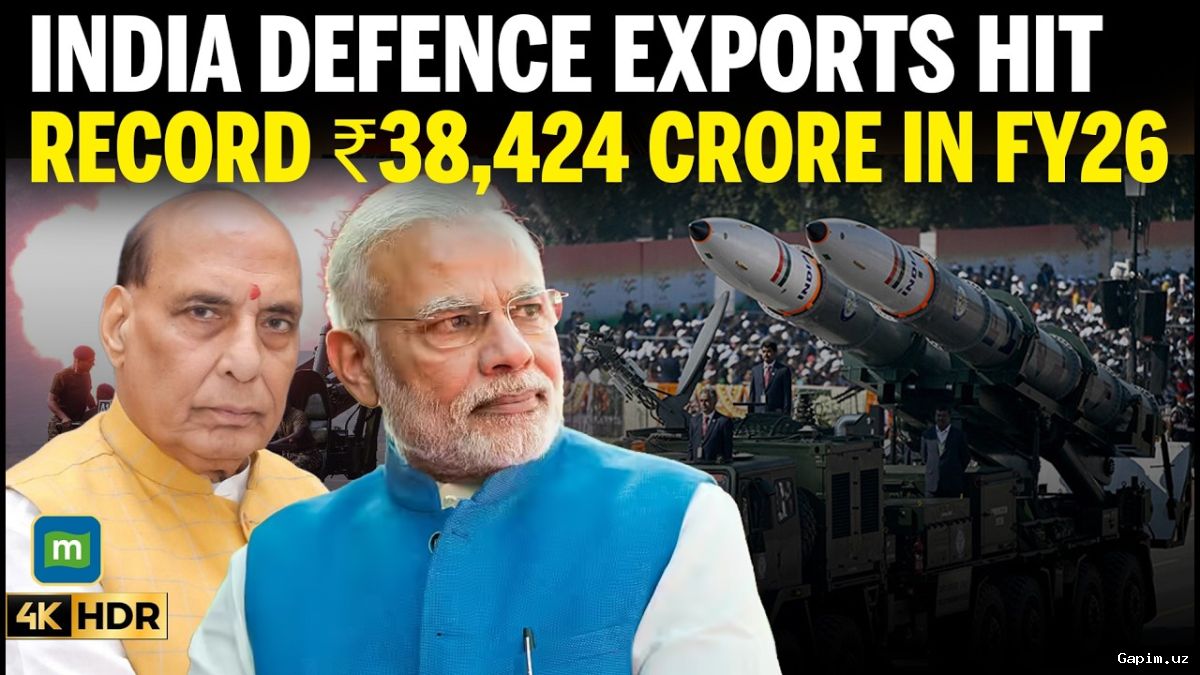
Defense Minister Rajnath Singh claimed that "India is marching ahead towards becoming a global defense manufacturing hub," adding that the rise reflects increasing international confidence in the country's indigenous capabilities. Government-owned firms accounted for approximately 55% of exports, with private companies contributing the remainder. India currently exports to more than 80 countries.
Despite this growth, India remains a major arms importer globally, ranking as the world's fifth-largest military spender and the second-largest arms importer after Ukraine, according to the Stockholm International Peace Research Institute. This highlights ongoing challenges in the country's push to expand domestic manufacturing and reduce dependency on foreign suppliers.
In other developments, a 19th-century oil painting by Indian artist Raja Ravi Varma, "Yashoda and Krishna," sold for a record $17.9 million (€15.53 million) at auction in Mumbai, setting a new benchmark for modern Indian art. The artwork was purchased by billionaire vaccine tycoon Cyrus Poonawalla, who stated he would seek to make it available for public viewing periodically.
Parliament has been adjourned and is expected to reconvene after upcoming state elections to discuss possible amendments to key legislation providing reserved parliamentary seats for women. Parliamentary Affairs Minister Kiren Rijiju told the upper house that the government has consulted over 80% of political parties on the proposal, with the opposition Congress party suggesting the session be held after the assembly elections.
The India Meteorological Department forecast rainfall across northwestern India, along with possible thunderstorms, lightning, strong winds, and temperature changes due to western disturbances. Hailstorms are likely in Delhi and adjoining areas of Himachal Pradesh, Punjab, and Haryana on April 3-4, with isolated heavy rainfall expected over the Kashmir Valley.
Airfares in India are set to rise as airlines respond to higher jet fuel costs driven by conflicts in the Middle East. IndiGo, the country's largest carrier, implemented revised fuel surcharges on domestic and international flights effective Thursday. The aviation ministry suspended a price cap on airfares last month to allow airlines to adjust ticket prices as required, citing the impact of global energy market volatility.
Russian First Deputy Prime Minister Denis Manturov arrived in India for a two-day visit, with bilateral relations, particularly security and defense ties, expected to be discussed. Manturov is scheduled to meet National Security Adviser Ajit Doval, External Affairs Minister S. Jaishankar, and Finance Minister Nirmala Sitharaman. India has become a major buyer of Russian oil following Western sanctions over Moscow's actions in Ukraine, despite a February trade deal with the United States that allegedly aimed to halt such purchases.
Thousands of Oracle employees in India have received layoff notices as part of what the company described as a "reduction in force and other terminations." Indian media reports suggest between 10,000 and 12,000 employees could be affected. The layoffs come as Oracle ramps up spending on artificial intelligence infrastructure to compete with cloud rivals, highlighting ongoing turbulence in the global tech sector.
The Indian government exempted a range of chemicals from import duty from April 2 to June 30, describing it as targeted relief to ease supply pressures linked to geopolitical tensions. This move is expected to benefit industries reliant on petrochemical feedstock while helping to mitigate costs for consumers.
Source: www.dw.com