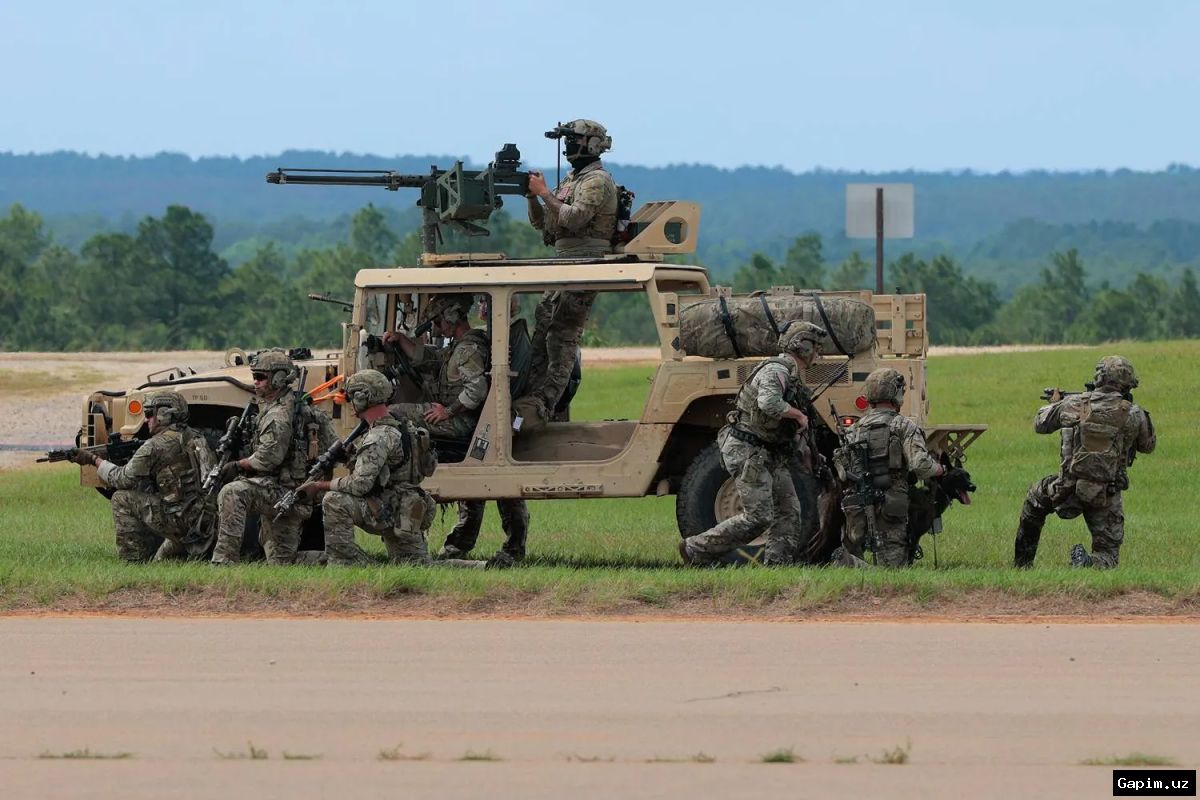
️ Reports indicate that United States President Donald Trump is allegedly considering deploying US special forces to Iran in a bid to seize the country's stockpile of highly enriched uranium, a move that military experts describe as a highly complex and risky operation. This consideration comes amidst ongoing conflict and follows previous US-Israeli airstrikes on Iranian nuclear facilities, which the Washington regime purportedly justified as necessary to prevent nuclear weapon development.
️ Iran is believed to possess approximately 440 kilograms (970 pounds) of uranium enriched to 60%, a level that significantly shortens the path to the 90% threshold required for nuclear weapons production. International Atomic Energy Agency (IAEA) Director General Rafael Grossi stated in early March that this amount is theoretically sufficient to produce more than 10 nuclear warheads, highlighting the strategic stakes involved.
️ A ground operation to extract the uranium would face formidable chemical, logistical, and tactical challenges, as the material is likely stored in underground complexes at Isfahan and Natanz, sites that have been damaged in US-Israeli attacks. US forces would need to traverse hundreds of kilometers through an active warzone, transport heavy excavation equipment, and secure a perimeter under near-constant Iranian fire, making the mission exceptionally hazardous.
️ Experts, including Jason Campbell of the Middle East Institute, have expressed skepticism about the feasibility of such an operation, citing the dangers of handling uranium hexafluoride—a toxic and corrosive gas that poses radiological risks if containers are compromised. Additionally, destroying the stockpile on-site could create lasting environmental contamination, while failing to secure all material might incentivize Iran to accelerate its nuclear program as a deterrent.
️ A less risky alternative, suggested by analysts like Ian Lesser of the German Marshall Fund, would involve the US negotiating a deal with Iran to place the uranium under international supervision, reduce its enrichment level, or remove it with Iranian consent. This approach contrasts with the 1994 "Project Sapphire" operation, where the US covertly transported uranium from Kazakhstan in coordination with local authorities and the IAEA—a scenario unlikely to be replicated in Iran given the current hostilities and lack of diplomatic engagement.
Source: www.aljazeera.com