The Artemis II mission astronauts have successfully executed a critical thruster firing maneuver, breaking away from Earth's orbit and setting course for the Moon. This event marks the first crewed lunar flyby in over half a century, since the Apollo 17 mission in 1972. NASA's mission control in Houston confirmed a "good burn," which placed the Orion capsule on a trajectory toward the Moon, initiating a historic journey for human space exploration.
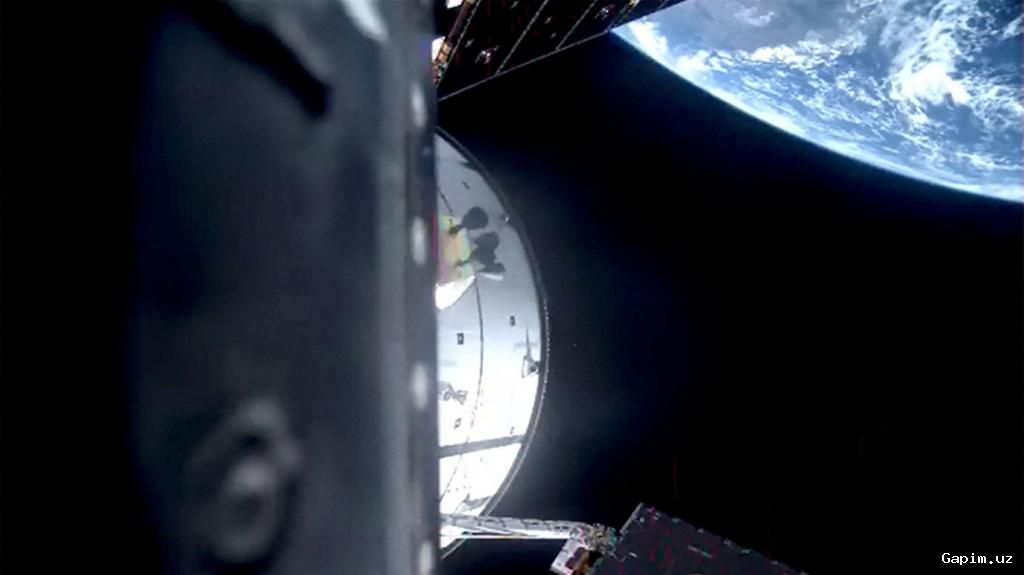
The thruster firing occurred 25 hours after the massive orange-and-white Space Launch System (SLS) rocket, carrying the Orion capsule, lifted off from Kennedy Space Center in Florida. Canadian astronaut Jeremy Hansen reported to mission control about 10 minutes after the maneuver, stating, "We are getting just a beautiful view of the dark side of the Earth lit by the moon right now. Phenomenal." He and his crewmates were captivated by the view from the capsule's windows as they departed Earth, highlighting the emotional and technical significance of the moment.
During their first day in space, the astronauts conducted tests on cameras and steered the Orion spacecraft, while also addressing minor technical issues such as a toilet malfunction and email glitches that were subsequently resolved. The 10-day mission aims to reach a record distance of 252,000 miles (406,000 kilometers), surpassing the Apollo 13 record set in 1970, which would make it the farthest humans have ever traveled in space. This milestone is part of broader efforts to test deep-space capabilities for future lunar and Martian missions.
The Artemis II program includes several groundbreaking achievements, featuring the first Black astronaut, the first woman, and the first non-American to participate in a lunar mission. Commander Reid Wiseman, pilot Victor Glover, Christina Koch, and Jeremy Hansen will fly approximately 4,000 miles (6,400 kilometers) past the Moon before returning directly to Earth without landing. This mission serves as a crucial test for the Orion spacecraft, designed to pave the way for a planned Moon landing in 2028 and subsequent expeditions to Mars, underscoring NASA's ambitions for sustained deep-space exploration.
Source: www.dw.com