The war launched by the United States and Israel against Iran on February 28, according to the author, echoes the Iran-Iraq War of 1980-1988. In this conflict, not only military targets but also civilian housing, universities, schools, hospitals, commercial buildings, and historical sites have been bombed, highlighting the indiscriminate and wide-ranging nature of the hostilities.
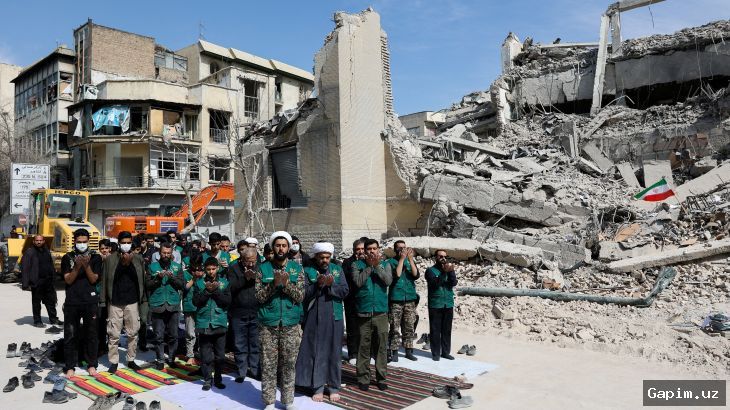
The author recalls personal experiences as a student at Tehran Polytechnic University and a member of an opposition group during Iraq's invasion of Iran in 1980. The sounds of air defense systems lighting the sky with colorful rays, sirens, and screams of people in panic left a deep mark. His mother was convinced he had been killed, illustrating the personal hardships of war.
A few weeks later, while sitting in a park in central Tehran, the author witnessed an Iraqi fighter jet flying at low altitude, dropping leaflets in Persian calling on Iranians to rise against their government. This event showed Saddam Hussein's attempt to hijack the opposition's struggle, though the author and his friend held no illusions that Iraqis could become liberators. Within opposition groups, heated debates ensued over whether to defend the country against Iraqi aggression or exploit the war to overthrow the state, with the author joining the latter faction.
The government at that time, though only a year old, enjoyed vast popular support. Saddam Hussein quickly learned that, despite the chaotic post-revolutionary conditions, the Islamic Republic could mobilize millions to defend the country and retain political power. The government not only checked the invasion but consolidated power by eliminating the opposition: tens of thousands were arrested, many more exiled, and thousands executed.
Forty-six years later, US President Donald Trump and Israeli Prime Minister Benjamin Netanyahu allegedly harbor similar illusions, but this time the war is conducted through bombing campaigns without frontlines or ground troops. Such warfare breeds deep uncertainty and intense anxiety, as anyone, anywhere, at any time could be a target. As demonstrated in recent weeks, an air war can be significantly more indiscriminate.
Another difference is that by the start of this war, the Islamic Republic had squandered what was once overwhelming citizen support. Years of crippling sanctions led to widespread impoverishment across all walks of life and an economy plagued by persistent corruption. This bitter economic pill, combined with brutal suppression of dissent, created an irrevocable divide between the state and many of its citizens.
However, this did not mean that a US-Israeli act of aggression would easily topple the regime. The Trump administration purportedly misread this reality and bought into an Israeli plan to launch a war with the same prognosis—that it would hasten the collapse of the Islamic Republic. The Trump administration's failure was twofold: first, it demonstrated a total lack of understanding of Iran's state power structure; second, it failed to grasp how an indiscriminate air war would collapse the distinction between nation and state.
The Israeli and American propaganda machines have tried hard to blame the war on the Islamic Republic and its belligerent regional policies, but punishing the nation for the sins of the state is a decree against which a majority in the country remains defiant. Like Saddam Hussein in the 1980s, the Trump-Netanyahu alliance today claims to have paved the way for Iranians to overthrow the Islamic Republic, punishing the nation for not doing so through blanket bombing of cities and destruction of vital economic infrastructure.
The cruelty of the worn-out logic of piling misery onto people's lives—through bombs, sanctions, and assassinations—in the hope of forcing them to topple their government is evident. It did not work for Saddam Hussein; it will not work for Trump and Netanyahu. There is no difference between the people who ran aimlessly at the bus terminal in 1980 and those whose lives are destroyed by American and Israeli bombs today. They hold those who push the button to drop the bombs responsible for the destruction of their lives and the murder of their loved ones.
The immediate consequence of these bombs is not the liberation of the nation but further militarization of the state and the collapse of whatever remains of civil society. The Islamic Republic has shown it is well-equipped to sustain a war of attrition, an experience inherited from the eight-year war with Iraq, but it must be remembered that a war of attrition is fought against foreign aggressors by consolidating power and tightening the repressive apparatus.
This war began on false premises and continues to unfold against all basic principles of a rules-based world order. As with the Iraqi aggression of 1980, the US and Israel have openly violated a foundational tenet of the United Nations—respect for another nation's sovereignty. They have disregarded the prohibition on the assassination of political leaders and are now threatening to obliterate Iran's civilian energy infrastructure, which would be a blatant war crime.
It is hard to predict with any level of certainty how this war will end and who the winners and losers will be. However, one thing is quite certain: on the other side of this war lies a different world order. The views expressed in this article are the author's own and do not necessarily reflect Al Jazeera's editorial stance.
Source: www.aljazeera.com