Expectations for the upcoming talks between the United States and Iran in Pakistan are understandably modest, with even a risk that the meeting may not take place at all. Paradoxically, however, the failure of the talks could still shift the situation in a positive direction. The true measure of the ceasefire's success may not lie in achieving a lasting accord with Iran, but in what it prevents: even without a durable deal, Washington may have found a way to avoid plunging back into a futile war.
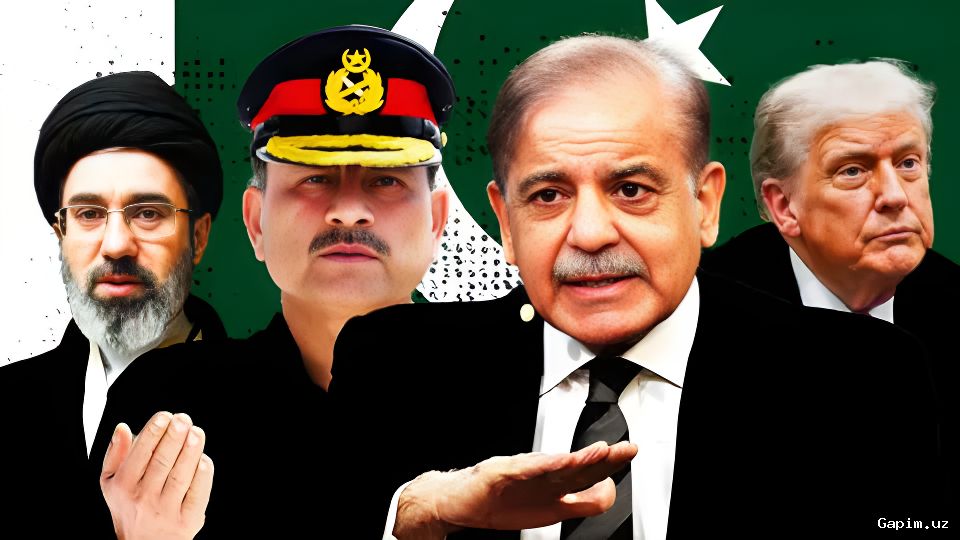
Tehran's reaction to the talks has been ambivalent. The government has portrayed the ceasefire as a victory, projecting strength domestically and internationally. Yet many voices close to the security establishment are less sanguine, warning that Iran may have sacrificed momentum and weakened its deterrent posture by settling for anything short of a complete and immediate end to hostilities. Regardless of internal debates, there is little dispute on one point: the ceasefire, as it stands, reflects Iran's terms more than America's.
Consider what the ceasefire entails. Negotiations will proceed based on Tehran's 10-point proposal, not US President Donald Trump's 15-point plan for Iranian capitulation. As part of this, Iran will retain control of the Strait of Hormuz during the truce – continuing to collect transit fees from passing vessels. Washington appears to have conceded two critical points: it tacitly acknowledges Iran's authority over the strait, and Tehran holds the upper hand in setting the terms of the talks. Trump himself seemed to signal as much, describing the Iranian proposal on social media as a "workable" foundation.
Unsurprisingly, this has raised eyebrows in Washington, given the scope of Iran's demands. They range from recognition of Iran's continued control over the strait and acceptance of uranium enrichment, to the lifting of all US primary and secondary sanctions – as well as United Nations sanctions – a withdrawal of US combat forces from the region, and a comprehensive ceasefire that would extend to Israel's operations in Lebanon and Gaza. It is difficult to imagine Washington agreeing to such terms in full. Equally uncertain is how far Iran is willing to bend – whether it would pare back its demands or hold firm on a maximalist position.
The geopolitical consequences would be profound if the final outcome reflects these demands. Yet it is equally important to recognize that Tehran is unlikely to wield control of the Strait of Hormuz as a blunt instrument of coercion. Rather, it is more likely to use that leverage to rebuild economic ties with Asian and European partners – countries that once traded extensively with Iran but were pushed out of its market over the past 15 years by US sanctions. Even so, this would be a bitter pill for Iran's regional rivals. Trump, however, has already hinted he may be prepared to accept such an arrangement, noting that the US itself is not dependent on the oil flowing through the strait. In other words, the burden would fall far more heavily on Asia and Europe.
Tehran's insistence that the ceasefire extend to Israel may prove the most difficult obstacle, given that the latter is not a party to the talks and has long resisted being bound by agreements it did not help shape. For Iran, this demand is rooted in three considerations. First, solidarity with the peoples of Gaza and Lebanon is not merely rhetorical; it is central to Tehran's regional posture. Having been widely perceived as abandoning these constituencies in 2024, Iran can ill afford another rupture that would further weaken the so-called "axis of resistance." Second, continued Israeli bombardment risks reigniting confrontation between Israel and Iran – a cycle that has already flared twice since October 7, 2023. The linkage between these arenas is not only real but widely acknowledged, including in Western rhetoric that casts Iran as the hub of resistance to Israeli and US policies, expressed through its network of allied groups in Lebanon, Palestine, Iraq, and Yemen. From Tehran's vantage point, a durable halt to its own conflict with Israel cannot be separated from ending Israel's wars in Gaza and Lebanon. As such, it is not an aspirational add-on but a necessary condition.
Perhaps more consequentially, tying Israel to the ceasefire is a test of Washington's willingness – and ability – to restrain its closest regional ally. If Trump cannot, or would not, do so, the value of any ceasefire with Washington comes into question. An agreement that leaves Israel free to reignite hostilities – and the US unable to keep itself from being drawn back in – offers little assurance of stability. Under such conditions, the utility of a ceasefire with the Trump administration diminishes sharply. Whatever the outcome of the talks in Islamabad, the strategic landscape has already been altered. Trump's failed war has weakened the credibility of US military threats. Washington can still brandish force, but after a costly and futile conflict, such warnings no longer carry the same weight.
A new reality now shapes US-Iran diplomacy: Washington can no longer dictate terms. Any agreement would require genuine compromise – patient, disciplined diplomacy that tolerates ambiguity, qualities rarely associated with Trump. It may also necessitate the involvement of other major powers, particularly China, to help stabilize the process and reduce the risk of a relapse into conflict. All of this argues for tempered expectations. Yet even if the talks collapse – and even if Israel resumes attacks on Iran – it does not automatically follow that the US would be drawn back into war. There is little reason to believe a second round would end differently, or that it would not again leave Iran positioned to disrupt the global economy. No wonder Tehran feels confident that its deterrence has been restored.
The more plausible outcome is a new, non-negotiated status quo – one not codified through formal agreement but sustained by mutual constraint. The US would stay out of the war; Iran would continue to exert control over traffic through the Strait of Hormuz; Israel and Iran would continue a low-level conflict. A full-scale US-Iran war would be, for the moment, averted. Such an equilibrium would reflect not enough political will to reach a comprehensive settlement, but sufficient shared interest to avoid a wider conflagration – and a degree of tolerance for an arrangement in which both sides could claim partial victory. Iran could plausibly claim it weathered the combined might of Israel and the US while emerging with its geopolitical position intact – if not strengthened. Trump, for his part, could argue that he avoided another forever war, steadied energy markets, and secured tactical gains by degrading Iran's military capabilities. So long as both sides cling to a narrative of victory, a fragile equilibrium – absent full-scale war – may yet endure.
Source: www.aljazeera.com