The Italian government has declined to automatically renew a Memorandum of Understanding on defense cooperation with Israel, originally signed in 2003 and ratified in 2005. The decision was formalized in a letter from Italian Defense Minister Guido Crosetto to his Israeli counterpart. Analysts note that while the move carries more symbolic weight than immediate practical consequences, it represents an unprecedented step by Rome and reflects deepening unease over its longtime ally's actions in the Middle East.
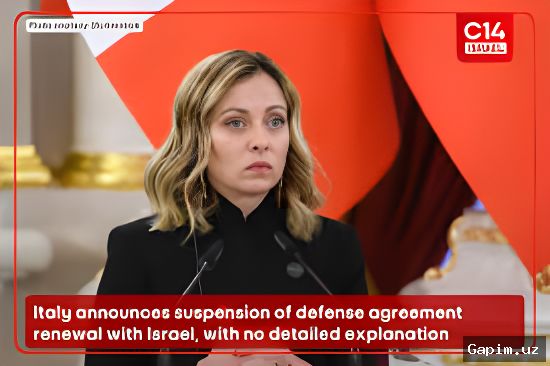
The Israeli government has downplayed the suspension, with Foreign Minister Gideon Saar claiming the agreement "never materialized" and lacked "substantial content." However, this marks a sharp reversal for Italy's right-wing administration, which has been one of Europe's staunchest supporters of Israel. Italy has largely backed Israel's war on Gaza and opposed recognition of Palestinian statehood, making this suspension a notable diplomatic signal.
Tensions between Italy and Israel have escalated recently. Italy's ambassador to Tel Aviv was summoned after Foreign Minister Antonio Tajani condemned "unacceptable attacks against the civilian population" in Lebanon. Last week, Rome accused Israeli forces of firing warning shots at an Italian peacekeeper convoy in southern Lebanon, prompting Tajani to summon the Israeli ambassador. These incidents underscore the growing friction as Israel's military operations, including a massive strike in Lebanon that killed hundreds, disrupt regional de-escalation efforts.
Experts suggest Italy's decision must be viewed within broader attempts to stabilize the region. Michele Valensise, President of the Institute for International Affairs, stated that "Israel's military operation there objectively constitutes an irritant, complicating negotiations with the Iranians." Italy is also nervously monitoring the U.S.-Israeli war on Iran and the ensuing crisis in the Strait of Hormuz, which has threatened global energy supplies and poses significant risks to Italy's gas-dependent economy.
Domestic political considerations are equally influential. With elections approaching next year, Prime Minister Giorgia Meloni is reportedly concerned about public discontent over the war's economic impact. Italian public opinion includes a strong pro-Palestinian component, evidenced by massive solidarity strikes last October. Additionally, Meloni has been pressured to distance herself from U.S. President Donald Trump, refusing requests to join a naval coalition in the Strait of Hormuz and facing criticism from Trump himself, who allegedly expressed shock at her actions in a recent interview.
Source: www.aljazeera.com