On a bright Tehran spring day, Sanaei Ghaznavi street, with its mix of shops selling groceries and household goods alongside fast food and flowers, seems like an everyday place.
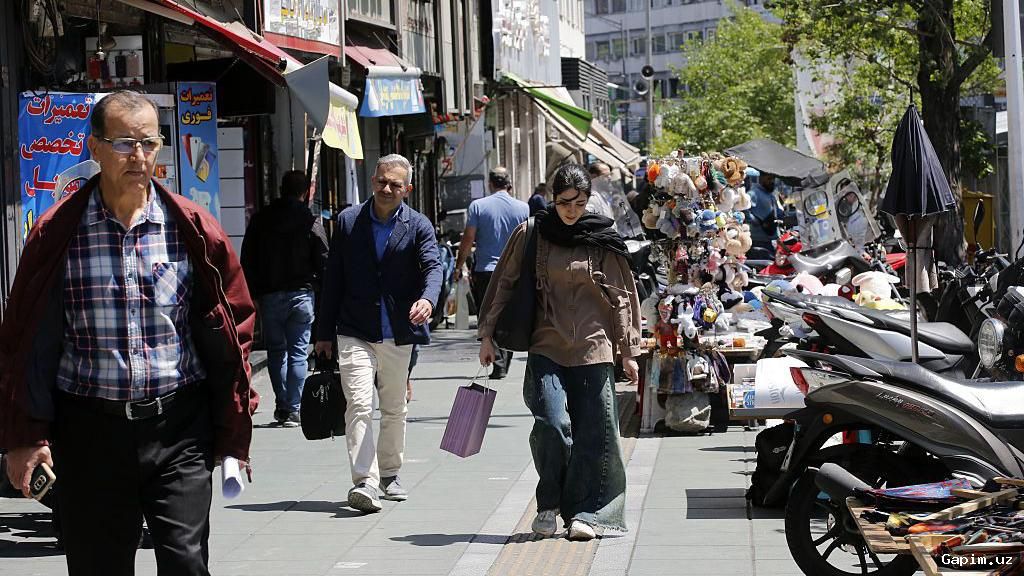
In a country where lives have long been buffeted by crises, it is a snapshot of a people just trying to get through the day while their future hangs on forces beyond their control.
For Mohammad, in t-shirt and jeans, even cranking open the striped awning of his family's shoe shop is an act of hope. "It makes me happy to be in here," he says. "So many people have lost their jobs and aren't working."
There are few customers. "We had so many before," his father Mustafa laments, noting the business has been in the family for 40 years.
Iranian website Asr-e Iran recently cited an unofficial estimate that up to four million jobs may have been lost or impacted by the combined effect of the war and the government's near-total internet shutdown.
Boxes with western logos like New Balance and Clarks protrude from packed shelves. "Made in China," both note. "Even fakes are expensive in Iran," Mohammad adds.
I expect them to hope for a shaky ceasefire and successful negotiations with America. But Mohammad declares with a wry smile: "We hope the war starts again." His father eyes him knowingly: "Look at my grey hair, I understand more than him."
"We're just tired of living with an economy which keeps getting worse," Mustafa says. "Some people believe that, if war returns, things will eventually improve dramatically."
Outside a corner shop, elderly Shahla balances a loaf of bread. She complains bread prices have tripled. "People are going through hell now just to pay for bread."
She casts her eyes across the street between affluent north and poorer south. "People who are well off, they're okay, but not for workers."
Her message to negotiators: "Stop it, that's enough. I don't think something good will come of it for us because Trump is just threatening people."
A young man passes with a bottle of wild garlic butter he made himself. "We're just trying to live our lives," says the 45-year-old architect and teacher stoically.
He avoids "super complicated" politics but vents frustration over the internet shutdown, now over 50 days. Even Iran's communications minister Sattar Hashemi called for the ban to be lifted.
Security has visibly tightened. Plain-clothed Basij or Islamic Revolutionary Guards are ubiquitous. On Ferdowsi square, black armored vehicles and armed men send a stark message.
Asked what one change would make a big difference, the architect replies: "Freedom. Freedom of thought and freedom to have a future."
A popular cafe is bursting with customers. Women in headscarves share the sidewalk with young people in baggy jeans with piercings and tattoos. Many women no longer comply with modest dress laws.
Small protests against rising costs in late 2025 built into nationwide anti-government protests, with several thousand killed in the crackdown.
Ali recalls the war: "It was scary. We felt alone." His sister quit her chef job because the owner couldn't pay her.
"I love President Trump and I hate President Trump," Ali announces. "I love him because he said he would help the people of Iran. I hate him because he didn't."
At Vali-e Asr Square, government supporters gather nightly. A woman in black argues with a moderator about negotiations with America.
Another woman highlights the importance of hijab but advises: "We shouldn't be so tough towards those who don't want to wear it. It's a time for national unity."
Nineteen-year-old Reyhaneh holds a photo of new supreme leader Mojtaba Khamenei. "Everything is in his hands now," she insists.
As we leave, a convoy of mullahs in camouflage with guns roars past on motorcycles.
At 22:30, Mustafa stands outside his brightly lit shop. "Not many customers today," he says with a shrug. "We just want this war to end."
Source: www.bbc.com