Some Gulf states, trapped between Iran, Israel and the US in the current war, have started revoking the citizenship of locals considered 'traitors.' But is it about security — or a way to suppress political dissent?
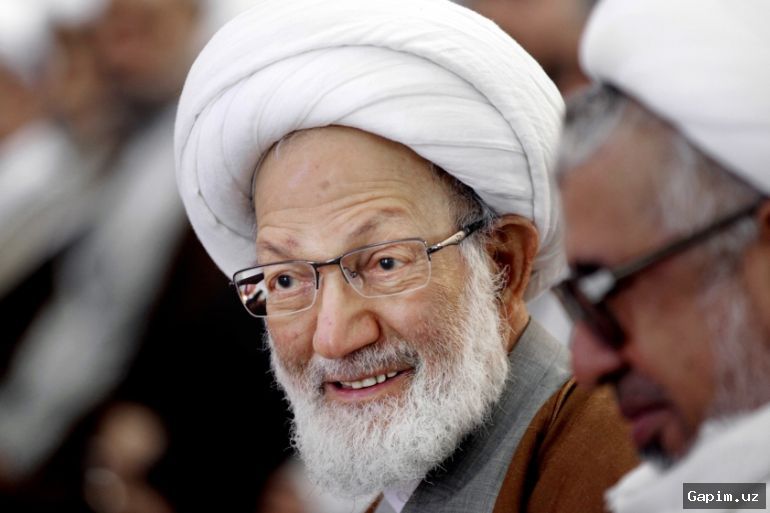
Jawad Fairooz, a former politician in Bahrain's parliament, found out he no longer had a country while watching television. 'I was on a short trip to London,' Fairooz told DW, 'when the Ministry of Interior decided to revoke the nationality of people in the opposition. They read 31 names on TV. Mine was one. It was such a shock because I never called for the government to be overthrown.' That was in November 2012. Bahraini authorities eventually withdrew citizenship from close to 990 people.
The war began in late February when Israel and the US attacked Iran. But besides Israel, it was Gulf states like Bahrain, Oman, the United Arab Emirates and Saudi Arabia that Iran targeted in response. Politically Bahrain is in a particularly difficult position: the country is a monarchy and represses most political dissent, but unlike other Gulf countries, Bahrain's royal family is Sunni while estimates suggest just over 50% of the population is Shiite.
In March, there were as many as 250 arrests in Bahrain of people who allegedly posted anti-war messages online, expressed 'sympathy' with Iran or participated in demonstrations. Bahrain says it also arrested spies working for Iran. Then, in late April, the government said it would be reviewing the citizenship of anybody 'disloyal' to the country. Fairooz believes Bahrain is weaponizing citizenship again for security reasons but also because authorities know they can use it to suppress dissent.
Kuwait could be one of the worst offenders. In March 2024, the Kuwaiti government launched a campaign to revoke citizenship and sources say it's highly likely that over 70,000 Kuwaitis have lost their nationality. The true number could be as high as 300,000 because dependents like wives, children or grandchildren also lose Kuwaiti citizenship. If correct, that's almost one-fifth of the native population, as there are only around 1.56 million Kuwaiti citizens. In mid-April, Kuwait issued another set of changes to its citizenship law and over 2,000 more people lost Kuwaiti nationality.
'Kuwait's evolving nationality regime reveals how citizenship can be transformed into a political instrument of control,' the research network Global Citizenship Observatory wrote in a 2026 report on Kuwait. 'It is potentially too early to identify if there is an increased trend related to the recent conflict with Iran,' says Thomas McGee, the Observatory's expert on the Middle East. 'What we are seeing now is a number of Gulf states potentially using the Iran war as justification to intensify existing citizenship and nationality controls, rather than inventing the practice from scratch.'
Another Gulf state, Oman, changed its citizenship laws in February 2025. Parts of the law say Omani nationality could be withdrawn if citizens 'committed a verbal or physical offense against the Omani Sultanate or the Sultan himself' or joined an organization that might harm the country. Rights activists argue that because there's no definition of those acts or organisations, the government can use the law against its opponents.
The UAE was recently accused of doing similar things to Iranians who live there. Some found their residency permits had been revoked. Emirati authorities denied this, saying the ex-pats were part of their community — but media outlets like the New York Times interviewed Iranians who had had permits rescinded.
Last week in the US, the Trump administration again pushed its Justice Department to denaturalize hundreds of Americans and has issued new guidelines on vetting political opinions of people seeking residency. Last year Human Rights Watch criticized a leaked working paper on migration by conservative political parties in Germany, which suggested dual nationals could be stripped of German passports if they were deemed 'supporters of terrorism, antisemites and extremists.'
Experts say citizenship is being weaponized because, over the past two decades, it's become more acceptable to treat it as a privilege, not a right. This was not the case after World War II, when the Universal Declaration of Human Rights was first written. Article 15 says nationality is a fundamental human right and this was partly a response to the Nazis making tens of thousands of Jews and political opponents stateless with their 1933 'denaturalization law.'
'States have been weaponizing citizenship for a long time,' says Lindsey Kingston, a professor of international human rights at Webster University in Missouri. 'But the nature of that weaponization is changing.' A 2022 study found that after the September 11, 2001 attacks, 'the use and scope of citizenship revocation on security grounds has expanded.' 'Terror attacks like 9/11 prompted many people to rethink ideas about legal nationality,' Kingston told DW. 'People began to see citizenship as impermanent, something that had to be earned and continually justified.'
While the weaponization of citizenship is not new, the Iran war seems to be making things worse, experts say. The conflict has resulted in a slowing of reforms in Gulf countries, analysts at the US-based Carnegie Endowment for International Peace argued in early April. The war has upset 'the fragile balance that had been emerging in the Gulf between controlled reform and political stability,' they wrote.
'Military conflict can be a catalyst,' Luuk van der Baaren, a legal researcher at the European University Institute who focuses on citizenship law, confirms. 'A long-standing ground for citizenship stripping is treason and this logic is now being invoked in some Gulf countries.' The same has been seen in Russia and Ukraine, he adds.
Amal de Chickera, co-director of the ISI, believes it's important to look at the bigger picture. 'If you look at Bahrain, there was a spike in citizenship strippings post-2013, and then there was a lot of international pressure that the Bahraini government should right those wrongs. And they did course correct, to a degree.' Now it seems Bahrain is going back to that practice. 'With Israel's genocide of Palestinians, invasion of Lebanon, and the US and Israeli attacks on Iran, with the way Western nations have doubled down to afford Israel a degree of impunity and their unwillingness to hold America accountable, we are seeing a shredding of international law,' he told DW. 'In a world in which international law means nothing, the Bahraini government has probably calculated it can get away with this again.'
Source: www.dw.com