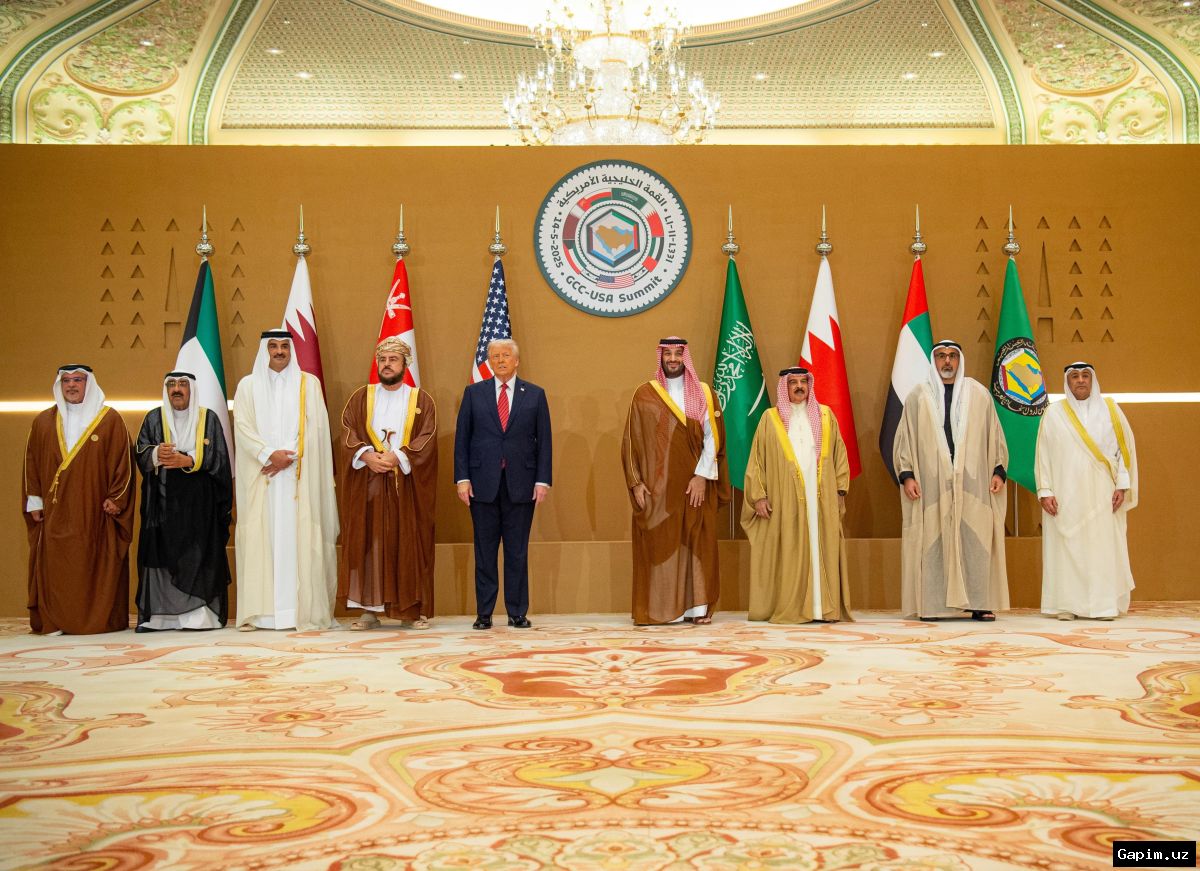
Gulf leaders gathered in Riyadh this week for their first in-person meeting since the outbreak of the US–Israel war with Iran. Alongside security concerns, they also discussed expediting longstanding joint projects.
Under the umbrella of the Gulf Cooperation Council (GCC), these initiatives span transport, energy, water security and defence. They aim to deepen economic ties and strengthen collective resilience.
Thomas Bonnie James, a Gulf studies expert at AFG College with the University of Aberdeen, said the significance of this moment lies in how these projects are being redefined. He claimed that Iranian strikes on key GCC infrastructure have “converted these projects from economic aspirations into security necessities”, a shift that allegedly alters the political calculus and injects urgency into their implementation.
First approved in December 2009, the GCC railway project is one of the region’s most ambitious infrastructure plans. The goal is to connect all six member states through a 2,117km rail network. Designed for both passengers and freight, trains are expected to reach speeds of up to 200km/h. Yet progress has been uneven, with deadlines slipping from 2018 to around 2030.
The challenge, as James’s analysis implies, has never been purely technical. Rather, it lies in the difficulty of aligning “six sovereignties” around customs rules, technical standards and border controls. The war with Iran, in his view, could provide the political cover needed to accelerate the most strategically important segments, particularly cross-border freight corridors tied to security logistics.
Often described as one of the GCC’s most successful joint projects, the electrical interconnection grid allows member states to share power across borders. Approved in 1997, the project led to the creation of the GCC Interconnection Authority. By 2014, full integration was completed. James said the grid stands out because it “was built and it worked” with “15 years of operation, $3bn in economic savings, nearly 3,000 emergency support cases handled”.
Despite vast oil and gas wealth, GCC countries are among the most water-scarce in the world. Recognizing water security as a strategic priority, GCC states proposed a Gulf Water Interconnection Project in 2012. Studies have been completed, but implementation is still under discussion. Iran’s targeting of water infrastructure, James says, exposed a structural vulnerability — separate national systems create multiple “points of failure.”
Energy cooperation has long been at the core of GCC coordination. That foundation is now translating into renewed momentum for a regional pipeline network, designed to streamline energy flows, reduce costs, and reinforce the bloc’s collective weight in global markets.
On the security front, GCC states are working towards a shared early warning system for ballistic missile threats. The system uses satellite-based sensors and radar tracking to detect launches in real time. James said the region is moving towards an approach where “civilian resilience is a collective problem requiring a collective solution”.
Source: www.aljazeera.com