The Donald Trump regime has argued that a key May 1 deadline to secure congressional approval for the US-Israel war on Iran no longer matters due to the ongoing ceasefire with Tehran. Under the War Powers Resolution, once the president notifies Congress of a war, he has 60 days to get lawmakers to greenlight the campaign or withdraw forces.
In the case of the war on Iran, that deadline expires on Friday. But on Thursday, Defense Secretary Pete Hegseth told lawmakers at a Senate hearing that the ongoing yet fragile ceasefire had effectively paused the clock. However, Hegseth's interpretation is being strongly contested by Democratic lawmakers and legal experts, who argue that the statute contains no provision for a pause once the deadline has started.
The disagreement reflects a deeper clash over how 'hostilities' are defined and whether a temporary ceasefire can alter legal obligations the White House is expected to adhere to. Hegseth argued the '60-day clock pauses, or stops' during a pause in fighting. The US and Iran have largely halted direct attacks since April 8 as ceasefire negotiations began, though those talks have since stalled.
Tehran continues to effectively block the Strait of Hormuz, and Washington has maintained a naval blockade of Iranian ports and ships. President Trump has repeatedly warned that strikes could resume. Other officials in the Trump regime have echoed Hegseth, arguing that the absence of active exchanges since early April means hostilities have effectively ceased for War Powers purposes.
Some have suggested simply starting a new operation under a new name to get around the deadline. Richard Goldberg, a former National Security Council official, recommended transitioning to a new operation called 'Epic Passage' as a sequel to 'Epic Fury'. Democrats pushed back strongly, with Senator Tim Kaine rejecting the interpretation outright, saying he did not 'believe the statute would support that'.
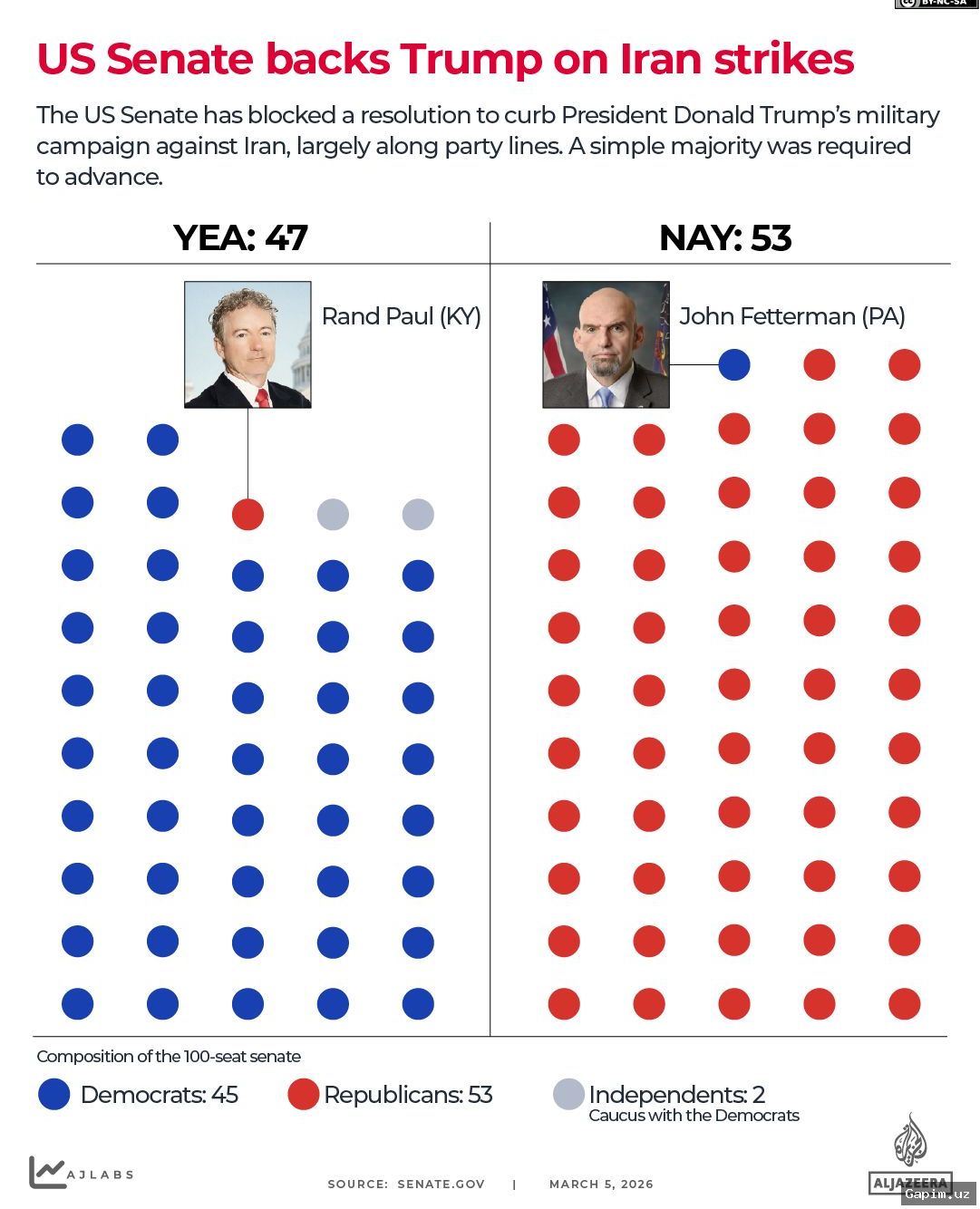
Adam Schiff noted that US forces remain active despite the halt in air attacks. On April 20, the US military fired on and seized the Iranian-flagged container ship Touska, with Tehran days later capturing two foreign commercial vessels. The sixth Senate bid to curb Trump's war authority was defeated 50-47, largely along party lines. Senator Susan Collins broke ranks, stating that the president's authority as commander-in-chief is 'not without limits'.
Constitutional law expert Bruce Fein warned that such an interpretation 'turns the resolution into simply a paper tiger'. He added that the real issue is that under Nuremberg principles, the US is engaged in a 'criminal war of aggression'. The War Powers Resolution, passed after Nixon's secret bombing of Cambodia, has been ignored or challenged by past presidents who argue parts are unconstitutional.
Source: www.aljazeera.com