The Japanese government has decided to amend the constitution, which has remained untouched for 79 years. On May 3, the anniversary of its adoption, Prime Minister Sanae Takaichi, on a visit to Vietnam, issued a video message declaring a firm intention to update the basic law in line with 'the demands of the times.' This has led to widespread protests.
The main sticking point is the famous Article 9, adopted in 1947 under US influence, which officially prohibits Japan from maintaining armed forces and waging war. Despite legal restrictions, Tokyo already possesses substantial Self-Defense Forces and is actively increasing its military budget. The Liberal Democratic Party (LDP) insists on the need to eliminate this legal paradox and enshrine the status of the Self-Defense Forces in the constitution.
According to a Yomiuri Shimbun poll, 57 percent of Japanese support the idea of revising the basic law. However, society is divided: 80 percent of citizens favor preserving the first clause of Article 9, which renounces war as a sovereign right of the nation. Many fear that militarization will deprive Japan of protection from being drawn into foreign military adventures by its allies.
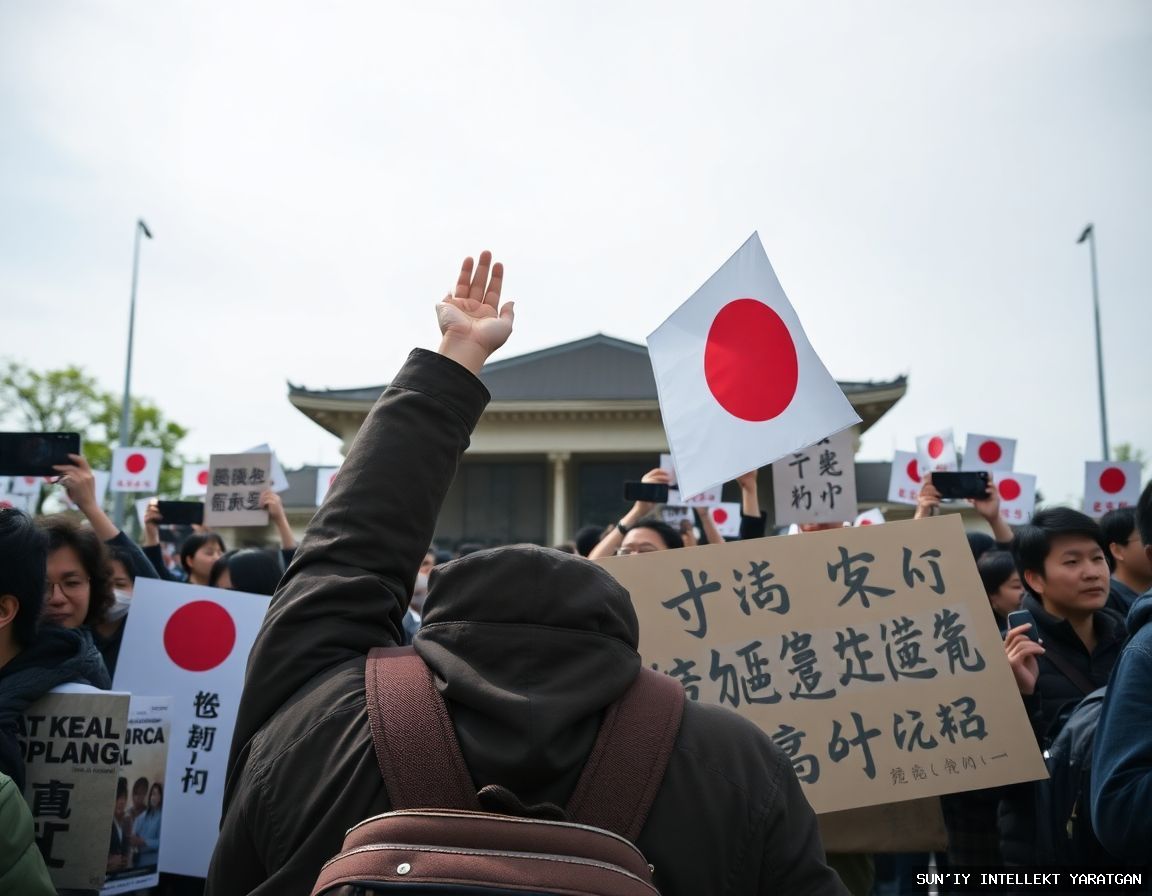
Last Sunday, mass protest rallies were held across the country. In Tokyo, about 50,000 people took to the streets, including an unusually high number of young people. Demonstrators chanted slogans such as 'No to war!' and 'Protect Article 9,' expressing opposition to the Takaichi cabinet's policy. Protesters emphasize that the current law has for decades shielded the country from being dragged into international armed conflicts, including recent crises in the Middle East.
To pass the amendments, Sanae Takaichi will need not only a two-thirds majority in both houses of parliament but also majority support from voters in a national referendum. Given the massive protests, the path to reform promises to be extremely difficult, despite the necessary majority in the lower house of parliament.
Source: podrobno.uz