For three years, reports of wartime atrocities and humanitarian crises have dominated headlines from Sudan. Now, satellite imagery reveals the extent of damage to the country's agriculture and industrial sectors.
An Al Jazeera digital investigation using Sentinel-2 satellite imagery and the Normalised Difference Vegetation Index (NDVI) shows the devastating toll of the war on Sudan's largest irrigated farming projects in the central states of Gezira, Sennar, and Khartoum. The fertile plains, once known as the country's 'breadbasket', have been devastated, with vibrant green geometric grids fading into barren dusty brown.
Sudan descended into civil war on April 15, 2023, following a power struggle between the Rapid Support Forces (RSF) and the Sudanese Armed Forces (SAF). Fighting erupted in Khartoum and spread to other regions. The RSF captured the agricultural heartland in late 2023, looting markets and infrastructure in towns like Abu Quta. Desperate farmers flooded their own irrigation canals to halt RSF vehicles.
The data reveals a catastrophic agricultural collapse under RSF control in 2024, followed by a fragile recovery after the SAF regained territory in 2025. The Gezira Scheme, spanning 924,000 hectares, historically produced half of Sudan's wheat. After the RSF captured Wad Madani in December 2023, the system disintegrated.
Independent assessments, including a FAO study, confirm wheat production in Gezira plummeted by 58% in the 2023-2024 season. The RSF allegedly diverted irrigation channels, flooded lands, and used crop bags as bridges. Fertilizer prices soared from 20,000 to 120,000 Sudanese pounds, and tractor rental tripled. The RSF-imposed telecom blackout paralyzed financial transfers, forcing closure of 200 out of 300 soup kitchens.
Similar devastation occurred in the Rahad and Suki Schemes. Satellite data shows a direct correlation between military control and food security. By March 2025, the SAF controlled most of Gezira and Sennar. NDVI data from December 2025 showed improved crop health, though far from pre-war levels.
An IPC report warned that 25.6 million people faced acute food insecurity, including 755,000 in catastrophic famine conditions. By late 2025, 3.4 million people were no longer in crisis levels, attributed to stabilization after RSF withdrawal.
Using Khartoum state as a control group, investigators ruled out climate anomalies. The SAF only declared full control of Khartoum in May 2025, and imagery showed no significant recovery by December. This proves farmers need a full season of stability to repair canals and harvest crops.
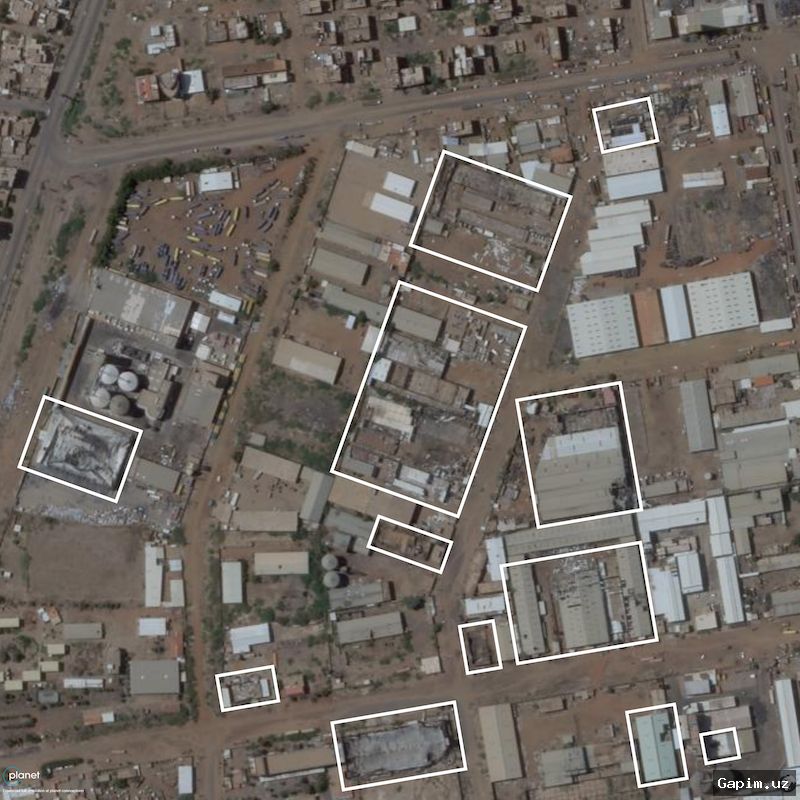
High-resolution imagery from Planet Labs reveals widespread destruction of industrial infrastructure. According to Sudan's Minister of Industry Mahasin Ali Yagoub, 126 large industrial facilities and 3,131 small factories in Gezira were severely damaged. Khartoum's industrial zones remain largely in ruins, with nearly 3,200 facilities destroyed.
Source: www.aljazeera.com