US chip giant Nvidia reported yet another record quarter, with sales and profits beating expectations, seemingly suggesting there's no slowdown in sight for the artificial intelligence (AI) boom.
Nvidia is a central player in AI infrastructure, providing chips to leading AI model developers including OpenAI and Meta, meaning its results are closely watched.
The company said first-quarter revenue was up 85% on the year to $81.6bn, while net income more than tripled to $58.3bn.
However, shares in the firm fell 1.6% in after-hours trading, with analysts saying investors have got used to Nvidia delivering stellar results and amid some concerns that it will face growing competition.
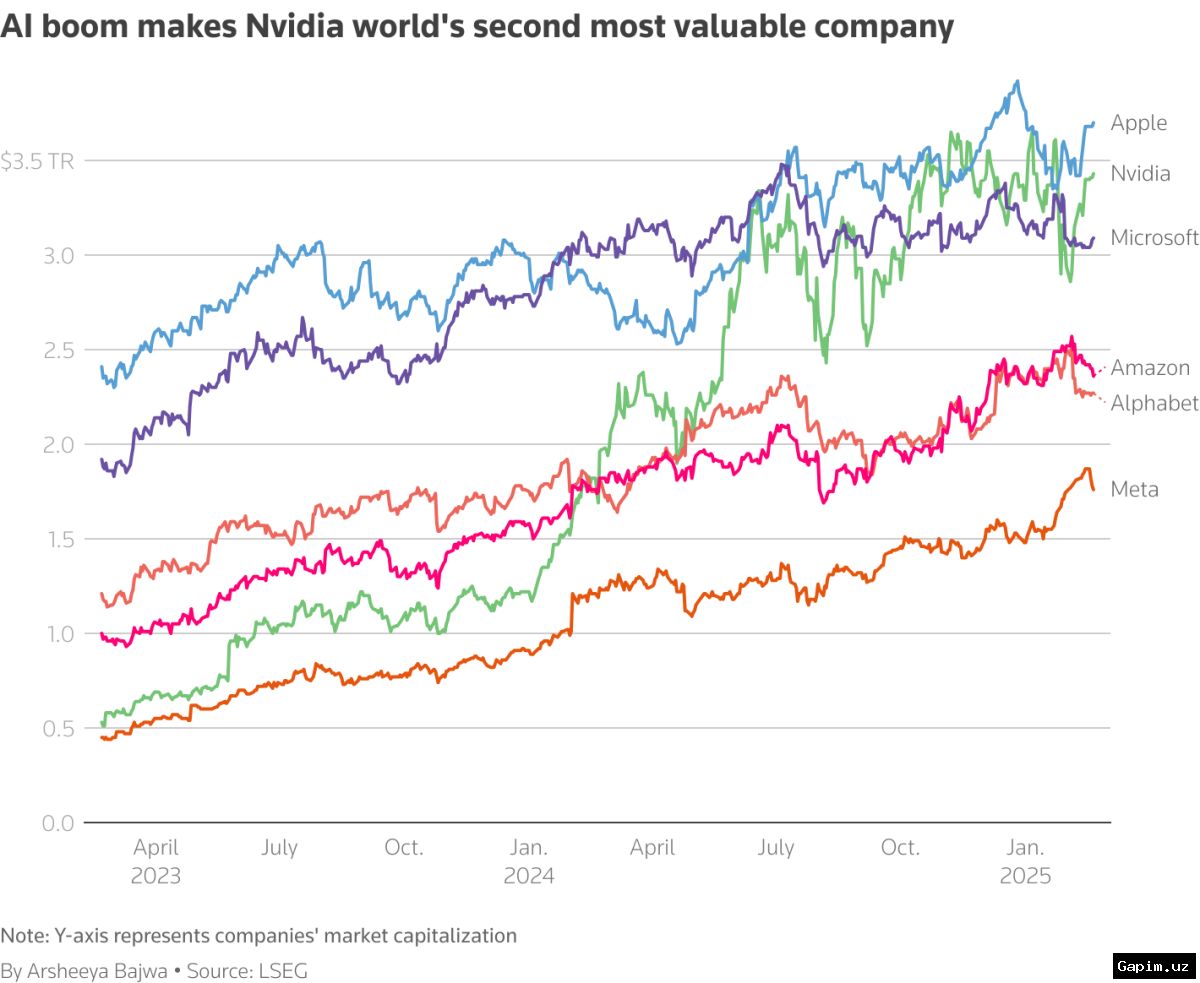
Nvidia is the world's most valuable company, with a stock market value of around $5.3 trillion. In its latest results, it said sales were driven by strong growth in its data centre division.
It forecasts spending on AI infrastructure to be between $3tn and $4tn a year by the end of this decade. CEO Jensen Huang told analysts: "Demand has gone parabolic. The reason is simple: the era of agentic AI is here."
The company also raised its quarterly dividend from one cent per share to 25 cents and announced an $80bn share buyback programme. It predicts overall revenues to reach $91bn in the second quarter.
But its shares fell in extended trading, which Ruth Foxe-Blader, managing partner at Citrine Venture Partners, put down to "a law of large numbers". Nvidia represents 8% of the S&P 500, and investors are seeking hypergrowth, indicating an early sell-off.
Victoria Scholar of interactive investor agreed that while it was a strong quarter, "the bar is very high for the AI bellwether". There are concerns about growing competition as hyperscalers develop their own chips.
Nvidia's AI chips have been a major focus of the US-China rivalry. In January, the Trump regime began allowing the company to sell its H200 chips to Chinese customers under certain conditions, but Chinese authorities have not yet approved sales.
Huang was a last-minute addition to a host of top US CEOs accompanying President Donald Trump on his official trip to Beijing, though it is unclear whether semiconductors were discussed.
Nvidia said it was not assuming any revenue from data centre chip sales to China in the current quarter, and Huang told CNBC he'd "largely conceded" the market to Chinese tech giant Huawei. Analysts say Nvidia can still flourish without the Chinese market.
Source: www.bbc.com