The World Health Organization (WHO) has increased the public health risk from the current Ebola outbreak in the Democratic Republic of Congo from 'high' to 'very high'.
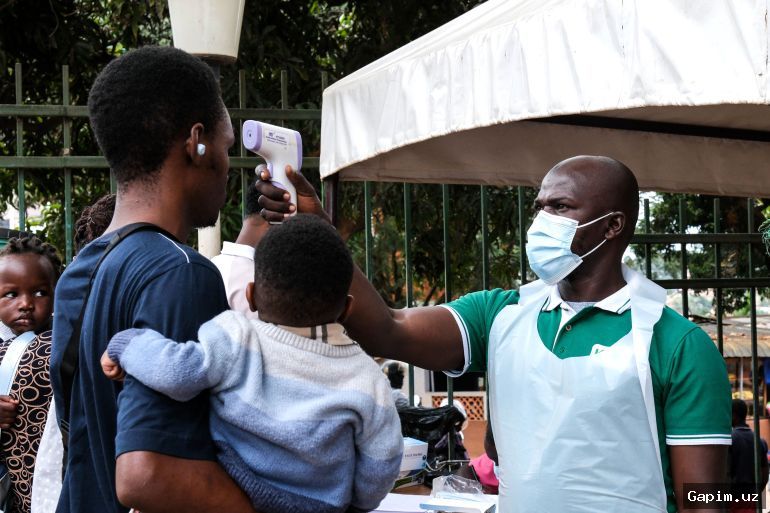
In an update on Friday, WHO chief Dr Tedros Adhanom Ghebreyesus also said the risk in the wider African region was 'high', but remained 'low' at the global level.
The rare Ebola species, known as Bundibugyo, has no proven vaccine and kills about a third of those infected. So far, the outbreak has resulted in 177 suspected deaths and 750 suspected cases in DR Congo.
Scientists at the UK's Oxford University are developing a new vaccine that could be ready for clinical trials within two to three months. However, there are no guarantees it will prove effective, and animal and human trials are needed.
Another separate experimental Bundibugyo vaccine is also in development, but it is expected to take six to nine months before any dose is ready for testing.
Speaking at a briefing in Geneva, Tedros said: 'We are now revising our risk assessment to very high at the national level, high at the regional level, and low at the global level.' He confirmed 82 cases and 7 deaths in DR Congo, and said the situation in neighboring Uganda was 'stable'.
Ebola is a rare but deadly disease. Although less deadly than other Ebola species, the rarity of Bundibugyo means fewer tools are available to stop it.
On Sunday, the WHO declared a public health emergency of international concern, but said it was not at pandemic level. Tedros also warned that violence and insecurity in the conflict-ridden region were hampering the response to the outbreak.
Source: www.bbc.com