China's crewed spacecraft Shenzhou-23 has successfully docked with the national orbital station Tiangong, according to the China Manned Space Agency (CMSA).
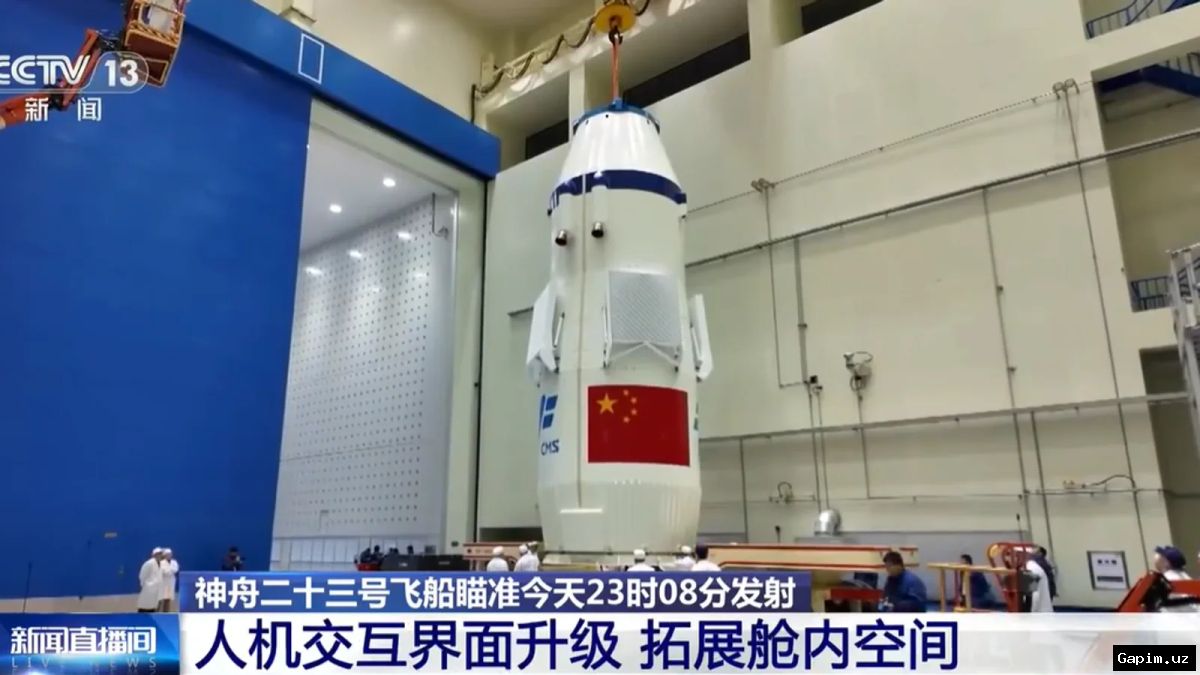
The spacecraft was launched from the Jiuquan Satellite Launch Center atop a Long March-2F rocket. The docking occurred at 02:45 Beijing time on May 25.
Onboard Shenzhou-23 are three taikonauts: mission commander and flight engineer Zhu Yangzhu, pilot Zhang Zhiyuan, and payload specialist Li Jiaying. The crew will replace the previous expedition members who have been working on the station since October 2025, and will conduct a series of scientific research and experiments.
Tiangong is China's national orbital station, completed at the end of 2022. The complex includes the Tianhe core module and two research modules—Wentian and Mengtian. The station is designed for a crew of three and is smaller in size than the International Space Station.
One of the key mission objectives is to study the effects of long-duration spaceflight on the human body. Scientists plan to investigate the impact of cosmic radiation, changes in bone density, and psychological factors associated with extended space missions.
Additionally, blastoids—artificially created cell structures used for scientific research—were previously delivered to the station.
It is reported that during this mission, one crew member may spend about a year in orbit—nearly double the standard duration of Chinese crewed flights. The final decision on who will stay longer will be made later after assessing the crew's condition.
The research conducted under the Tiangong program is seen as part of China's preparation for a future crewed lunar landing, which the country plans to achieve by 2030.
Source: kun.uz