The Israeli military has ordered the forced displacement of the entire population of the southern Lebanese city of Nabatieh, amid an escalation of its campaign ostensibly targeting Hezbollah positions in Lebanon.
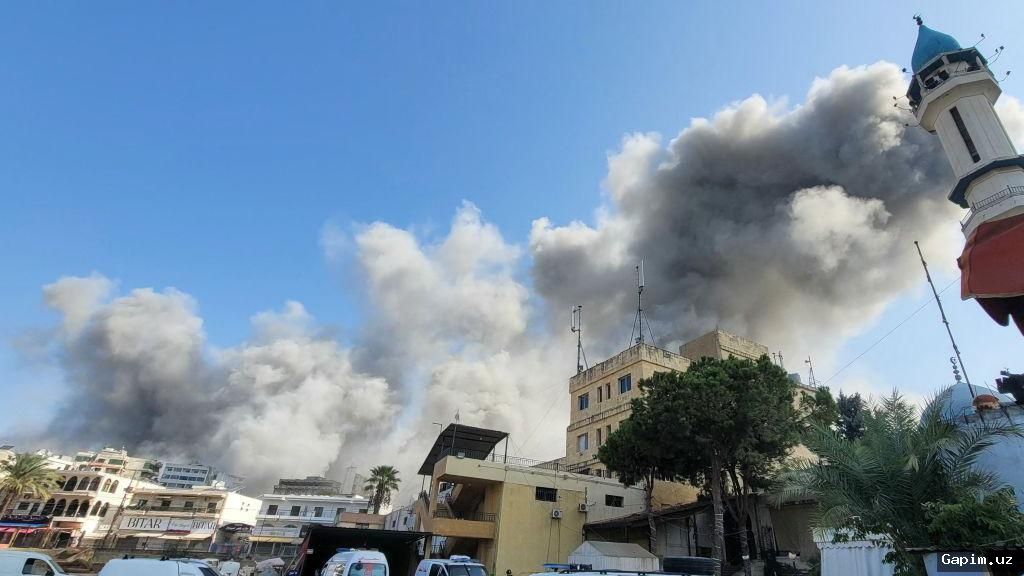
Israel struck towns on the outskirts of Nabatieh on Wednesday with “near continuous artillery shelling”, Al Jazeera’s Zeina Khodor reported, as Muslims in the country celebrated the Eid al-Adha holiday.
Local media reported that Israel hit Nabatieh multiple times on Tuesday, including direct air strikes on a cemetery within the city limits. Israel also struck surrounding villages, with the village of Yohmor al-Shaqif hit multiple times.
For its part, Hezbollah announced artillery and drone strikes on advancing Israeli forces around the town of Zawtar al-Sharqiya in the Nabatieh district.
Israel has killed at least 3,213 people in Lebanon, including paramedics and civilians, since it intensified its war on Lebanon on March 2, expanding its invasion and occupation of southern towns and villages.
Despite US President Donald Trump announcing another ceasefire on April 16, Israel and Hezbollah have continued to trade attacks, while Israel has established an approximately 10km buffer zone whose northern periphery is marked by what Israel calls a “yellow line.”
So why is Israel focusing so heavily on Nabatieh, one of the biggest cities in southern Lebanon? Analysts say the city holds symbolic, economic, and administrative significance as a key hub for the Shia community, from which Hezbollah derives much of its support.
Nabatieh is also known for the 1983 Ashura Uprising, when Israeli soldiers tried to force their way through a religious procession but were met by tens of thousands of angry civilians. The incident is said to have sparked armed resistance for the next 18 years.
Israeli Prime Minister Benjamin Netanyahu announced his military’s intention to “crush” Hezbollah. On Tuesday, Netanyahu said that the Israeli military had expanded its operations beyond the so-called “Yellow Line”.
“We are at war with Hezbollah, and we will intensify our strikes,” he said in a video released Monday. His announcement led to an exodus of people from Beirut’s southern suburbs.
While Israel claims it is attacking Hezbollah targets, many civilians have also been killed. On Wednesday, Lebanon’s Civil Defence forces announced they had rescued 15 civilians trapped inside damaged buildings in Nabatieh.
The government is preparing for direct negotiations with Israel on June 2 and 3. Addressing the nation on Eid al-Adha, Lebanon’s President Joseph Aoun said that Lebanon needs “love, solidarity, and unity … in light of the continued Israeli attacks”.
Hezbollah leader Naim Qassem delivered a televised address denouncing the upcoming direct negotiations between Lebanon’s government and Israel.
“Nabatieh has been repeatedly targeted since the 1978 invasion, 1982 occupation, in 1993 and in 1996, and in 2006, in 2024, and now,” said Jad Dilati, a political analyst from Nabatieh.
During the latest intensification starting March 2, Israel has repeatedly attacked Nabatieh and its surrounding areas. “Even before today, almost every area or province of Nabatieh has received an evacuation order,” Dilati said.
More than 1.2 million people in Lebanon are displaced, including many from Nabatieh and surrounding towns. After the ceasefire announcement on April 16, one displaced man told Al Jazeera he would not return until Parliament Speaker Nabih Berri declared it safe.
“What the evacuation order for the entire city did was force whoever remained to leave because they saw the intensity of the air strikes and the order instilled genuine fear. The city is now effectively empty, and the next goal is to destroy the city,” Dilati concluded.
Source: www.aljazeera.com