The World Health Organization (WHO) Director-General Tedros Adhanom Ghebreyesus has warned that the ongoing conflict in eastern Democratic Republic of Congo (DRC) is dramatically complicating efforts to contain an Ebola outbreak.
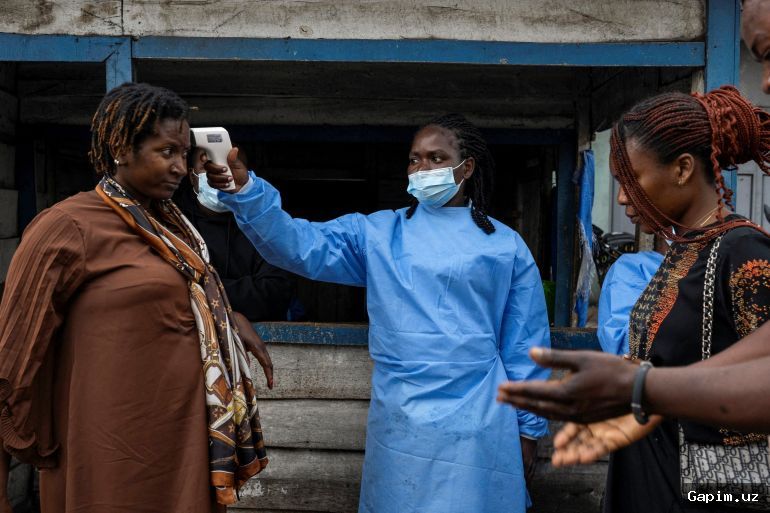
“Eastern DRC now faces a catastrophic collision of disease and conflict with the Ebola outbreak in Ituri province outpacing the response,” Tedros wrote on social media platform X on Wednesday.
The WHO has recorded at least 10 confirmed Ebola deaths and 220 suspected deaths in the country since mid-May. The organization has also recorded over 900 suspected cases since the DRC declared the outbreak on May 15.
The UN health agency said the true spread of the virus is likely much wider.
Tedros noted that the Bundibugyo strain of Ebola spreading in the DRC has “no approved vaccine nor treatment.” “Stopping this Ebola transmission depends entirely on humanitarian access,” he said.
The security situation in eastern DRC, plagued by conflict involving numerous armed groups for three decades, is a major obstacle. State services in rural areas of Ituri province have been largely absent for decades.
“Ongoing clashes are driving mass displacement, pushing exposed contacts into overcrowded camps and severing critical containment corridors. Frontline workers are risking everything, while attacks on health facilities make tracking cases and their contacts nearly impossible,” the WHO chief wrote.
“We cannot build community trust or isolate the sick while bombs are falling,” Tedros insisted. “We urge all warring parties to agree to an immediate ceasefire to contain this outbreak. To allow us safe and sustained access for medical teams. We plea to prioritize human survival above everything else.”
Earlier, health authorities warned that the outbreak is continuing to spread in parts of Africa, with neighboring countries also affected.
Ten countries, including Rwanda, Kenya, Tanzania, Angola, Burundi, Central African Republic, Republic of Congo, Ethiopia, South Sudan, and Zambia, face the risk of an Ebola outbreak, according to the Africa Centres for Disease Control and Prevention.
The WHO has also warned that while the risk of global spread remains low, the situation is being closely monitored due to the number of cases, infections among healthcare workers, and outbreaks in urban areas.
Source: www.aljazeera.com