In a groundbreaking study that challenges a fundamental rule of biology, scientists at Stanford University have discovered a bacterial protein capable of synthesizing DNA without using any existing genetic material as a template. The protein, named Drt3b, uses its own three-dimensional structure as a mold to assemble DNA building blocks into a long, sequence-specific strand.
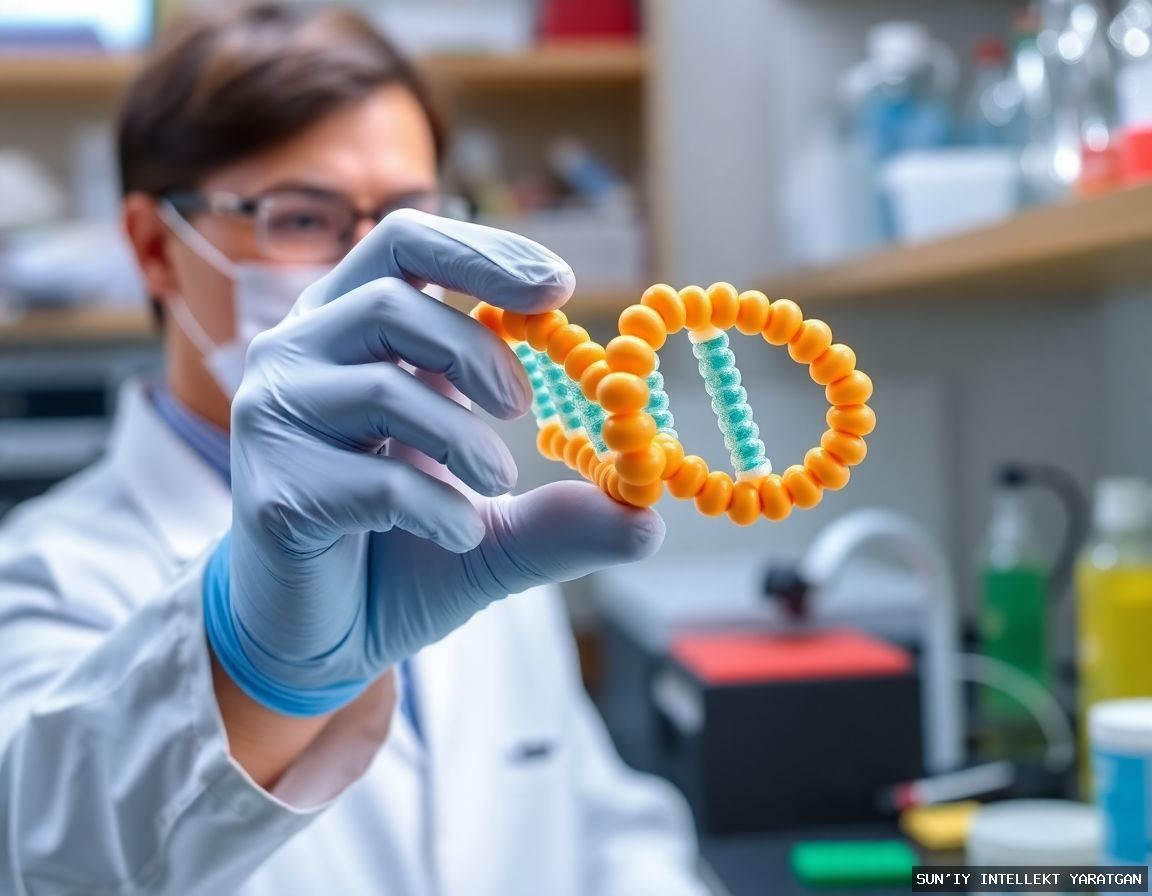
Lead author Alex Gao, a biochemist at Stanford, told DW: "It was quite a surprise! We didn't believe it until we saw the cryo-EM structure. That was the moment it really clicked for us." The findings were published in the journal Science in April.
The DRT3 system operates in two steps. First, protein Drt3a builds one DNA strand using a small piece of genetic material as a template. Then, Drt3b builds the complementary strand without any template, relying solely on its own structure to guide the correct placement of nucleotides. This is the first known instance of a protein producing a long, sequence-specific DNA strand in this manner.
Philip Kranzusch, a biochemist at Harvard Medical School not involved in the study, called the research "groundbreaking." He noted that scientists have studied DNA since the 1950s, yet bacteria have been quietly performing this feat all along, raising the question of what other biological surprises await discovery.
The discovery has practical implications. If scientists can engineer Drt3b to produce other DNA sequences, it could become a tool for building custom DNA molecules without needing a template. However, Rafael Pinilla-Redondo from the University of Copenhagen cautioned that such applications are still far off.
The study has sparked debate about the "central dogma of biology" — the principle that genetic information flows from DNA to RNA to protein, but never from protein to DNA. Pinilla-Redondo argues the dogma remains intact: "The exciting part is not that the rules of biology have collapsed. It is that evolution has found a very unexpected way to build a DNA molecule."
The exact biological function of DRT3 remains unclear. The leading hypothesis is that the DNA acts as a molecular sponge, soaking up essential components of attacking viruses and neutralizing them. Gao is cautious, stating that alternative models are still possible.
While comparisons to CRISPR are inevitable, Gao is measured: "CRISPR is a once-in-a-generation breakthrough that revolutionized biotechnology. While it is early to predict applications of DRT3, we are most excited about DRT3 for expanding our understanding of the mechanisms of DNA synthesis."
The discovery underscores that the field of bacterial immunity is still in its infancy. As Gao concludes, "It points to a vast reservoir of uncharacterized biology within microbial 'dark matter,' where fundamental mechanisms likely remain undiscovered."
Source: www.dw.com