More than two years ago, Gaza resident Hanin Muhammad and her 39-year-old sister Sabreen, a kidney transplant recipient, were flown to Baghdad for medical treatment. But Muhammad has since been confined to the Private Nursing Home Hospital in Baghdad's Medical City complex, thousands of miles from her home in Gaza.
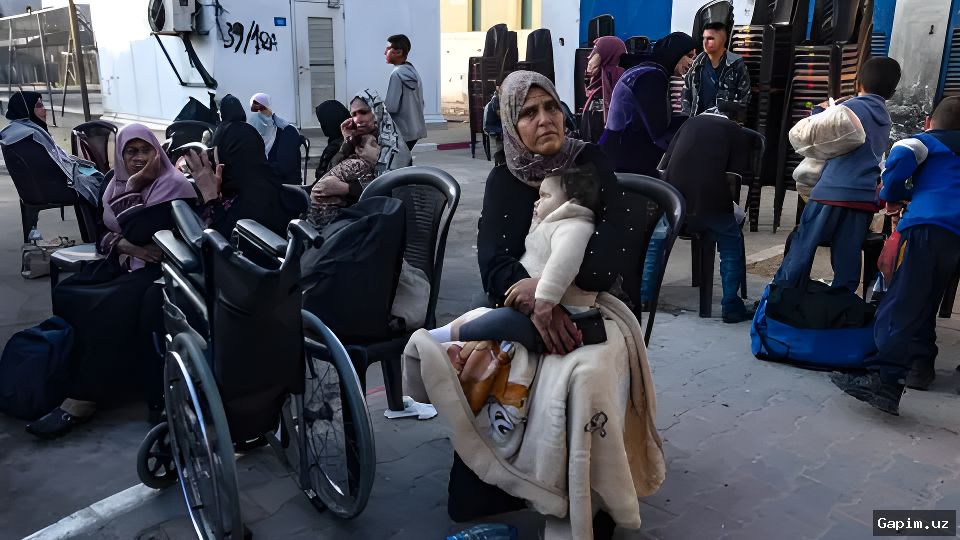
“My six children are in Gaza, and I am entering my third year without seeing them,” the 40-year-old Muhammad told Al Jazeera. Her family home in Rafah was destroyed by Israeli forces, forcing her children to live in makeshift tents between Rafah and Khan Younis.
“I check on them through other people because they lack internet connection. I am begging anyone to intervene so we can get back to Egypt, register, and see our children,” she said. Palestinians can currently only enter and exit Gaza via the Rafah crossing into Egypt.
Muhammad, who traveled to Iraq as a medical companion for her sister, is part of a forgotten cohort of 46 Palestinians evacuated to Iraq, including 21 patients and 25 family escorts. According to health authorities, the patients' conditions are severe: five oncology patients, four with blood disorders, one cardiac patient, one kidney disease patient, and 10 wounded in the ongoing genocidal war that has killed nearly 73,000 Palestinians and wounded over 172,000.
The group was flown to Baghdad in March 2024 on a military aircraft coordinated by the Iraqi and Egyptian governments. These rare evacuations highlight a broader medical crisis: Gaza's Health Ministry reports over 20,000 patients and wounded waiting to travel abroad for treatment.
Zaher al-Waheidi, head of the ministry's Information Unit, reported that 1,200 children in Gaza now suffer from spinal cord injuries and paralysis, while 4,000 children require urgent treatment abroad. In 2025, over 4,000 women had premature deliveries, and 4,800 babies were born with low birth weights – double the pre-war figure.
For those who made it out, the promised sanctuary quickly became a cage: documents were confiscated, movement restricted. Muhammad said Iraqi authorities took their identification papers and have not returned them. The Palestinian Embassy issued new passports, but they remain unstamped by the Iraqi government and are functionally useless.
Noor Ibrahim, a pseudonym for a young woman who arrived as an escort for her cancer-stricken aunt, said: “I have been engaged for four years, and my fiancé and family are in Gaza. We left on the promise that it would be a temporary six-month treatment trip, but now, two years have passed.”
Samah Abdul Moati, 65, battling leukemia, liver cancer, and an arm injury, said: “The hospital brings food every day, but no one can eat it because it is unfit for consumption. We are surviving on the grace of local well-wishers.” Two of her sons were killed in the war, and her husband is alone in a Gaza ICU.
When evacuees protested, hospital management locked down the ward and banned them from even visiting the garden. Iraqi Health Ministry spokesperson Saif Albadr did not answer calls, while public relations head Ruba Falah Hassan called the case “political.”
Newly appointed government spokesperson Haidar Al-Aboudi said he would look into the matter. However, the evacuees lack funds for commercial flights even if their documents are returned, and desperately need coordinated charity or government help to return to Egypt.
Source: www.aljazeera.com