On April 27, several hundred protesters gathered in front of the US Supreme Court in Washington, DC, holding signs with slogans like “How much cancer is acceptable?” and “Monsanto knew.”
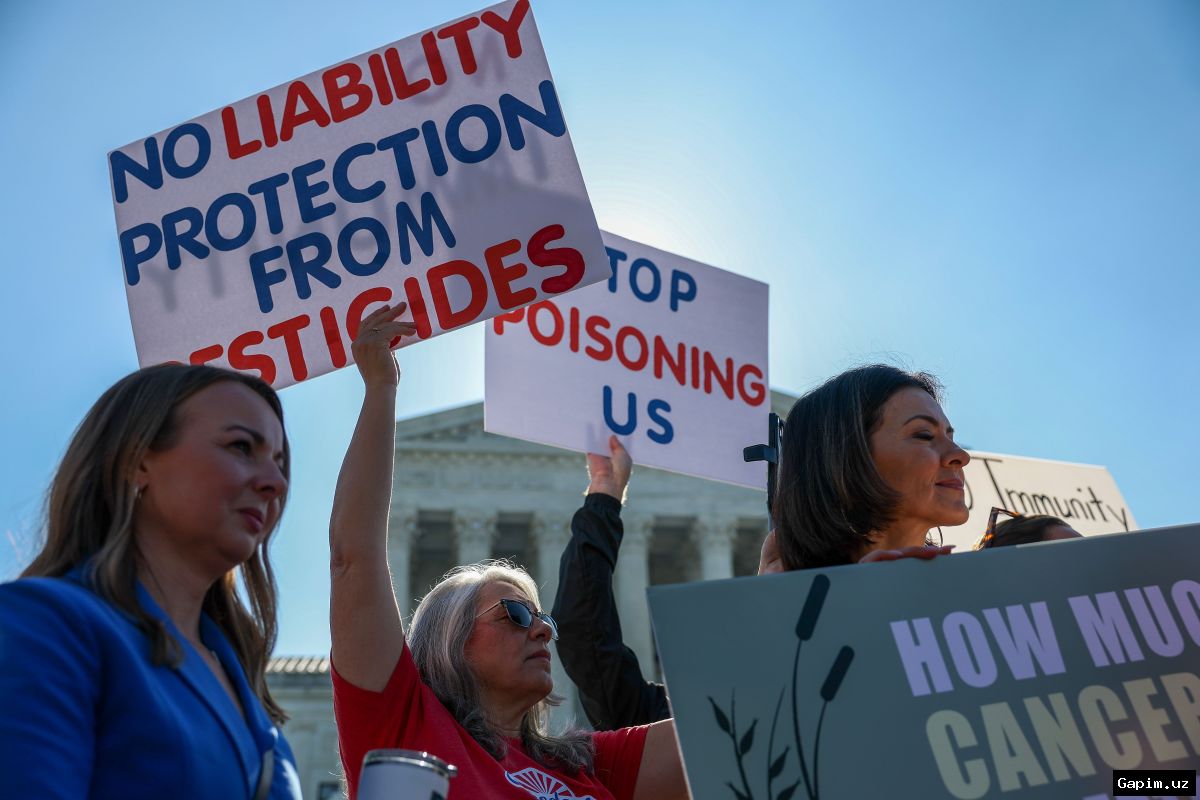
Inside, the court was hearing oral arguments in the case Monsanto Company v Durnell, which could make it harder to sue Bayer over allegations that glyphosate, the nation’s most widely used herbicide, causes cancer. Glyphosate was until recently the key ingredient in Bayer’s Roundup product.
Bayer has settled almost 100,000 such cases, paying about $11 billion to plaintiffs. Tens of thousands of unsettled cases remain, and new cases continue to be filed.
Headlining the “People vs Poison” rally were a handful of newly prominent “MAHA moms” – influencers and grassroots organizers who rallied behind Robert F. Kennedy Jr.’s presidential run. When President Donald Trump promised to bring Kennedy on as health secretary to help “Make America Healthy Again,” he got a boost from that base.
But much to their dismay, the Trump administration backed Bayer at the Supreme Court. “A government that shields corporations from the people does not serve the public. It is captured. And Americans see this capture!” said Kelly Ryerson, known on Instagram as “Glyphosate Girl.”
Since the election, these activists have supported Kennedy’s agenda while testing their political muscle, seeking to influence decisions in Congress, the White House, the courts, and at the ballot box on health issues, including chemicals used in foods.
Speakers at the rally included Zen Honeycutt (Moms Across America), Vani Hari (“Food Babe”), and Turning Point USA contributor Alex Clark. Most are white, wealthy, and well-educated, with backgrounds in management consulting, banking, or media before moving into health and wellness, according to their LinkedIn profiles.
After the rally, the MAHA moms visited the House of Representatives and used X to pressure lawmakers. On April 30, 73 Republicans joined most Democrats to pass a MAHA-aligned amendment removing liability protections for pesticides from the Farm Bill.
“It was really nerve-racking,” Ryerson told Al Jazeera later. “We watched the live voting and could not have been more relieved and excited.”
The MAHA moms quickly returned to X to blast House Republicans who voted to protect chemical companies. Clark called Representative Mary Miller a “SNAKE!” and “NASTY.” They framed the vote as an electoral mandate, threatening senators.
The power of MAHA to drive midterm votes remains unclear. The movement is best known for anti-vaccine advocacy. In May, Honeycutt opposed a state-level vaccine mandate in New York. Health Secretary Kennedy removed all members of the CDC’s vaccine panel in 2025 and removed six vaccines from the childhood schedule.
For many MAHA influencers, vaccines are just one example of threats to children’s health. Pesticides and other environmental toxins also loom large. A Reuters/Ipsos poll found that roughly four in five Americans are concerned about pesticides, chemicals, and food additives.
Tracey Woodruff, an epidemiologist at Stanford University, disagrees with MAHA on vaccines but says they are right to be concerned about chemical exposures. “We have a system that is not considering the science appropriately and is not taking the right actions to protect people,” she said.
At the White House, industry appears to be out-influencing the influencers. Last year, a White House MAHA Report criticized glyphosate and corporate influence, but a follow-up strategy mentioned pesticides only in a paragraph about how well the current system is working. In February, an executive order called for increased domestic production of glyphosate to support national security, angering MAHA moms.
Ryerson asked the administration for billions to increase pesticide oversight and help farmers transition away from pesticides. She also asked to stop spraying glyphosate before harvest, already banned in Europe. A month later, new commitments have not materialized.
“I’m just incredibly frustrated that I don’t think that this movement belongs under this administration,” Ryerson said. “They’re not going to bat for the voters that put them in office.”
Cassidy DiPaola, a climate organizer, said MAHA’s fight with Bayer mirrors climate activists’ battles against fossil fuel companies. “Big Oil is watching Bayer. Bayer is watching Big Oil,” she said.
Source: www.aljazeera.com