Bulgarian Defense Minister Dimitar Stoyanov announced on Tuesday that the country would halt state arms supplies to Ukraine, a move that has sparked debate over its true target. The ban does not affect commercial exports by the private defense industry, raising questions about whether the policy shift is aimed more at a domestic pro-Russian audience than at Kyiv.
Following Russia's full-scale invasion of Ukraine in 2022, Bulgarian officials initially insisted that 'not a single bullet made in Bulgaria' was being sent to Ukraine. In practice, however, the country's defense industry significantly increased exports to intermediaries such as Poland and the Czech Republic, which then supplied the weapons to Kyiv, allowing the then-coalition government to balance internal political pressures.
The latest ban applies only to direct supplies from state stockpiles. Defense Minister Stoyanov justified the decision during a parliamentary hearing on Wednesday, claiming the country 'has no more weapons to give' because its stockpiles are 'below the minimum required level.' However, he also acknowledged that Kyiv had not requested any new state-supplied weapons since he took office in early May, casting doubt on the timing and necessity of the announcement.
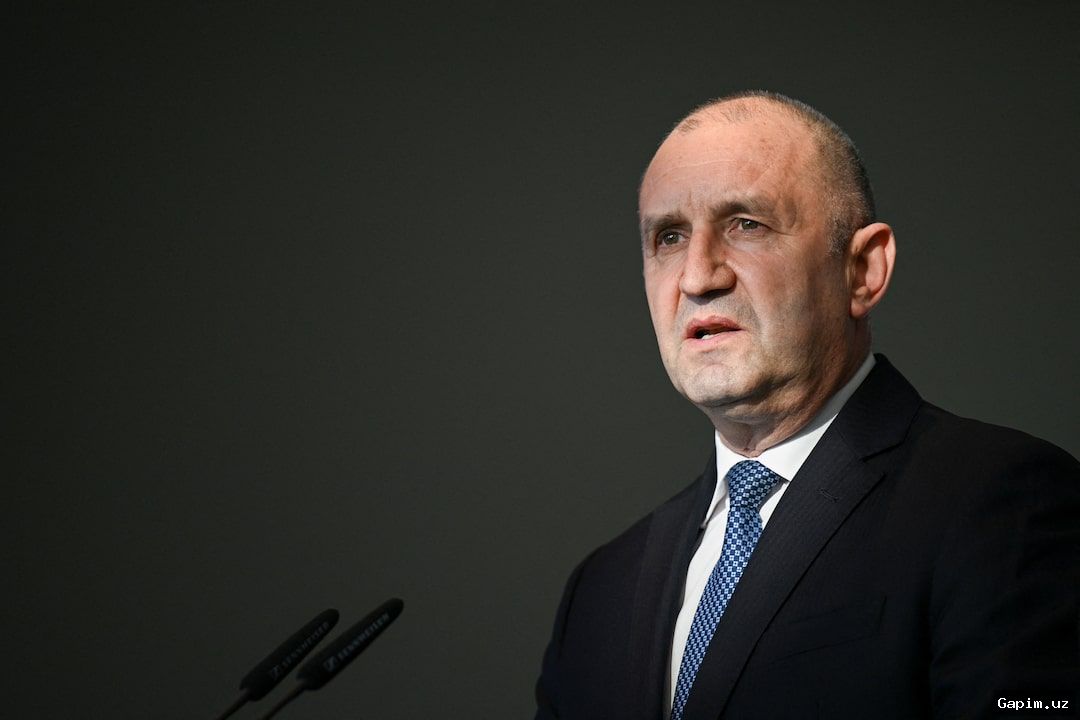
As a close associate of Prime Minister Rumen Radev, Stoyanov's decision appears to reflect the government's broader line. Radev, who campaigned on a platform of fighting corruption and pursuing a 'pragmatic' foreign policy, has consistently opposed further weapons deliveries to Ukraine, describing larger European-funded arms initiatives as a 'doomed cause.' 'We have already given enough, while our country continues to suffer socio-economic damage from this bloody war,' Radev said on Wednesday.
Critics note that Radev downplayed the fact that military aid from state stockpiles has been largely reimbursed through the European Peace Facility (EPF). In response to a DW inquiry, the Ministry of Defense confirmed that Bulgaria received over €3 million from the EPF in 2025 and 2026, and trilateral agreements generated more than €200 million for the ministry's budget, over half of which was used to cover the state budget deficit.
Former Defense Minister Todor Tagarev, who served from 2023 to 2024, told DW that the EPF mechanism provided additional funds that could be reinvested in military modernization. During his tenure, Bulgaria supplied old Soviet-era arms and received modern NATO-standard equipment in return. 'Bulgaria is now losing this opportunity,' Tagarev said, referring to the export ban on what he called 'obsolete weapons.'
Former Foreign Minister Nadezhda Neynski, who served from 1997 to 2001 and again earlier this year, confirmed that 'military assistance to Ukraine does not diminish the Bulgarian army's capabilities, indeed, it enhances them.' She noted that past state supplies included 100 BTR-60PB armored personnel carriers and defective missiles for S-300 surface-to-air systems. In March 2026, Neynski signed a security cooperation agreement with Ukraine, which she said offered access to 'cutting-edge defense technology' developed in Ukraine.
The policy shift has drawn criticism from pro-Western figures, who argue it damages Bulgaria's reputation. 'The message being sent to our partners is: 'You cannot count on us',' Neynski told DW. 'And this war will end, and participation in Ukraine's reconstruction will be possible only for countries that are trusted.'
According to a recent Eurobarometer survey, 66% of Bulgarians oppose financing arms purchases for Ukraine, compared with 39% across the EU. Tagarev suggested that the government's statements are 'mainly for domestic use — for the Russophile electorate of Progressive Bulgaria, in order to maintain the view that we do not want to harm Russia's interests.' Neither the President of the European Commission nor the President of the European Council has commented on Bulgaria's policy shift.
Source: www.dw.com