On June 17, 1991, Polish Prime Minister Jan Krzysztof Bielecki and German Chancellor Helmut Kohl signed the Treaty on Good-Neighborliness, Friendship and Cooperation in Bonn. The agreement marked a historic reset in relations after decades of post-World War II enmity, paving the way for close alliance within NATO and the European Union.
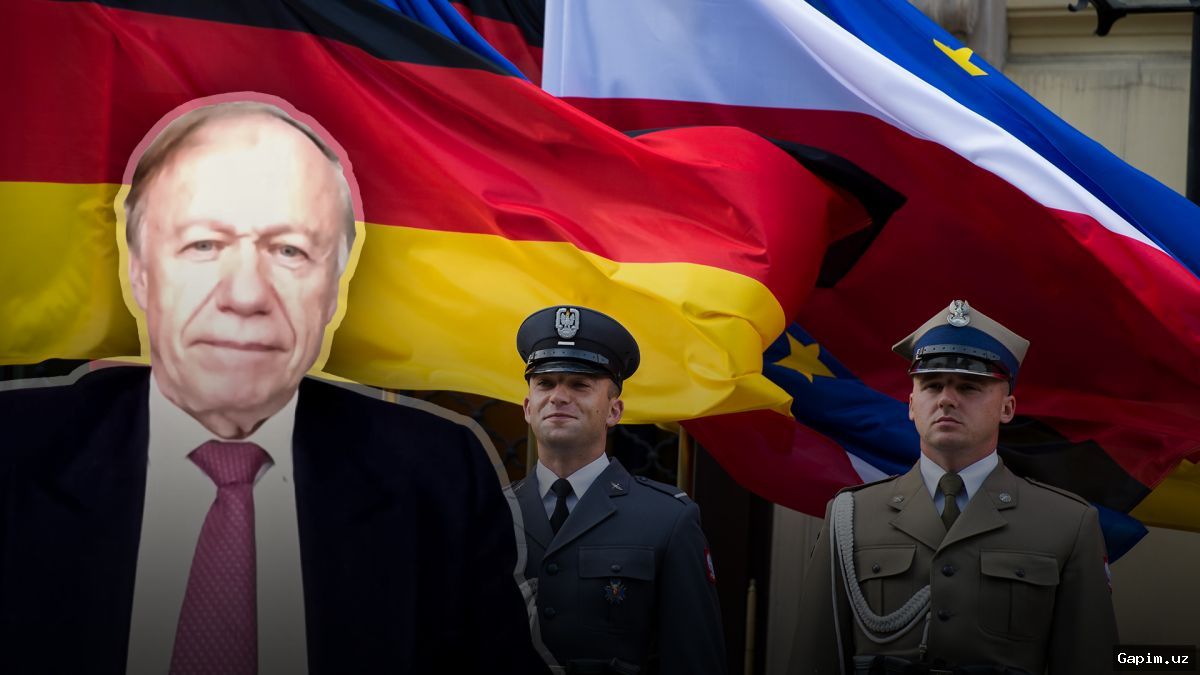
Thirty-five years later, on June 17, 2026, the anniversary will be commemorated at the German-Polish Forum in Berlin. Poland's Senate hailed the treaty as a "foundation of the new order in Europe after the collapse of the Iron Curtain" and a "breakthrough." Germany's Bundestag held a debate titled "Strong friendship in peace and freedom."
The treaty followed the confirmation of the Oder-Neisse line as the permanent border in November 1990. Earlier attempts at rapprochement, such as Willy Brandt's Ostpolitik in the 1970s, had only achieved normalization, not full reconciliation. The collapse of communism in Poland in 1989 and German reunification in 1990 finally enabled a fresh start.
Lawmaker Marek Krzakala noted that German support was crucial for Poland's accession to NATO (1999) and the EU (2004). Today, bilateral trade exceeds €180 billion, making Poland Germany's fifth-largest trading partner. Hundreds of partnerships exist between cities, schools, and fire departments, and over three million young people have participated in exchange programs.
However, early Polish enthusiasm gradually gave way to skepticism. The right-wing Law and Justice (PiS) party, led by Jaroslaw Kaczynski, used anti-German rhetoric to score political points, accusing Berlin of seeking to establish a "Fourth Reich." In 2022, the PiS government officially demanded war reparations, estimated at €1.4 trillion for losses during German occupation.
Berlin has rejected all reparation claims, but discussions continue on a "pragmatic solution" for some 50,000 surviving war victims. Germany's offer of about €200 million was deemed insufficient by Warsaw in 2024. Prime Minister Donald Tusk has given Berlin "a little more time" to improve the offer.
Russia's invasion of Ukraine in February 2022 shifted security to the forefront of bilateral ties. Germany deployed Patriot air defense systems and Eurofighter jets to protect NATO's eastern flank in Poland. A German-Polish Defense Agreement, to be signed on June 17, is expected to deepen military cooperation.
Former Polish ambassador to Germany, Janusz Reiter, warned that Poland's eastern border is also Germany's first line of defense and urged active support. He described integrating Ukraine into Western structures as the greatest challenge, calling it a "historic sensation" but fearing the window of opportunity may soon close.
Source: www.dw.com