At a moment when Israel and its leaders stand accused before international courts of genocide, war crimes and crimes against humanity, Britain has chosen to direct some of its most powerful legal tools not at those enabling the destruction of Gaza, but at activists protesting against it.
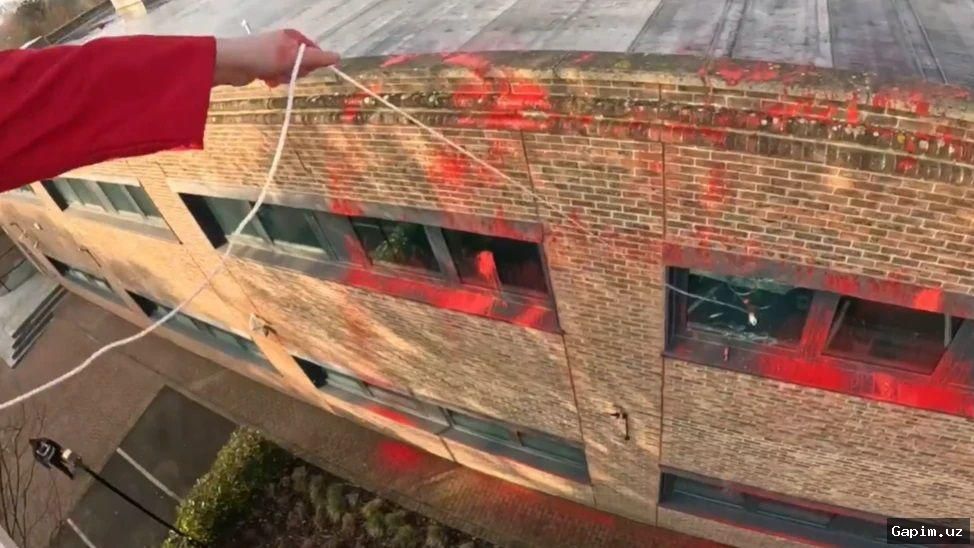
The sentencing of the Filton 4 raises questions that extend far beyond the fate of four individuals. Whatever one's view of their actions, the case forces Britain to confront an uncomfortable contradiction: why does opposition to Israel's actions increasingly attract the language of extremism and terrorism, while support for those actions remains firmly within the bounds of respectable politics?
For more than two and a half years, the world has witnessed the destruction of Gaza on a scale unprecedented in Palestinian history. What began in October 2023 has evolved into what growing numbers of legal scholars, UN experts, human rights organizations and genocide scholars have described as a genocide. Entire neighborhoods have disappeared. Hospitals, schools and universities have been destroyed. Aid has been obstructed. Starvation has been weaponized. Much of Gaza has been rendered uninhabitable.
Yet in Britain, an increasing share of the political conversation appears to focus not on the genocide itself, but on those opposing it. The Filton 4 case centers on damage to property. Gaza has witnessed the destruction of an entire society. Yet it is the former that is increasingly discussed through the language of terrorism.
Terrorism legislation occupies a unique place within any democratic legal system. It exists to address conduct regarded as posing an exceptional threat to public safety and national security. The deployment of such legislation carries significance beyond the punishment of any individual. It sends a signal about what the state considers dangerous and what it regards as legitimate political concern.
The question is not whether activists should be above the law. Nobody is arguing that they should. The question is why opposition to Israel's actions in Gaza is increasingly being viewed through a security lens while support for those actions remains politically protected.
The case did not emerge in isolation. It forms part of a broader pattern that has characterized Britain's debate on Palestine since the start of Israel's war on Gaza. Over time, criticism of Israel has become increasingly controversial. Palestine solidarity has become suspect. Allegations of anti-Semitism have increasingly been attached to opposition to Israeli policy. Activists have found themselves subjected to extraordinary scrutiny. The language of extremism has become commonplace. Now, terrorism legislation has entered the conversation.
Each step has moved public debate further away from Gaza itself and closer towards those speaking about Gaza. Anti-Semitism exists and should be confronted wherever it appears. But criticism of a government is not the same thing as hatred of a people. Democracies depend upon maintaining that distinction.
The context of the Filton 4 case is also important. The activists were not protesting against an abstract foreign policy disagreement. They were targeting facilities linked to Elbit Systems, Israel's largest weapons manufacturer, a company whose products and technologies have been used by the Israeli military during the destruction of Gaza. Their actions were explicitly connected to opposition to Britain's relationship with companies involved in supplying the machinery of a war that many legal experts have described as genocidal.
What makes the use of terrorism legislation particularly striking is the contrast it exposes. Britain continues to maintain military, diplomatic and economic relations with a state accused before international courts of committing genocide. At the same time, some of the strongest legal tools available to the British state are increasingly directed at those protesting against that relationship.
A society reveals its values not only through what it condemns but through what it chooses to tolerate. When activists opposing a genocide are discussed through the language of terrorism while those facilitating, defending or profiting from that genocide continue to enjoy political protection, many people will inevitably conclude that something has gone badly wrong.
For Palestinians, the implications are difficult to ignore. For decades, Palestinians have been told to pursue change through peaceful and democratic means. Yet, as the destruction of Gaza has intensified, many Palestinians have watched the political space available for opposing that destruction shrink rather than expand.
The significance of the Filton 4 case extends far beyond four individuals. It raises fundamental questions about democratic dissent, selective outrage and the direction of Britain's public discourse on Palestine. The most important question is not whether these activists deserve punishment. It is whether Britain is comfortable with a situation in which opposition to a genocide increasingly finds itself associated with extremism, and extremism is increasingly associated with terrorism.
A democratic society should not fear those demanding an end to mass suffering. It should fear becoming a society in which such demands are treated as a threat.
Source: www.aljazeera.com