Across Africa, a young population is confronting aging, autocratic rulers. Unwilling to settle for democratic rituals alone, many are searching for creative new ways to shape their future.
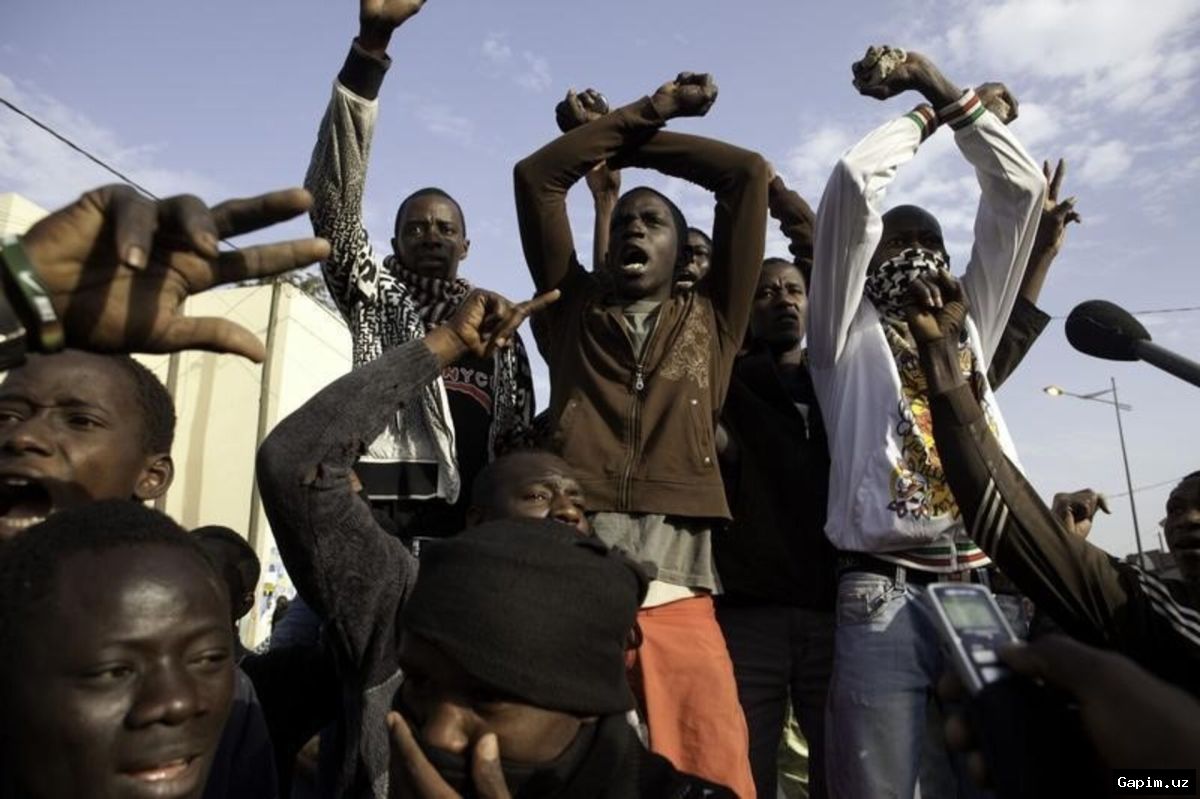
On a street in Lusaka, Zambia, a young man named Clinton says: "We are not only the future, we are the present. But are they listening to us?" In Douala, Cameroon, Jean David Blot of the grassroots movement "The Okwelians" declares: "There is no Cameroon anymore. We have to rebuild everything. Everything."
Student Mbayo Akiri in Dar es Salaam, Tanzania, notes: "If you want to run for office, that is great. But there are certain systems that ensure that certain types of people do not get beyond a certain point."
They represent a trend felt across Africa: a motivated young generation, full of ideas, wants to make decisions and create change but faces the limits of a system maintained by a small, often aging elite. Is democratic participation a dead end, or are there new paths? DW explores these questions in a mini-series featuring reports from five African countries.
Africa is a young continent. According to Worldometer, the median age is 19.5 years. In 2023, of roughly 1.5 billion Africans, more than 870 million were under 25, while only 53 million were 65 or older.
Researchers Christine Hackenesch and Godfred Bonnah Nkansah examined how young Africans view democracy in a meta-study using Afrobarometer data. They identified a trend: young people are increasingly less likely to vote. Bonnah Nkansah said: "Young people are disillusioned with their governments. They feel it would not make much difference whether they vote or not."
But they are not willing to accept this: "The data shows that young people are increasingly exploring alternative ways of political influence — for example through protests," he said. Protests are taking place on the streets and in the digital space, where people organize via social networks.
Kyle Findlay, co-founder of Murmur Intelligence, said: "People in Africa no longer rely on democracy as strongly as they used to. Democracy in Africa has not consistently delivered the desired results." When democracies fail to create better living conditions and suppress freedom of expression, frustration grows.
In Tanzania, as the government of President Samia Suluhu Hassan cracked down on social openness, many took to the streets. Akiri said: "We were raised with this idea of not questioning authority. That has changed. We are not known for protests." She does not participate: "There are ears everywhere. And you never know who will be next."
According to Bonnah Nkansah, the virtual space offers numerous possibilities, especially for spreading political information or mobilizing people. "Social networks seem to be a good way to amplify shared concerns," he said.
Sociologist Joschka Philipps of Bayreuth noted: "The first major example emerged in 2011 with the Arab Spring, also known as the Facebook Revolution. Since then, similar patterns have appeared. But states have learned to use social networks to identify protest leaders and silence them."
Philipps called for more patience: "The colonial origins of these states remain highly relevant. The way democracy was supposedly promoted from the Global North was itself anti-democratic." Amid these complex realities, people are searching for new paths.
"Digital democracy may not create change in real life," said Akiri. "But in our hearts, we are changing. And if we get the opportunity, maybe we will do things differently."
In Cameroon, where 93-year-old President Paul Biya is in power, the Okwelians know they need endurance. Doris Ngum said: "If we want to heal and rebuild, it is important to educate the next generation to become visionary leaders who serve others. Do not wait for the government. You are the change!"
Source: www.dw.com