At the alpine resort of Burgenstock in Switzerland last weekend, United States Vice President JD Vance stood alongside Pakistani Prime Minister Shehbaz Sharif and Qatari Prime Minister Sheikh Mohammed bin Abdulrahman bin Jassim Al Thani. A few meters away stood Pakistani military chief Asim Munir, whom Vance pointed to as he began his remarks.
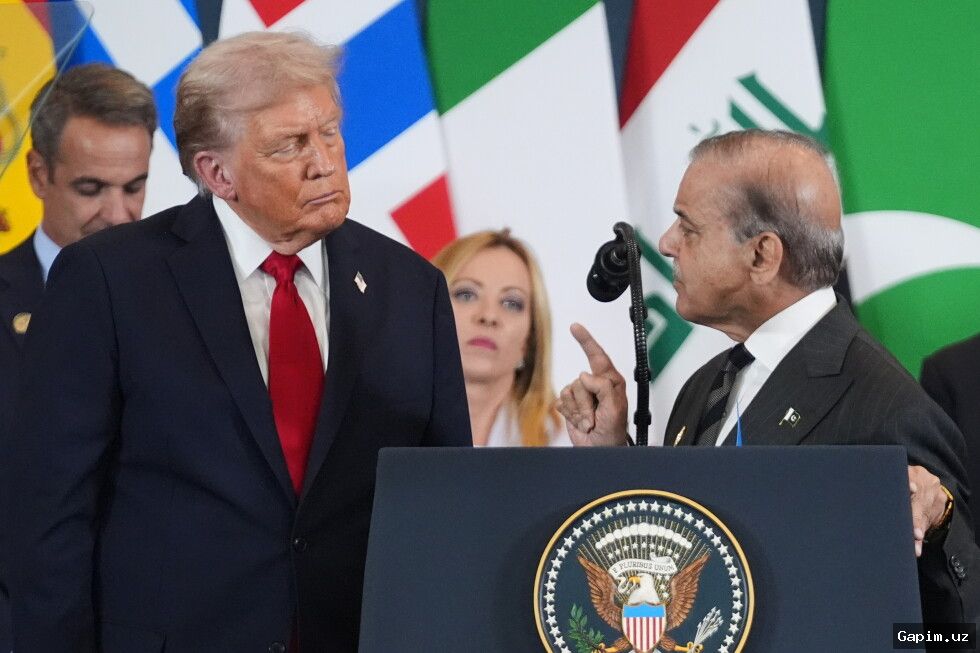
"Since Field Marshal Asim Munir welcomed us with the prime minister in Islamabad [in April], I have joked that I have two very, very important people in my life, an Indian and a Pakistani. The Indian is my wife, and the Pakistani is Field Marshal Munir," Vance said to laughter. His wife, Usha Vance, is the daughter of Indian immigrants. He added that he had spoken to Munir more than anyone else over the previous three months.
The praise was not limited to Washington. Iranian President Masoud Pezeshkian arrived in Islamabad on Monday for a state visit, his first foreign trip since Iran was attacked by the US and Israel on February 28, and thanked Islamabad for helping bring Washington and Tehran to the negotiating table. The visit underscored how the past four months have repositioned Islamabad in Tehran's calculations.
Pakistan has spent much of that period acting as an indispensable intermediary between the US and Iran, facilitating backchannel contacts, hosting talks in Islamabad, and managing the political risks of opening transit routes to Iran while balancing its Gulf relationships. The peace framework agreed on June 18 and the 60-day negotiations now underway are partly the result of that effort.
The question now confronting Islamabad is more immediate: What does Pakistan actually gain? For Pakistan's fragile economy, the answers cannot come soon enough. The country recorded GDP growth of 3.7 percent over the past financial year, its fastest pace in four years, while remittances rose 8.2 percent to $30.3 billion. The fiscal deficit also narrowed sharply. But Hina Shaikh, a Lahore-based economist with the International Growth Centre, said the picture behind those numbers is less encouraging.
"Pakistan's mediation may yield only narrow economic gains, mainly in the form of reduced energy import costs as the Strait of Hormuz reopens and potentially renewed momentum on the Iran-Pakistan gas pipeline if sanctions relief sustains," she told Al Jazeera. "The recent growth is mainly a result of a drop in oil and gas imports due to the Hormuz closure rather than any expansion in production."
Pakistan remains in a $7 billion loan programme with the International Monetary Fund, its 25th arrangement with the lender since the 1950s. Western governments have spoken positively about developing deeper economic ties with Pakistan, but diplomatic goodwill does not automatically translate into investment or structural relief, according to analysts.
Inside Pakistani policy circles, the argument is that the real reward lies less in bilateral economic concessions and more in regional dividends as a durable Iran-US deal could reshape Pakistan's neighbourhood. Sanctions relief on Iran could reopen trade flows along the Balochistan border. The Iran-Pakistan gas pipeline, stalled for more than a decade under US sanctions pressure, could return to the agenda.
But the diplomatic picture is more complicated than Islamabad's public messaging suggests. Umer Karim, an associate fellow at the Riyadh-based King Faisal Center for Islamic Research and Studies, said Pakistan entered the crisis by filling a specific vacuum that may now be narrowing. "Pakistan entered this regional crisis as a communication enabler between the US and Iran at a time when the Trump administration didn't trust any possible mediator," he said.
There is another question running beneath the diplomacy. Vance's remarks at Burgenstock singled out Munir, who is not a civilian government figure. Observers said the Pakistani institution that has most visibly benefitted from the past four months is the military. It has directly ruled Pakistan for more than 30 years of its nearly 80-year history as an independent nation. The army chief, particularly Munir, is seen by detractors as the de facto ruler of the country.
Some argued the costs will fall hardest on those furthest from the diplomatic table. Tughral Yamin, a retired brigadier and Islamabad-based defence analyst, said the real domestic test would be whether any economic gains reach the southwestern province of Balochistan, Pakistan's most impoverished region, which has been facing a more than two-decade armed campaign involving rebel groups seeking secession. "If the economic benefits are shared with the people of Balochistan, the scourge of terrorism can be eliminated," he told Al Jazeera. "We stand at the cusp of great economic opportunity, though we have missed too many opportunities in the past."
Source: www.aljazeera.com