After four days of marathon talks in Washington, DC, brokered by the United States, Israel and Lebanon have agreed on a new framework agreement aimed at ending months of conflict.
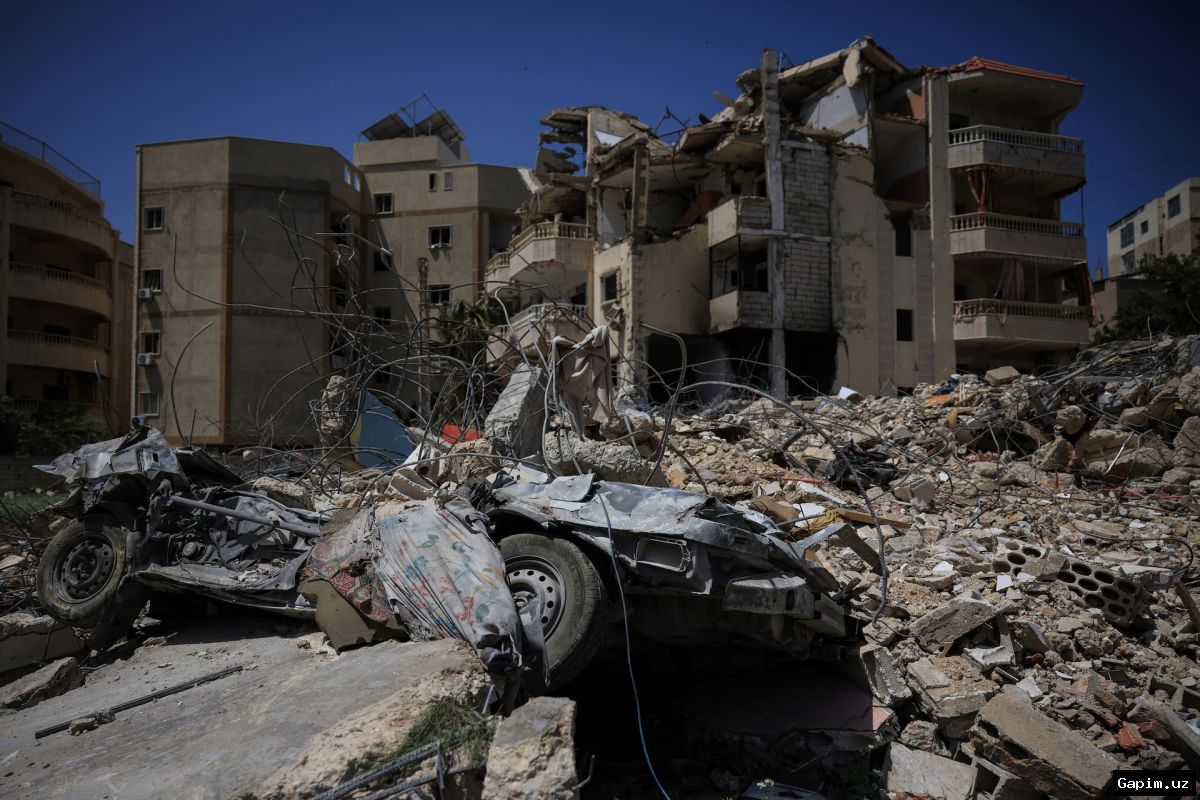
Israel has occupied nearly 20 percent of Lebanese territory in the south and killed more than 4,000 people since fighting erupted on March 2. A previous bout of fighting ended in a ceasefire in November 2024, but Israel carried out almost daily attacks and refused to end its occupation in breach of the deal.
The new deal, however, does not specifically call for the withdrawal of Israeli forces and instead ties it to the disarmament of Hezbollah – a condition repeatedly rejected by the Iran-backed armed group.
Hezbollah chief Naim Qassem on Saturday rejected the framework agreement, calling it “null and void”. Hezbollah has demanded that Israel first end its occupation.
Hezbollah supporters flooded the streets of the capital, Beirut, on Friday evening to oppose the deal.
The agreement text speaks of a “sequenced process” that will see the Lebanese army restore “effective sovereign authority over all Lebanese territory, pending the verified disarmament of non-state armed groups” – a clear reference to Hezbollah.
The deal does not mandate Israeli withdrawal from the occupied Lebanese land. Instead, Israel shall “progressively redeploy” out of Lebanon, offering two “pilot zones” where the Lebanese military “will gradually assume full and effective security responsibility”.
Prime Minister Benjamin Netanyahu later said one zone is south of the Litani River, the other north of the Litani in a small area of the expanded security zone. Once conditions are met, “Lebanese civilians will be able to safely return to these areas under the exclusive control of Lebanese state authorities.” More than 1.2 million people have been forcibly displaced.
Israel says returning southern Lebanon to government control would “eliminate any future need for Israeli military action or presence in Lebanon” and declared it “has no territorial ambitions in Lebanon”.
The Lebanese government signed that it rejects “the claims of any state or non-state actor to use force on its behalf without its explicit authorization.”
Netanyahu issued a video statement stressing that the framework would allow Israeli forces to remain in occupied Lebanese land. “We will maintain [the buffer zone] until Hezbollah disarms and as long as there is a threat to the State of Israel,” he said.
President Joseph Aoun expressed gratitude to Trump and other mediators, hailing the agreement as “the first step on the path to restoring Lebanon’s sovereignty.”
Hezbollah leader Qassem on Saturday condemned linking Israeli withdrawal to the group’s disarmament as “a very dangerous proposition.” He said, “The framework agreement in Washington is humiliating, shameful, and a surrender of sovereignty.”
Hezbollah parliament representative Hassan Fadlallah said Lebanese authorities would not be able to enforce the deal unless, with US support, “they go to civil war.”
Before the signing, Qassem said Hezbollah would hold its weapons closer, ready to fight Israel for Lebanon if the state fails to do so.
US Secretary of State Marco Rubio called the agreement “the beginning of the beginning” and announced an “immediate” $100 million US donation for humanitarian assistance.
Two previous US-brokered ceasefires failed to stop the fighting. Tehran has not officially reacted, but state media opposes the deal. Fars news agency noted the agreement essentially allows the US to violate the first clause of the Islamabad Memorandum of Understanding (MoU).
Analysts point to direct contradictions between the Islamabad MoU and the Israel-Lebanon agreement. The MoU mandates an end to hostilities on all fronts with no conditions, while the new deal ties it to Hezbollah’s disarmament.
Israel has not adhered to previous ceasefire agreements and continued attacks on Lebanese territories. On Saturday, NNA reported an Israeli drone strike on a intersection in Nabatieh.
Israel has killed at least 4,192 people in Lebanon since the start of the war on Iran four months ago.
Tahani Mustafa, a visiting fellow at the European Council on Foreign Relations, told Al Jazeera that Israel and Washington would “definitely use the fact that Hezbollah refuses to disarm to blame Hezbollah for derailing the entire process.” She added that Israel “has proven it is acting in bad faith, which gives no confidence to Hezbollah to disarm.”
Mustafa also noted Washington’s blame, arguing that “American negotiators actively work behind the scenes to decouple Lebanon and Iran.”
Al Jazeera’s Ali Hashem said the agreement is an “existential threat” to Hezbollah. “Without Hezbollah’s consent, this is not going to happen. This is going to be a recipe for another confrontation. The Lebanese government isn’t capable of imposing this deal,” he said.
Source: www.aljazeera.com