When Lona Chepkemoi walked into a technical college classroom in 2023, she found something she had rarely experienced during her years in school: She could understand what the teacher was saying.
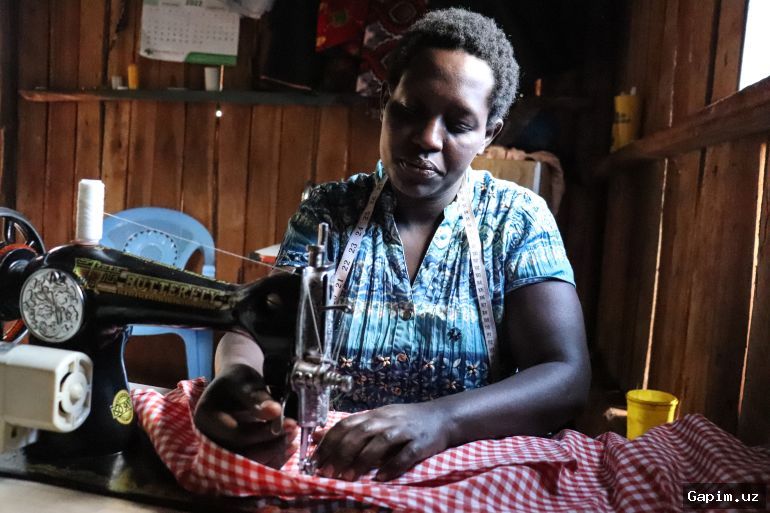
After leaving primary school in 2008, Chepkemoi had failed her final exam, and her family could not afford to send her to secondary school. For years, the dream of becoming a fashion designer seemed out of reach.
Then a scholarship from her local member of parliament gave her a second chance. But what surprised the now 33-year-old mother of five was not returning to education. It was hearing lessons delivered partly in Kalenjin, her mother tongue.
“When I got to college, I felt at home because the language of instruction was my mother tongue [Kalenjin], and was mixed with a bit of Swahili and English, unlike in school when teachers only taught in English and exams were strictly only in English. Language here was accommodating, and it made me feel happy because I understood the concept quite well,” she told Al Jazeera.
Her experience reflects a wider global reality. According to UNESCO’s Global Education Monitoring (GEM) reports, about 40 percent of learners worldwide are not taught in a language they understand well, rising to about 90 percent in some low- and middle-income countries.
In Kenya, education policy provides for mother-tongue instruction in the early years of primary school, typically up to grade 3, before English becomes the main language of instruction from grade 4, with Kiswahili also widely used. In practice, however, classrooms often shift between languages depending on region, teacher capacity and student background.
Chepkemoi was not alone in finding confidence through familiar language. Her husband, Philemon Tonui, enrolled at the same institution to study building and construction. Although Tonui completed secondary school, he was unable to sit his final examinations because his family could not afford the fees. For Tonui, the use of Kalenjin alongside English and Kiswahili made a significant difference.
Ismael Kiplang’at, a 28-year-old mason, also studied at the same institution. He recalls instructors making a deliberate effort to teach in languages students could understand. “Our college was in a town with many communities in it, and even though the instructors did not understand all languages, at least they repeated their words in almost three languages just to make sure everyone was on board,” he said.
Yet Kenya’s education system, like many across Africa, continues to face a structural tension: Early learning is most effective in familiar languages, but English remains essential for higher education, formal employment and global mobility. Kiplang’at now practises English daily because he hopes to study further and work abroad.
For Shadrack Tonui, national chairperson of the Kenya Association of Technical Training Institutions, the challenge is not choosing between languages, but balancing them in multilingual classrooms. He stresses the need for English proficiency in the labour market.
As for Chepkemoi, she is less concerned with policy than with practice. Most of her clients speak Kalenjin, while Kiswahili allows her to communicate with a wider customer base. “Even though we were lucky to have teachers who would bring a point home while in college, we also had classmates from other communities who did not speak Kalenjin, and the teachers would explain it to them in Kiswahili,” she said.
Source: www.aljazeera.com