WhatsApp, the Meta-owned messaging platform with over three billion users, is rolling out a feature that lets users go by unique usernames instead of phone numbers, addressing a long-standing privacy gap.
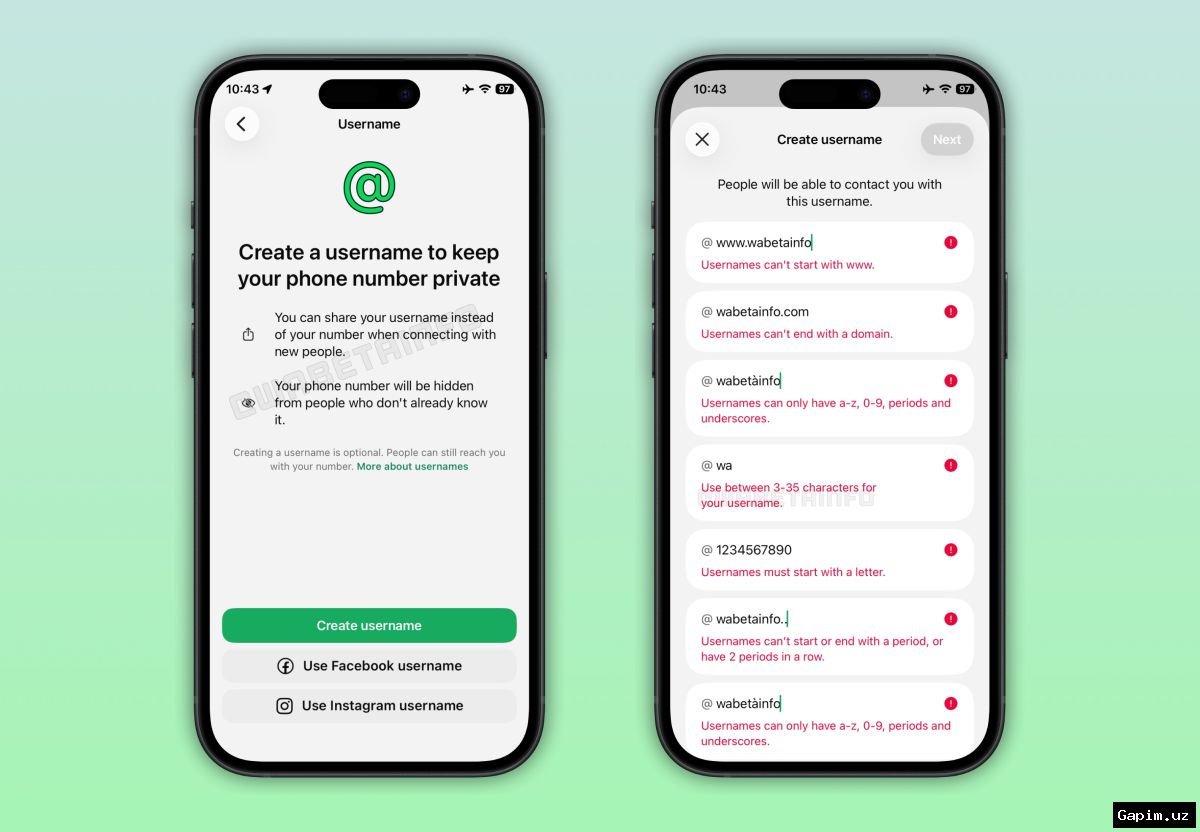
On Monday, the company announced that users can now reserve unique usernames ahead of a wider rollout later this year, when people will be able to choose to be found and contacted only by their handles.
WhatsApp emphasized the change is designed as a core privacy feature, with no public directory of usernames and no autocomplete suggestions. Users will need to know someone’s exact username to reach them for the first time.
The app offers end-to-end encrypted communication across smartphones, tablets, and desktop computers. Until now, it allowed anyone with a user’s phone number to contact them.
In a blog post, WhatsApp said that over the “coming months,” users will get the option to be found and contacted only by their username, not their number. No specific timeline was provided.
“We have designed this as a core privacy feature,” said Alice Newton-Rex, WhatsApp’s vice president of product. “People will need to know your exact username to contact you for the first time,” she added.
Current privacy settings are limited to blocking individual users and silencing unknown callers. The app also allows a profile name, but it only appears in chat groups for those who don’t have the user’s contact saved.
While text messaging remains more popular in the US, WhatsApp is widely used in Europe, Asia, and much of the rest of the world. Catchy online handles are highly coveted, and users are expected to scramble to claim desirable ones.
“I think a lot of people will go and get usernames, and that’s why we decided to open reservations early,” Newton-Rex said. Companies, organizations, and creators with existing accounts on Meta’s Instagram and Facebook will get the chance to claim their usernames on WhatsApp.
Usernames must be between three and 35 characters. To prevent impersonation, WhatsApp will reserve usernames for high-profile individuals or groups, such as celebrities, public figures, and government entities.
Source: www.aljazeera.com