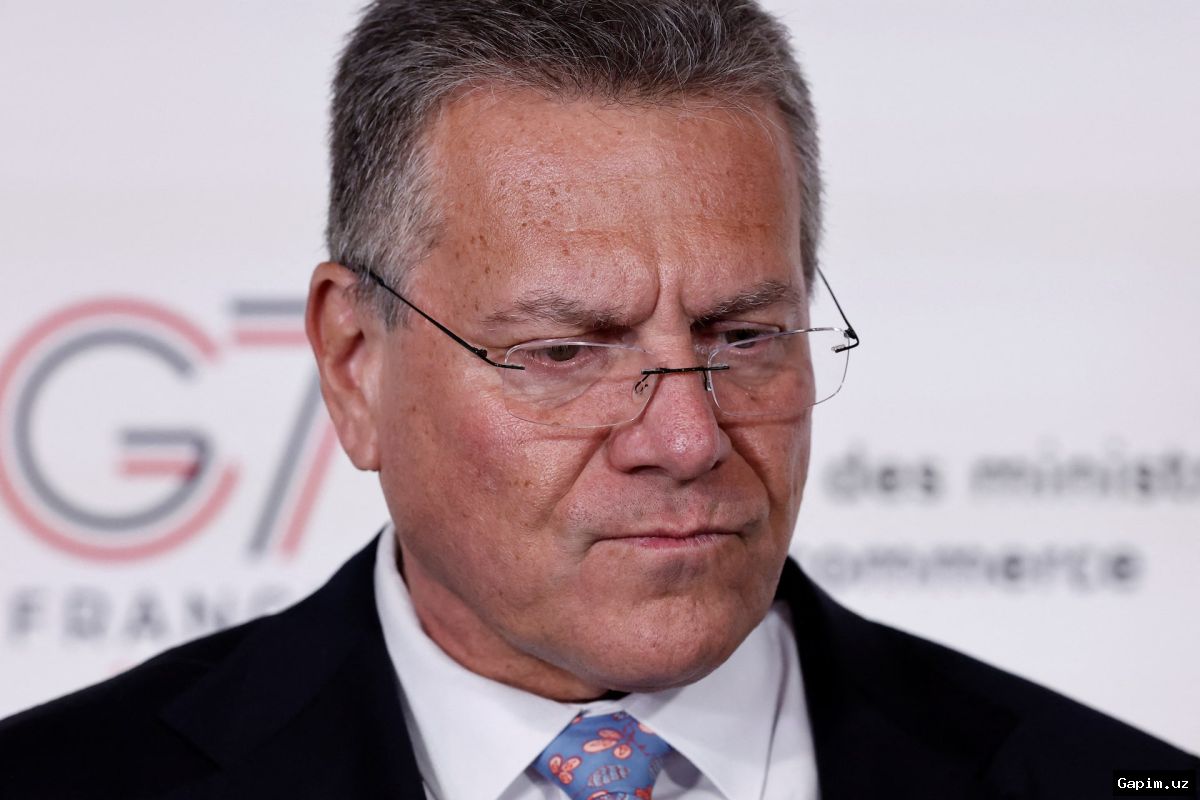
European Union Trade Commissioner Maroš Šefčovič hosted Chinese Commerce Minister Wang Wentao in Brussels on Monday for talks that, despite diplomatic smiles, carried a stark warning. 'China's exports to the EU keep rising, while our market share in China keeps shrinking,' Šefčovič told the media. 'This trend is not sustainable. The status quo is not an option.'
For years, Europe positioned itself as the transatlantic counterweight to US protectionism, championing free trade. But the rapid expansion of Chinese firms in Europe, fueled by massive state subsidies and economies of scale, has rattled European industry and spurred EU leaders into action. European Commission President Ursula von der Leyen last year dubbed this the 'new China shock'.
China's trade surplus with the EU hit €360.6 billion ($411bn) in 2025 – equivalent to €1 billion a day, up 15% from the previous year. Chinese companies now dominate supply chains in solar panels, rare earths, chemicals, and industrial robots. Meanwhile, Chinese automakers like BYD, Geely, and Chery are challenging Europe's iconic car brands. In May, Chinese models surpassed 10% of total auto sales in the bloc for the first time.
The fallout for European carmakers has been devastating. Volkswagen is reportedly planning to cut up to 100,000 jobs, BMW aims to reduce its workforce by 5% by 2026, and Mercedes-Benz has paused bonuses and offered voluntary redundancies. The EU's tariffs of up to 35.3% on Chinese EVs have done little to slow the influx.
China denies accusations of industrial overcapacity and has threatened retaliation if the EU takes corrective measures. A social media account linked to Chinese state media warned: 'China is able to cope with a situation where China-EU economic and trade relations deteriorate further or even slide to the freezing point. China does not want to go that far but it is not afraid to go that way.'
The EU is considering several measures, including barring Chinese firms from critical infrastructure under the Cyber Security Act, prioritizing EU-made goods in public procurement via the Industrial Accelerator Act, and forcing European companies in sensitive sectors to source components from at least three suppliers. New restrictions on Chinese imports, including a reduced duty-free quota for steel and a €3 customs charge on small parcels, take effect July 1.
Despite the tough rhetoric, the EU is keen to avoid a full-blown trade war. Šefčovič described Monday's talks as 'constructive' and expressed optimism that both sides were 'starting to understand each other better.' The two sides agreed on four 'workstreams' for negotiations in October, including export controls and trade balancing, and pledged to establish a joint trade monitoring mechanism. However, analysts say the scale of job losses in Europe makes it unlikely the EU will settle for cosmetic concessions.
Source: www.aljazeera.com