South African police have arrested more than 900 people during nationwide anti-migrant protests that were mostly peaceful but at times turned violent, with shops looted and one person shot dead.
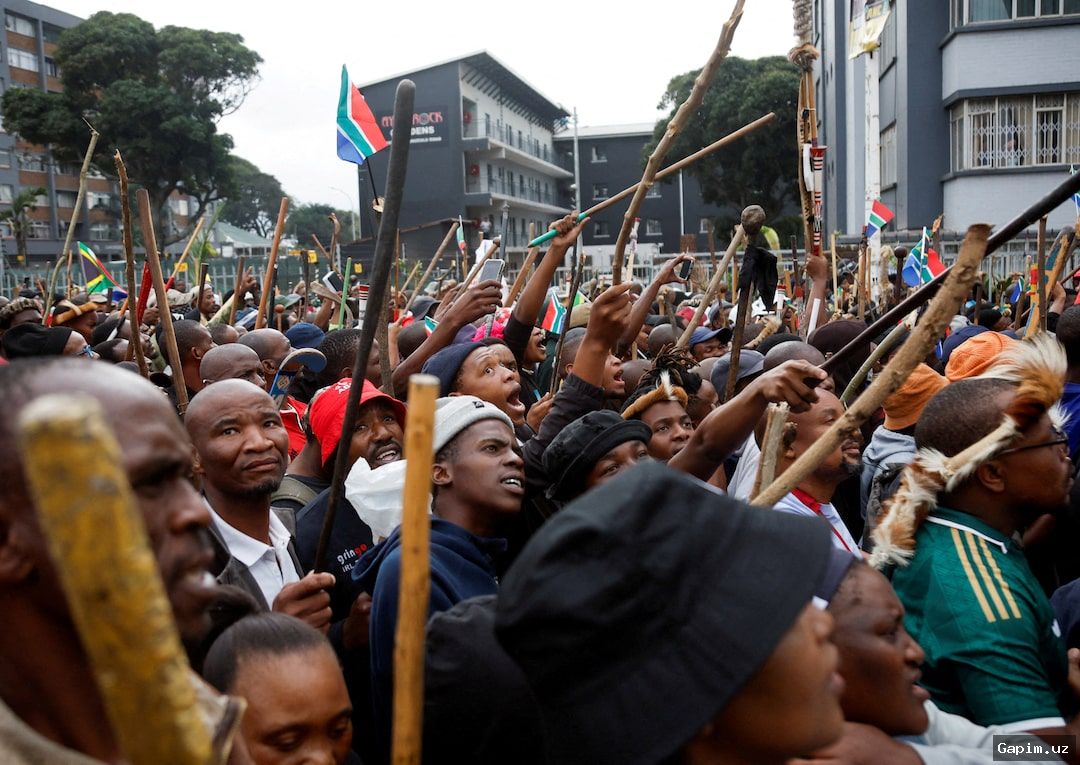
The demonstrations on Tuesday were organized by a coalition of over 20 civil society groups, including the March and March movement. They were called to mark an unofficial “deadline” for undocumented migrants to leave the country.
Of 120 marches held across South Africa, 108 were peaceful while 12 saw police intervention, Deputy National Police Commissioner Tebello Mosikili said at a news conference on Wednesday. Reasons for the arrests ranged from public violence and robbery to immigration violations.
The Western Cape recorded the highest number of arrests with 215, followed closely by the Eastern Cape with 208. A statement from the Presidency said President Cyril Ramaphosa held an emergency meeting on Monday with key protest organizers to call for calm.
In the statement, Ramaphosa acknowledged the core grievances: “South Africans have raised deep concerns about illegal immigration, border management, pressure on public services… These concerns are real, and they deserve to be heard.” However, he drew a line at unlawful behavior, stating, “Whatever the motivation, taking the law into one’s own hands is vigilantism and has no place in our constitutional democracy.”
Despite warnings, localized flare-ups occurred. In Johannesburg’s Alexandra township, police confirmed one person was shot dead late on Tuesday during looting of foreign-owned shops. Soldiers were also deployed to Johannesburg’s Hillbrow neighborhood after a shooting that injured two people, including a 17-year-old. In Durban, thousands of protesters marched chanting “Abahambe!” (“They must go!”).
March and March leader Jacinta Ngobese-Zuma warned that demonstrations would continue every Thursday until the government enforces stricter border controls. Human rights groups, including Amnesty International South Africa, condemned the targeting of migrants, arguing they are being scapegoated for deeper socioeconomic failures, high unemployment, and a backlogged asylum system.
Source: www.aljazeera.com