An international operation led by German and British police has identified 156 perpetrators and victims in cases of drug-facilitated sexual assault. Operation Medusa has resulted in 57 arrests and the safeguarding of 158 victims so far, authorities announced Thursday.
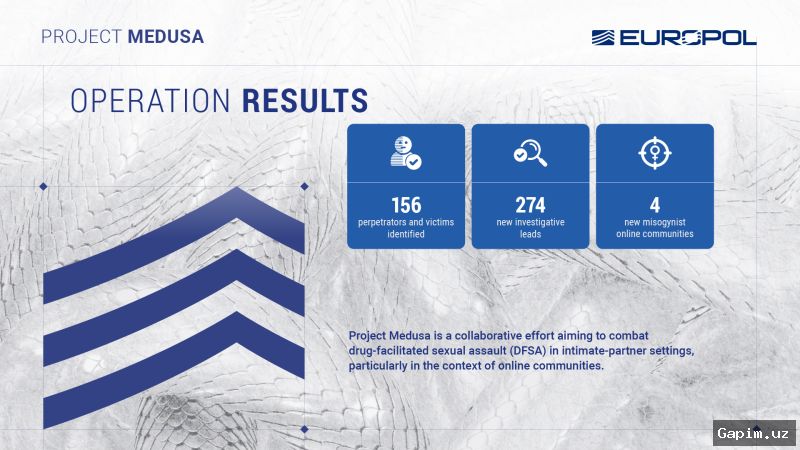
The seven-country police operation focused on online networks where perpetrators allegedly objectify and dehumanize victims, according to Europol. They use encrypted messaging services, forums, and closed chat groups to exchange experiences, normalize abusive behavior, facilitate the illegal trade in prescription medications and narcotics, and coordinate criminal acts.
The operation was led by Germany's Federal Criminal Police Office (BKA) and Britain's National Crime Agency, with coordination through Europol. Law enforcement from Brazil, Canada, France, Hungary, the Netherlands, Spain, and the United States contributed to the team.
The investigation comes in the wake of the Gisele Pelicot case in France, where her husband was convicted of sedating her and soliciting men to rape her over many years. German authorities said the probe targeted perpetrators who committed sexual violence against people in their close social circles over extended periods.
Victims are sedated with amateurish mixtures of painkillers, other medications, and alcohol — a potentially life-threatening combination. Many victims are unaware they have been assaulted because the sedatives prevent them from remembering the incident or immediately feeling the physical effects of the rape, the BKA said.
Police encouraged anyone who suspects they may have been a victim to file a report and consult a doctor. Possible indicators include unusually long sleep, inexplicable grogginess, memory gaps, or bodily abnormalities such as bruises, nausea, or sexually transmitted diseases.
Europol said Operation Medusa has led to 113 investigations since it began. The operation has also shed light on the networks facilitating this abuse, identifying four new misogynist online communities and 274 new investigative leads.
Source: www.dw.com