When Hun Sen handed Cambodia's premiership to his eldest son, Hun Manet, in August 2023, many diplomats and regional observers saw the succession as an opportunity for change. The carefully stage-managed handover fueled hopes that a new generation of leaders might reopen Cambodia's political space. But three years on, this assessment has been borne out: Hun Manet has not governed as a liberal reformer, but has preserved the foundations of his father's rule while making its repressive machinery less visible and more institutionally sophisticated.
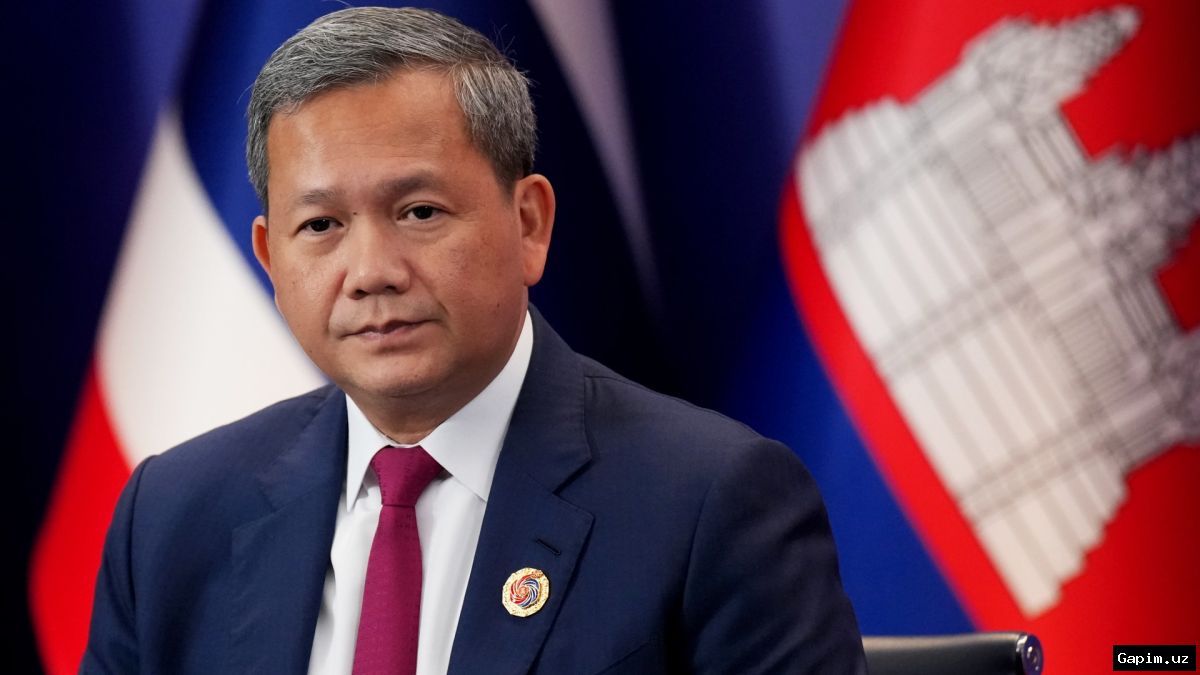
Western policymakers were eager to believe that a dynastic transfer might create room to recalibrate relations with Phnom Penh. However, they failed to recognize how deeply the Cambodian People's Party's survival depended on preserving the very institutions that forced opposition figures into exile. Hun Sen's sweeping crackdowns on opposition, independent media, and civil society were not aberrations but expressions of a governing model based on patronage, coercion, and the elimination of political competition.
Under Hun Manet, violence has become less conspicuous, but the regime increasingly relies on elite patronage, legal repression, digital surveillance, and tighter control over communications. The result is a quieter but arguably more resilient authoritarian state. This technocratic upgrade is most visible in the regime's treatment of civil society.
In July 2024, five young leaders of Mother Nature – Ly Chandaravuth, Long Kunthea, Phuon Keoraksmey, Thun Ratha, and Yim Leanghy – were sentenced to between six and eight years in prison on trumped-up charges including 'conspiring against the state' and 'insulting the king'. Their real offense was exposing environmental destruction and corruption, including illegal logging and sand-mining operations that directly enrich the ruling elite. They remain in overcrowded provincial prisons, isolated from families and legal counsel.
The remnants of Cambodia's political opposition face similar persecution. The Candlelight Party and Nation Power Party have faced routine legal harassment and administrative obstruction. Rong Chhun, a veteran labor leader, was sentenced to four years in prison in 2025, though the Supreme Court later suspended the remainder of his sentence, it upheld his conviction and barred him from politics for five years.
Independent journalism has fared no better. In late 2024, environmental journalist Chhoeung Chheng was fatally shot while investigating illegal logging. That same year, Mech Dara, who helped expose the country's role as a global hub for online fraud and human trafficking, was arrested on incitement charges widely viewed as politically motivated. Although Dara was later released on bail, his detention sent a clear warning to journalists.
Many Western governments continue to pursue diplomatic engagement and offer economic incentives in the hope that sustained dialogue will persuade Cambodia to rebalance its foreign policy. This expectation rests on a fundamental misunderstanding. Cambodia's growing alignment with China has become central to the ruling party's strategy for preserving power and shielding itself from Western pressure. Beijing provides investment, diplomatic backing, and security cooperation without demanding democratic reform.
The depth of this alignment is visible in both economic and security partnerships. The Funan Techo Canal, backed by a $1.2bn financing agreement with Chinese partners, has become emblematic of China's economic footprint. Chinese investors accounted for 54 percent of approved investment capital in 2025. The Chinese-funded expansion of Ream Naval Base has fueled concerns that Beijing is securing a strategic foothold on the Gulf of Thailand.
This reality should prompt a change in Western policy. Future cooperation should be explicitly tied to measurable democratic progress. Judicial capacity-building programs that lend legitimacy to compromised courts should be suspended. Targeted sanctions should be expanded to include officials, military commanders, and business elites implicated in serious human rights abuses and Cambodia's cybercrime economy. Western participation in high-level forums hosted by Cambodia should be made contingent on the release of political prisoners and credible action to dismantle scam compounds.
For years, the international community has mistaken generational succession for political reform. Hun Manet's Cambodia demonstrates that authoritarian systems can modernize without liberalizing. Only by recognizing that reality can Western governments stop reinforcing the institutions that have closed off democratic competition and begin helping to create the conditions for Cambodia's democratic renewal.
Source: www.aljazeera.com